keneci
News • Science & Tech • Comedy
Pavel Durov Charged In France Following Arrest Over Refusal To Censor Users Of Telegram
August 28, 2024
post photo preview

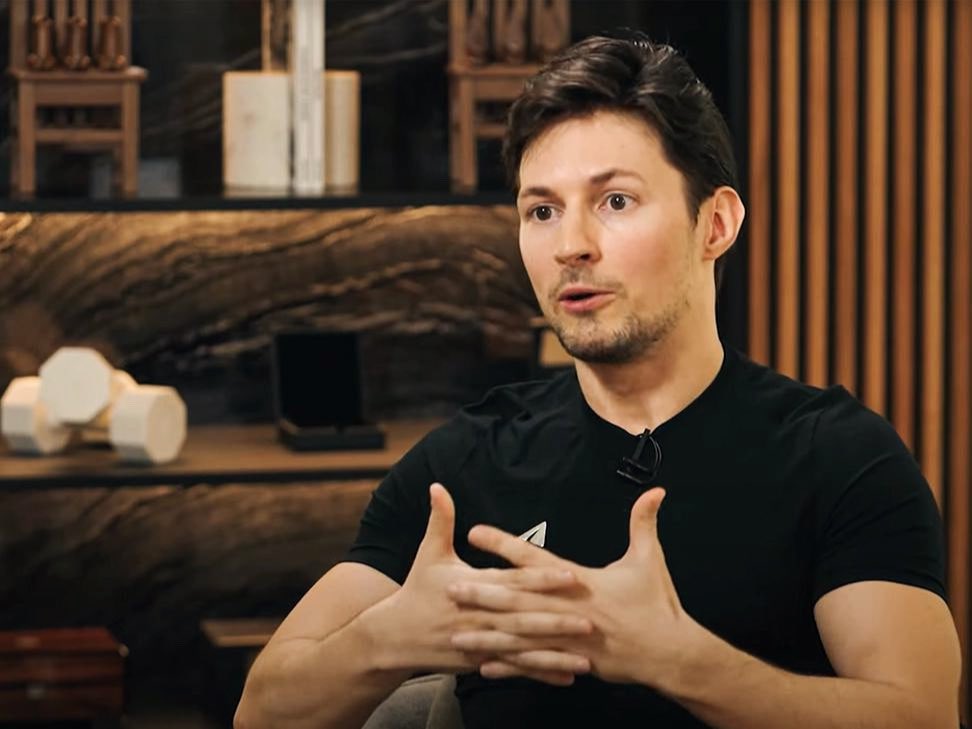
French authorities have charged Telegram CEO Pavel Durov with enabling illegal activities on the messaging app, including complicity in the distribution of child sexual abuse material (CSAM) and drug trafficking. The charges were filed Wednesday, days after Durov’s arrest at Paris-Le Bourget airport. He was released from custody on bail of €5 million, but is prohibited from leaving France and must report to the police twice a week.

The charges against Durov include complicity in the distribution of CSAM, drug trafficking, and enabling illegal transactions on Telegram.

French prosecutors allege that Telegram’s lack of moderation and cooperation contributed to the investigation.

Telegram has responded, stating that Durov has “nothing to hide” and that it is “absurd” to hold the platform responsible for its users’ abuse.

Pavel Durov, a Russian-born entrepreneur, co-founded Telegram in 2013. He holds citizenship in France, the UAE, and the Caribbean countries of St. Kitts and Nevis.

Russian and UAE officials have reportedly asked for consular access to the Telegram CEO.

The charges against Durov have sparked debate about the balance between freedom of speech, platform neutrality and enforcement of the law. Critics say the arres of a prominent social media platform executive sets a dangerous precedent, and will have chilling effect on online speech rights.

community logo
Join the keneci Community
To read more articles like this, sign up and join my community today
0
What else you may like…
Videos
Posts
Articles
SpaceX Starlink Internet Satellites

With Starlink internet, data is continuously being sent between a ground dish and a Starlink satellite orbiting 550km above. Furthermore, the Starlink satellite zooms across the sky at 27,000 km/hr! MORE VIDEOS ON KENECI NETWORK RUMBLE CHANNEL: https://rumble.com/c/Keneci

00:28:08
Elon Musk, DOGE Speak On Waste And Fraud

US Department of Government Efficiency Services (USDS) led by Elon Musk speak on the "mind-boggling" fraud and waste in UInited States federal government

00:00:45
January 17, 2025
SpaceX Launches Starship 7th Test Flight

SpaceX successfully executed its second-ever “chopsticks” catch of a Super Heavy booster (or Booster 14) using the “Mechazilla” launch tower on Thursday(Jan. 16), during the seventh uncrewed test flight of the company's 123-meter Starship rocket. However, the megarocket's upper stage(or Ship 33) was lost approximately 8.5 minutes into the flight in a “rapid unscheduled disassembly(RUD)” or explosion

00:10:30
Welcome to Keneci Network!

Join the conversations!

December 09, 2025
Bitcoin White Paper By Satoshi Nakamoto

Bitcoin white paper

Bitcoin_White_Paper.pdf
September 17, 2024
Charges Against Sean 'Diddy' Combs In Grand Jury Indictment

The rapper was charged with racketeering conspiracy, sex trafficking by force, fraud or coercion, and transportation to engage in prostitution in the indictment unsealed Tuesday(Sept. 17)

Combs-Indictment-24-Cr.-542.pdf
January 28, 2026
post photo preview
GPS III-9: SpaceX Launches Advanced Anti-jam Satellite For The U.S. Space Force

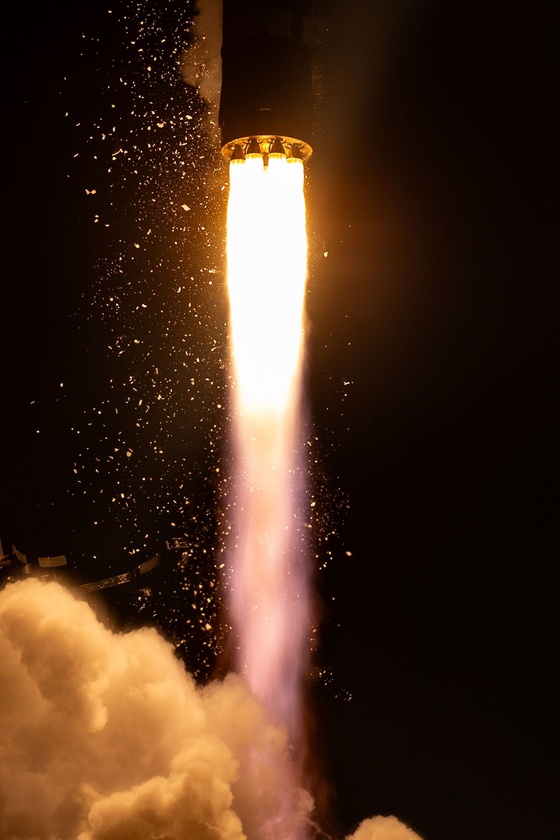
SpaceX Falcon 9 carrying U.S. Space Force's advanced anti-jamming GPS III-SV09 spacecraft, lifted off at 0453 UTC on Jan. 28, from Space Launch Complex 40 (SLC-40) at Cape Canaveral Space Force Station.

After stage separation, the Falcon 9 first stage booster, B1096, returned to Earth and landed safely on a SpaceX autonomous drone ship in the Atlantic Ocean about 8 minutes after liftoff—this marked the 141st landing on a drone ship and the 564th Falcon 9 booster landing in SpaceX’s history. B1096 had previously flown four times on missions for NASA, the U.S. military, Amazon’s Kuiper project, and SpaceX’s Starlink satellites.

The payload was deployed into medium Earth orbit, an altitude of 4,265 kilometers, about 90 minutes after liftoff, marking a key step in modernizing the U.S. Global Positioning System.

GPS III-SV09, a next-generation navigation satellite built by Lockheed Martin, is equipped with M-Code, a secure military GPS signal that is significantly more resistant to jamming and interference than previous systems, according to Space Force officials. GPS IIIF is the next iteration of satellites the U.S. will use for positioning, navigation and timing. (The "F" stands for "follow-on.") The first of these spacecraft is expected to launch in Spring 2027.

The first GPS III vehicle lifted off in December 2018. As its name suggests, GPS III-SV09 was the ninth, out of a planned total of 10, to reach orbit. The final one in the series is expected to go up later this year.

GPS III-SV09 is named in honor of Colonel Ellison Onizuka, the first Asian American astronaut, who died in the Space Shuttle Challenger disaster on January 28, 1986—a poignant coincidence given the launch date. Other former astronauts have been so honored as well. For example, GPS III-SV05 was named after Apollo 11 moonwalker Neil Armstrong, and GPS III-SV07 carries the moniker "Sally Ride," after the first American woman to reach space.

'Ellison Onizuka' was originally booked to fly on Vulcan Centaur, United Launch Alliance's powerful new rocket. But the Space Force changed that plan. This mission was part of the U.S. Space Force’s rapid-response launch initiative, demonstrating the ability to shorten timelines for critical national security missions.

"For this launch, we traded a GPS III mission from a Vulcan to a Falcon 9, then exchanged a later GPS IIIF mission from a Falcon Heavy to a Vulcan," U.S. Space Force Col. Ryan Hiserote, SYD 80 Commander and National Security Space Launch program manager, said in an emailed statement on Jan. 22.

"Our commitment to keeping things flexible — programmatically and contractually — means that we can pivot when necessary to changing circumstances," he added. "We have a proven ability to adapt the launch manifest to complex and dynamic factors and are continuing to shorten our timelines for delivering critical capabilities to warfighters."

GPS III-9 was SpaceX’s second national security mission of 2026 and the third rapid-accelerated mission for the U.S. Space Force under the National Security Space Launch (NSSL) program. The mission was managed by Space Systems Command (SSC) and Mission Delta 31, with System Delta 80 (SYD 80) overseeing the NSSL program.

Read full Article
January 27, 2026
post photo preview
Helix 02: Figure AI Unveils Their 'Most Powerful And Capable' Humanoid Robot

Figure AI, the AI robotics company developing humanoid robots, has unveiled Helix 02, described as their most powerful and capable model to date for controlling humanoid robots, the company announced on X Tuesday.

Helix 02 represents a major advancement in their AI stack, building on the earlier Helix Vision-Language-Action (VLA) model introduced in early 2025. It enables fully autonomous, end-to-end whole-body control for complex, long-horizon tasks in real-world environments.

Key highlights from the company's video demonstrations:

  • Full-body autonomy from pixels to actions — A single unified neural network directly controls the entire body (including locomotion, manipulation, balance, wrists, fingers, torso, and head) using inputs from all onboard sensors: vision, touch (tactile sensing), and proprioception.

  • Long-horizon loco-manipulation demo — The standout showcase is a robot (running on Figure 03 hardware) autonomously unloading and reloading a dishwasher in a full-sized kitchen. This 4-minute task integrates walking, grasping, placing items, opening/closing doors, and balance maintenance — all without resets or human intervention. Figure claims this is the longest and most complex autonomous task completed by a humanoid robot to date.

  • New architecture — Helix 02 extends their prior "System 1 + System 2" setup with a foundational System 0 layer: a learned whole-body controller trained on over 1,000 hours of human motion data plus sim-to-real reinforcement learning. This replaces over 109,000 lines of hand-engineered C++ code with a neural prior for more natural, stable motion.

  • Enhanced dexterity — Leveraging embedded tactile sensors and palm cameras on the Figure 03 robot, it achieves fine-grained manipulation previously out of reach for vision-only systems, such as:

    • Extracting individual pills.

    • Dispensing precise syringe volumes.

    • Singulating (separating) small, irregular objects from cluttered environments despite self-occlusion.

This pushes toward household and general-purpose robotics, addressing unpredictability in homes (diverse objects, no fixed setups). It runs onboard with low power, enabling real-world deployment without cloud reliance.

Read full Article
January 27, 2026
post photo preview
USAT: Tether Launches New Dollar-backed Stablecoin

Tether has officially launched USAT, a federally regulated, dollar-backed stablecoin designed for the U.S. market, marking its formal entry into the domestic regulatory framework under the GENIUS Act. The token is built on Tether’s Hadron real-world asset (RWA) tokenization platform, enabling scalable, on-chain transparency and compliance.

USAT is issued by Anchorage Digital Bank, the first federally chartered stablecoin issuer in the U.S., operating under the Office of the Comptroller of the Currency (OCC). This gives USAT full compliance with U.S. federal regulations. Cantor Fitzgerald serves as the designated reserve custodian and primary dealer for USAT, ensuring bank-grade transparency and asset management.

Bo Hines, former Executive Director of the White House Crypto Council, has been appointed CEO of Tether USAT, overseeing the U.S. division.

“USDT has proven for more than a decade that digital dollars can deliver trust, transparency, and utility at a global scale,"  CEO of Tether Paolo Ardoino said. "USAT extends that mission by providing a federally regulated product designed for the American market.”

USAT is now live on major exchanges including Kraken, OKX, Crypto.com, Bybit, and MoonPay, with initial trading volumes reaching $13 million shortly after launch.

Tether’s massive financial resources—reporting over $33.1 billion in U.S. Treasury bill purchases in 2024—position USAT to scale rapidly, with ambitions to reach a $1 trillion market cap within five years.

Tuesday's launch comes after the U.S. passed the GENIUS Act in July 2025, creating a legal framework for regulated stablecoins. While USDT remains a global, offshore stablecoin, USAT is Tether’s strategic response to compete with Circle’s USDC, the dominant U.S.-compliant stablecoin. The launch follows months of preparation, including the appointment of Hines in September 2025 and the selection of Anchorage and Cantor Fitzgerald as key partners.

Read full Article
See More
Available on mobile and TV devices
google store google store app store app store
google store google store app tv store app tv store amazon store amazon store roku store roku store
Powered by Locals