keneci
News • Science & Tech • Comedy
Elon Musk Moving X , SpaceX HQs To Texas, After Anti-Family Transgender Law In California Signed By Far-left Governor Gavin Newsom
July 17, 2024
post photo preview

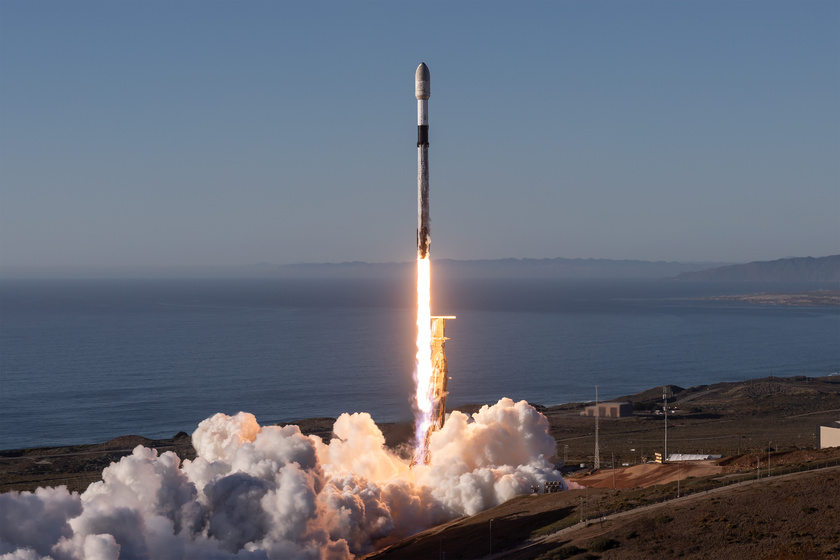
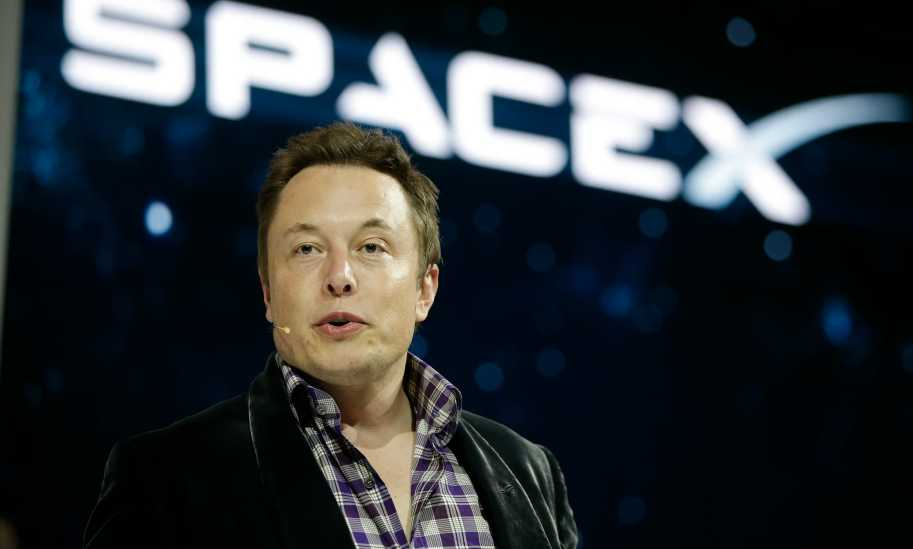
The SpaceX and X owner announced Tuesday, he's moving the headquarters of both companies to Texas from Democrat-controlled California This announcement comes after the news that far-left governor Gavin Newsom signed into law Monday, a controversial legislation, AB 1955 which prohibits school districts in California from notifying parents if their child asks for a gender identification different from their birth certificate.

Conservatives have slammed the law, a first in the United States. And parental rights groups say it is an outrageously dangerous state overreach and woke interference in a healthy traditional family.

Musk, who has been vocal about his disapproval of the law, has apparently had it. "This is the final straw," he wrote on X. "Because of this law and the many others that preceded it, attacking both families and companies, SpaceX will now move its HQ from Hawthorne, California, to Starbase, Texas... And X HQ will move to Austin."

The Tesla CEO later added, "Have had enough of dodging gangs of violent drug addicts just to get in and out of the building."

Critics have been raising concerns over destructive woke policies implemented by left-wing governors and mayors in Democrat-controlled states and cities across the country rife with rampant violent crimes and degenerate pro-LGBTQ  policies.

"The governor of California just signed a bill causing massive destruction of parental rights and putting children at risk for permanent damage," Musk wrote in another X post.

The relocation of Tesla, and now SpaceX and X’s headquarters marks a significant shift away from California, a state long considered a hub for innovation and technology. Texas, known for its business-friendly environment and lower regulatory hurdles, signals a strategic realignment for Musk’s enterprises.


community logo
Join the keneci Community
To read more articles like this, sign up and join my community today
0
What else you may like…
Videos
Posts
Articles
SpaceX Starlink Internet Satellites

With Starlink internet, data is continuously being sent between a ground dish and a Starlink satellite orbiting 550km above. Furthermore, the Starlink satellite zooms across the sky at 27,000 km/hr! MORE VIDEOS ON KENECI NETWORK RUMBLE CHANNEL: https://rumble.com/c/Keneci

00:28:08
Elon Musk, DOGE Speak On Waste And Fraud

US Department of Government Efficiency Services (USDS) led by Elon Musk speak on the "mind-boggling" fraud and waste in UInited States federal government

00:00:45
January 17, 2025
SpaceX Launches Starship 7th Test Flight

SpaceX successfully executed its second-ever “chopsticks” catch of a Super Heavy booster (or Booster 14) using the “Mechazilla” launch tower on Thursday(Jan. 16), during the seventh uncrewed test flight of the company's 123-meter Starship rocket. However, the megarocket's upper stage(or Ship 33) was lost approximately 8.5 minutes into the flight in a “rapid unscheduled disassembly(RUD)” or explosion

00:10:30
Welcome to Keneci Network!

Join the conversations!

December 09, 2025
Bitcoin White Paper By Satoshi Nakamoto

Bitcoin white paper

Bitcoin_White_Paper.pdf
September 17, 2024
Charges Against Sean 'Diddy' Combs In Grand Jury Indictment

The rapper was charged with racketeering conspiracy, sex trafficking by force, fraud or coercion, and transportation to engage in prostitution in the indictment unsealed Tuesday(Sept. 17)

Combs-Indictment-24-Cr.-542.pdf
post photo preview
Rumble Launches 'Game-changing' Self-custodial Crypto Wallet

Rumble, the video streaming platform, has launched a non-custodial crypto wallet in partnership with Tether, enabling users to tip creators directly using Bitcoin (BTC), USDT, and Tether Gold (XAUT).

The wallet, built using Tether’s Wallet Development Kit (WDK), eliminates reliance on traditional intermediaries like banks and payment processors, with MoonPay providing the on- and off-ramp infrastructure for fiat-to-crypto and crypto-to-fiat transactions via credit cards, Apple Pay, PayPal, and Venmo, while maintaining full custody of their assets.

The Rumble Wallet is non-custodial, meaning users retain full control of their assets. It supports Bitcoin, USDT, and Tether Gold (XAUT) at launch, with plans for potential future asset additions. The wallet is embedded directly into the Rumble platform, enabling instant, borderless transactions.

MoonPay serves as the on- and off-ramp provider, enabling users to convert between crypto and traditional payment methods such as credit cards, Apple Pay, PayPal, and Venmo. This hybrid structure lowers barriers for non-crypto users while preserving decentralization at the custody level.

MoonPay’s CEO, Ivan Soto-Wright, described peer-to-peer crypto payments as the future of the internet economy and praised Rumble for being one of the first major platforms to adopt this model.

Rumble CEO Chris Pavlovski saId that the wallet aligns with Rumble’s free-speech mission with decentralized financial tools, emphasizing that the platform is “putting more power into the hands of users and creators so they can engage with and financially support the content they like.”

Tether CEO Paolo Ardoino described the launch as a milestone in expanding decentralized payments to a mainstream audience, noting it gives users “more control than any platform has offered before” and marking the first real-world deployment of Tether’s WDK.

After downloading and signing into the Rumblke Wallet, content creators can enable the tip jar on their Rumble channels and profiles.

Viewers can send tips by selecting the “Tip” button from within the wallet or on a video or channel page; choosing their preferred cryptocurrency (BTC, USDT, or XAUT), and confirming the transaction (via their connected wallet).

Funds can be deposited in the wallet using fiat via MoonPay’s supported payment methods, and creators can withdraw or convert received assets using the same tools.

The launch marks a significant step in mainstream crypto adoption, aligning with Rumble’s free-speech mission and Tether’s push for decentralized financial tools. Users can receive and send money to other crypto wallets, buy, swap and store cryptocurrencies.

The partnership follows Tether’s $775 million strategic investment in Rumble in late 2024, which gave Tether a nearly 48% stake in the company. Rumble has also adopted a Bitcoin treasury strategy, holding 211 BTC as of early 2026.

The wallet launch is part of a broader strategic alignment, including a $150 million GPU leasing agreement with Northern Data, which Rumble is merging with in a $767 million all-stock deal. This merger would expand Rumble’s cloud and AI infrastructure, positioning it as a full-stack provider with access to over 22,000 Nvidia GPUs.

The announcement Monday, triggered a positive market response, with Rumble’s stock (RUM) rising nearly 4% in premarket trading and over 5% year-to-date. Retail sentiment on Stocktwits shifted to “extremely bullish,” with users projecting the stock could surpass $10.

Read full Article
January 06, 2026
post photo preview
CES 2026 | NVIDIA's New AI Model, Chip, Robotics, Rubin, Alpamayo

NVIDIA CEO Jensen Huang unveiled a suite of groundbreaking innovations at CES 2026, centering on the new Vera Rubin AI platform and the Alpamayo reasoning model for autonomous vehicles.

The Vera Rubin platform, now in full production, is a six-chip, extreme-codesigned AI system designed to deliver up to five times the computing power of the previous Blackwell generation while reducing token generation costs by up to 10 times.

This next-generation AI supercomputer integrates 88 custom Olympus cores per Vera CPU and 336 billion transistors per Rubin GPU, with each system containing a pair of both components. The platform is designed for large-scale AI inference and training, capable of being clustered into "pods" with over 1,000 Rubin chips to form a single AI engine. It features a proprietary data format and includes innovations like "context memory storage" to improve long-form AI interactions.

The system is expected to be deployed by major cloud providers including Microsoft, Amazon Web Services, Google Cloud, and CoreWeave, as well as by AI labs such as OpenAI, Anthropic, Meta, and xAI. Cooling is optimized using hot water, and the chassis can be assembled in just five minutes.

Alpamayo, an open-source family of reasoning models, enables autonomous vehicles to handle complex, unfamiliar driving scenarios through chain-of-thought reasoning, with the first deployment in the 2025 Mercedes-Benz CLA set for early 2026.

This 10-billion-parameter chain-of-thought reasoning model is designed to guide autonomous vehicles through unpredictable situations by breaking down complex scenarios into smaller, manageable problems and explaining its decisions at each step. It is part of NVIDIA’s full-stack DRIVE platform and will be used in the 2025 Mercedes-Benz CLA, which has already earned a five-star safety rating from EuroNCAP.

Alpamayo is also being used in conjunction with NVIDIA’s Cosmos simulation environment to train robots and vehicles using synthetic data from digital twins. The model is open-sourced, including the training data, to promote transparency and trust.

In other highlights of his presentation, Huang was joined on stage by autonomous BDX droids from Star Wars, trained using NVIDIA’s Cosmos and Isaac Sim platforms, demonstrating the company’s progress in physical AI.

NVIDIA also announced partnerships with Siemens to enhance manufacturing through digital twin-based robotics training. Additionally, the company emphasized its focus on inference efficiency, with Rubin chips designed to handle real-time AI responses more effectively than previous generations.

While no new GeForce RTX GPUs were announced during the main keynote, NVIDIA covered its gaming advancements on GeForce On Community Update. This included DLSS 4.5, which introduces a second-generation transformer model to reduce ghosting and shimmering, along with support for 6x multi-frame generation and dynamic frame generation.

G-Sync Pulsar, a new flicker reduction technology, was also announced, promising perceived motion clarity equivalent to 1,000Hz through backlight pulsing and adaptive brightness/color temperature adjustments. Pre-orders for G-Sync Pulsar displays are set to open January 7, 2026.

All announced products by NVIDIA are either in full production or scheduled for rollout in the second half of 2026, with the Vera Rubin platform and Alpamayo already being integrated into early partner systems.

Read full Article
January 06, 2026
post photo preview
Atlas: Boston Dynamics Robot From Prototype To Production For Hyundai, Google DeepMind

Boston Dynamics has officially begun manufacturing its new 1.89-meter humanoid robot, Atlas, with 56 degrees of freedom, for deployment at Hyundai’s Robotics Metaplant Application Center (RMAC) and Google DeepMind, marking a major transition from prototype to production-ready industrial robot.

The robot, unveiled at CES 2026 in Las Vegas, is designed for enterprise use, capable of autonomous operation, lifting up to 50 kg, and performing tasks such as material handling and parts sequencing with minimal supervision.

The Atlas robot features fully rotational joints, a reach of up to 2.3 meters, and human-scale hands with tactile sensors for fine manipulation. It operates in temperature ranges from -20°C to 40°C and has an IP67 rating, making it water-resistant and suitable for industrial environments.

Atlas can autonomously navigate to a charging station, swap its own battery, and resume work without human intervention, enabling continuous operation.

The robot is equipped with 360-degree vision and human detection systems for safe interaction in shared workspaces. It can learn new tasks in under a day, and once trained, the skill is instantly shared across the entire fleet of Atlas robots.

Atlas is being developed in partnership with Google DeepMind to integrate advanced AI foundation models, enhancing its cognitive and adaptive capabilities.

The robot will be the first test case, according to Carolina Parada, senior director of robotics at Google DeepMind.

“We’re looking to integrate our cutting-edge AI foundation models with Boston Dynamics’ new Atlas robots, and we’ll aim to develop the world’s most advanced robot foundation model to fulfill the promise of true general-purpose human needs,” Parada said onstage at CES 2026.

While some of the interaction and working with humans has been handled on the hardware side -- the 360-degree cameras to allow it to see when people are approaching -- DeepMind’s work could help the Atlas learn how to act.

“Rather than having a set of predefined, loaded tasks onto the robot, we think robots should understand the physical world the same way we do,”Parada said. “They should be able to learn from their experience. Should be able to generalize new situations and get better over time. So whether it is to assemble a new car part or to tie your shoelaces, robots should learn the same way we do from a handful of examples, and then get better very quickly with a little bit of practice.”

Hyundai Motor Group, which owns a majority stake in Boston Dynamics, will supply the actuators and is investing $26 billion in U.S. operations, including a new factory capable of producing 30,000 robots annually.

Initial deployments are scheduled for 2028 at Hyundai’s RMAC in Savannah, Georgia, starting with parts-sorting tasks, with plans to expand to component assembly by 2030.

The robot can be controlled via autonomous mode, teleoperation using a VR headset, or a tablet steering interface.

The product version of Atlas is in full production, according to the company, with all 2026 deployments already committed to Hyundai and Google DeepMind, and additional customers expected in early 2027.

Read full Article
See More
Available on mobile and TV devices
google store google store app store app store
google store google store app tv store app tv store amazon store amazon store roku store roku store
Powered by Locals