keneci Network
News • Science & Tech • Comedy
Updates and conversations about hot topics in news, entertainment, and tech
Interested? Want to learn more about the community?
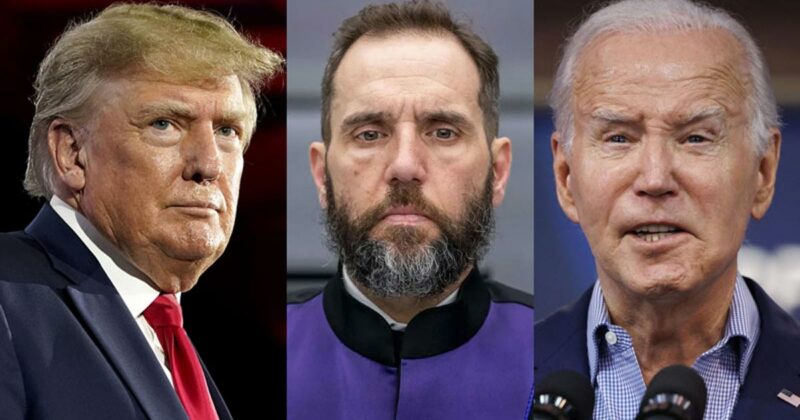
Supreme Court's Rulings In Trump Immunity, Jan 6, Chevron Cases Deal Heavy Blows To Biden Admin's Partisan Prosecutors, Bureaucrats

In several major rulings in the past week, the supreme court of the United States, SCOTUS dealt heavy blows to President Joe Biden administration's political prosecution of Donald Trump and his supporters, and the corrupt government bureaucracy or so-called deep state.

In a 6-3 decision on the Trump v. United States case Monday, the Court ruled that a former president has substantial immunity from prosecution for official acts committed while in office, but not for unofficial acts.

In the Special Counsel Jack Smith’s federal election interference case, he charged Trump with conspiracy to defraud the United States; conspiracy to obstruct an official proceeding; obstruction of and attempt to obstruct an official proceeding; and conspiracy against rights. The charges which were widely criticized, stem from his months-long investigation into whether the former president was involved in the Jan. 6, 2021, Capitol riot and any alleged interference in the 2020 election result.

Trump pleaded not guilty to all charges and argued he should be immune from prosecution from official acts done as president of the U.S.

"The President enjoys no immunity for his unofficial acts, and not everything the President does is official," SCOTUS Chief Justice John Roberts wrote for the 6 justices in the majority ruling. "The President is not above the law. But Congress may not criminalize the President’s conduct in carrying out the responsibilities of the Executive Branch under the Constitution. And the system of separated powers designed by the Framers has always demanded an energetic, independent Executive. The President therefore may not be prosecuted for exercising his core constitutional powers, and he is entitled, at a minimum, to a presumptive immunity from prosecution for all his official acts. That immunity applies equally to all occupants of the Oval Office, regardless of politics, policy, or party."

Justice Clarence Thomas penned a separate concurrence to the majority opinion "to highlight another way in which this prosecution may violate our constitutional structure" -- the appointment of Jack Smith as special counsel.
"In this case, the Attorney General purported to appoint a private citizen as Special Counsel to prosecute a former President on behalf of the United States," Thomas wrote. "But, I am not sure that any office for the Special Counsel has been ‘established by Law,’ as the Constitution requires. By requiring that Congress create federal offices ‘by Law,’ the Constitution imposes an important check against the President—he cannot create offices at his pleasure. If there is no law establishing the office that the Special Counsel occupies, then he cannot proceed with this prosecution. A private citizen cannot criminally prosecute anyone, let alone a former President. [T]here are serious questions whether the Attorney General has violated that structure by creating an office of the Special Counsel that has not been established by law. Those questions must be answered before this prosecution can proceed. We must respect the Constitution’s separation of powers in all its forms, else we risk rendering its protection of liberty a parchment guarantee."

The Court sent the matter back down to a lower court, to go back to the drawing board and find out whether or not Trump's actions qualify as official in his capacity as president. However the Court gave clear baselines which legal experts say, suggest a high burden of proof placed on the Special Counsel.

Justice Sonia Sotomayor, joined by her fellow left-wing Justices Elena Kagan and Ketanji Brown Jackson, dissented, claiming the decision "makes a mockery of the principle, foundational to our Constitution and system of Government, that no man is above the law."

"Relying on little more than its own misguided wisdom about the need for ‘bold and unhesitating action’ by the President … the Court gives former President Trump all the immunity he asked for and more," she wrote for the minority in the dissenting opinion. "Because our Constitution does not shield a former President from answering for criminal and treasonous acts, I dissent."

Reacting to the ruling Trump wrote on his social media platform Truth Social: "THE SUPREME COURT DECISION IS A MUCH MORE POWERFUL ONE THAN SOME HAD EXPECTED IT TO BE. IT IS BRILLIANTLY WRITTEN AND WISE, AND CLEARS THE STENCH FROM THE BIDEN TRIALS AND HOAXES, ALL OF THEM, THAT HAVE BEEN USED AS AN UNFAIR ATTACK ON CROOKED JOE BIDEN’S POLITICAL OPPONENT, ME. MANY OF THESE FAKE CASES WILL NOW DISAPPEAR, OR WITHER INTO OBSCURITY. GOD BLESS AMERICA!"

Respected law professor Jonathan Turley speaking to Fox News said the court ruling is a major victory for Trump and joked that he couldn't see how the decision doesn't induce heart attack to the special counsel Smith.

SCOTUS also handed down three major rulings on Friday.

The court narrowed the statute that Biden administration's zealous left-wing prosecutors have relied on in their widely criticized 'obstruction of an official proceeding' cases against hundreds of Trump supporters who took part in the January 6, 2021 Capitol protests.

The 6-3 ruling in Fischer v United States, stems from the conviction of Joseph Fischer, a former Pennsylvania police officer, who took part in a "stop the steal” rally on the morning of January 6 before outside the Capitol.

Fischer was one of about 350 people federal prosecutors charged under a federal statute, 18 USC section 1512(c)(2), which says any person who “otherwise obstructs, influences, or impedes any official proceeding, or attempts to do so” can be fined or punished with up to 20 years in prison. The 350 people charged with the crime represent about a quarter of all those charged in connection with the January 6 protests.

The central question in the case was what kind of conduct exactly the language prohibited. The previous section of the law, 18 USC section 1512(c)(1), is more specific, saying anyone is guilty of a crime who “alters, destroys, mutilates, or conceals a record, document, or other object, or attempts to do so, with the intent to impair the object’s integrity or availability for use in an official proceeding.”

“Complex as subsection (c)(1) may look, it simply consists of many specific examples of prohibited actions undertaken with the intent to impair an object’s integrity or availability for use in an official proceeding: altering a record, altering a document, concealing a record, concealing a document, and so on,” Chief Justice Roberts wrote. “Guided by the basic logic that Congress would not go to the trouble of spelling out the list in (c)(1) if a neighboring term swallowed it up, the most sensible inference is that the scope of (c)(2) is defined by reference to (c)(1). To prove a violation of Section 1512(c)(2), the Government must establish that the defendant impaired the availability or integrity for use in an official proceeding of records, documents, objects, or as we earlier explained, other things used in the proceeding, or attempted to do so.”

SCOTUS sent the opinion back to the court of appeals for the District of Columbia circuit for further consideration. The ruling could have profound implications for the January Capitol protesters and could also affect the case against Trump.

In another major decision Friday, the court in a 6-3 decision overturned one of its precedents, the Chevron deference, delivering a major blow to the regulatory powers of unelected bureaucrats in federal agencies. The court’s 1984 opinion in Chevron USA Inc v Natural Resources Defense Council, had required the courts to defer to the knowledge of government bureaucrats in their reasonable interpretation of ambiguous laws passed by congress.

Friday's decision was delivered in two combined cases, Relentless Inc v Department of Commerce and Loper Bright Enterprises v Raimondo. The cases were hung on a complaint from fishing companies over charges they were required to pay to cover the costs of conservation monitoring. The National Marine Fisheries Service, required fishing boat owners to pay $710 a day -- a demand that the fishing companies argued was an overreach of federal agency power.

Writing the opinion, Chief Justice Roberts stated that the Chevron precedent “is overruled.” He slammed the legal theory laid out in the 1984 ruling, claiming it “gravely erred,” and calling it “misguided” and “unworkable.”

“The constitution assigns to the federal judiciary the responsibility and power to adjudicate cases and controversies,” Roberts wrote. “Agencies have no special competence in resolving statutory ambiguities. Courts do.”

The supreme court on Friday, also ruled 6-3 that cities in the US west can criminalize unhoused people sleeping outside even when they lack access to shelter. The ruling is a victory for Grants Pass, Oregon, which in 2019 passed ordinances prohibiting sleeping and camping in its public parks and on its streets, banning unhoused people from “using a blanket, pillow, or cardboard box for protection from the elements.”

Critics have called on local officials to take advantage of the ruling in tackling homeless camps and filth rampant in cities across the country run by left-wing Democrats.

Also earlier last week, SCOTUS rejected Purdue Pharma’s bankruptcy settlement plan, stripped the Securities and Exchange Commission (SEC) of a major tool in fighting securities fraud, and put a hold on an attempt by the Environmental Protection Agency (EPA) to reduce harmful air pollution that drifts across state lines.

Here are supreme court's opinions in Trump v. United States, Fischer v United States, and the combined cases, Relentless Inc v Department of Commerce and Loper Bright Enterprises v Raimond.


post photo preview
Interested? Want to learn more about the community?
What else you may like…
Videos
Posts
Articles
SpaceX Starlink Internet Satellites

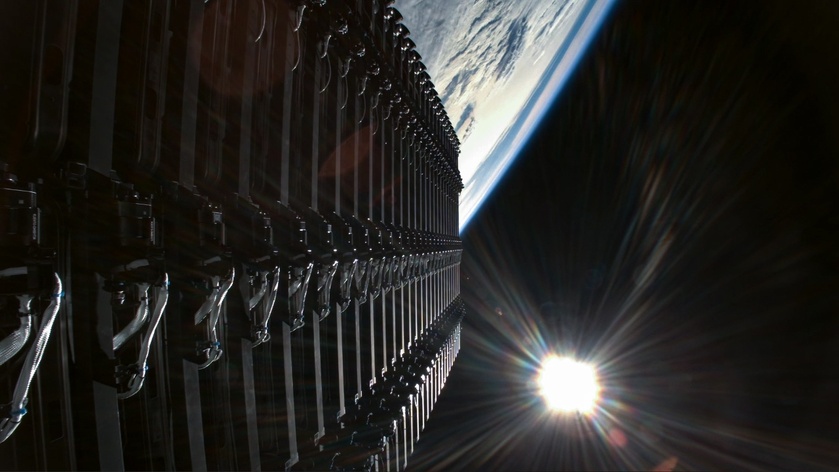
With Starlink internet, data is continuously being sent between a ground dish and a Starlink satellite orbiting 550km above. Furthermore, the Starlink satellite zooms across the sky at 27,000 km/hr! MORE VIDEOS ON KENECI NETWORK RUMBLE CHANNEL: https://rumble.com/c/Keneci

00:28:08
Elon Musk, DOGE Speak On Waste And Fraud

US Department of Government Efficiency Services (USDS) led by Elon Musk speak on the "mind-boggling" fraud and waste in UInited States federal government

00:00:45
January 17, 2025
SpaceX Launches Starship 7th Test Flight

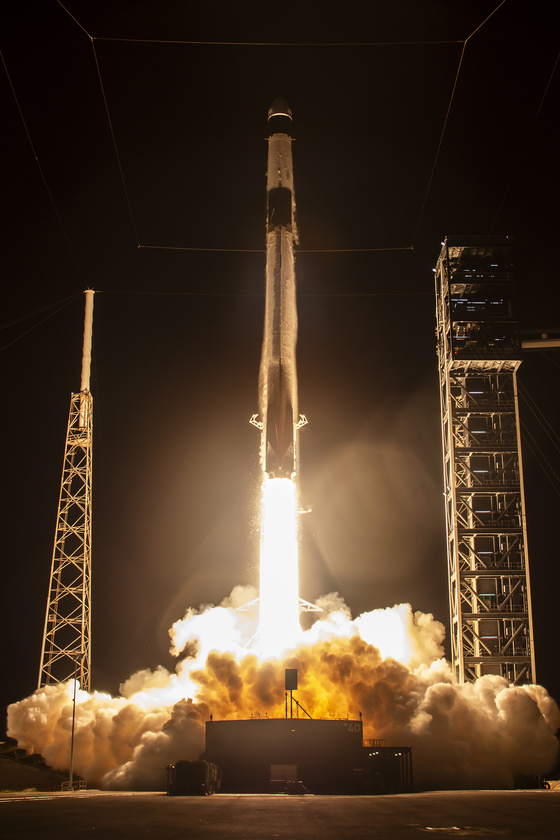
SpaceX successfully executed its second-ever “chopsticks” catch of a Super Heavy booster (or Booster 14) using the “Mechazilla” launch tower on Thursday(Jan. 16), during the seventh uncrewed test flight of the company's 123-meter Starship rocket. However, the megarocket's upper stage(or Ship 33) was lost approximately 8.5 minutes into the flight in a “rapid unscheduled disassembly(RUD)” or explosion

00:10:30
Welcome to Keneci Network!

Join the conversations!

December 09, 2025
Bitcoin White Paper By Satoshi Nakamoto

Bitcoin white paper

Bitcoin_White_Paper.pdf
September 17, 2024
Charges Against Sean 'Diddy' Combs In Grand Jury Indictment

The rapper was charged with racketeering conspiracy, sex trafficking by force, fraud or coercion, and transportation to engage in prostitution in the indictment unsealed Tuesday(Sept. 17)

Combs-Indictment-24-Cr.-542.pdf
post photo preview
Iran Issues Sweeping Demands Before It Opens Strait Of Hormuz: US Must 'Correct Its Behavior'

Iran’s Supreme National Security Council (SNSC), led by Secretary Mohammad Bagher Zolghadr, on Saturday, issued a sweeping list of demands declaring that the Strait of Hormuz will not reopen until the United States "corrects its behavior."

These demands, published by Iranian state media, include permanently ending threats and hostilities against Iran and its regional allies, withdrawing all U.S. military forces from the region, lifting the naval blockade and sanctions, paying full war reparations, and unconditionally releasing frozen Iranian assets.

Iran effectively closed the Strait in retaliation for attacks by the U.S. and Israel, halting critical maritime trade and causing global energy prices to spike, with U.S. gas prices averaging $4.02. A temporary ceasefire memorandum signed in June collapsed over U.S. military interference. Tehran claims that after shipping restored to roughly 60% of pre-war capacity, the U.S. sought to establish unauthorized alternative routes and challenge Iranian management of the channel.

Iranian military continue to 'violating' vessels—including a Saturday Iranian missile strike on an Emirati-flagged tanker—underscoring the volatile environment surrounding the Strait of Hormuz through which roughly 20% of the world’s petroleum and natural gas normally flows.

SNSC's stated conditions include,

  1. A permanent cessation of U.S. threats and military actions directed at Iran probably directed at President Donald Trump who regularly threatens the Iranian government in apocalyptic terms.

  2. An immediate end to strikes and offensive military operations targeting Iran's allies across Lebanon, Palestine, Yemen, and Iraq.

  3. Complete termination of the U.S. naval blockade restricting Iranian ports.

  4. Full pullout of U.S. naval and air forces deployed in the immediate vicinity of Iran.

  5. Financial compensation paid by Washington for damages inflicted during the war.

  6. Complete lifting of economic sanctions and the immediate release of frozen Iranian assets abroad.

"Until America corrects its behavior, the Strait of Hormuz will not open," Zolghadr declared, emphasizing that Tehran views control over the waterway not merely as an economic mechanism, but as a core pillar of its geographic and strategic power.

Meanwhile, Iranian Foreign Minister Abbas Araghchi said Saturday, that negotiations with Oman are in the "final stages" and close to an agreement on managing shipping traffic, specifically regarding the determination of new transit routes.

Araghchi noted that the historical Traffic Separation Scheme (TSS) in the strait is no longer acceptable to Tehran. Iranian and Omani naval delegations have drafted maps for a temporary route along Oman's coast to serve as a bridge toward a permanent framework.

However, Araghchi cautioned that this bilateral deal alone is insufficient; the full reopening of the waterway remains contingent on the U.S. meeting Tehran’s conditions, which he attributed to Washington's alleged violation of the interim ceasefire memorandum signed in June.

Oman described talks as "positive and constructive" but warned that ongoing attacks on commercial vessels, such as the recent missile strike on UAE-owned ship, could derail progress.

The Trump administration has insisted on the complete, unhindered reopening of the Strait and rejected Iran’s attempts to charge transit fees or exercise unilateral control, viewing the Iranian demands as unlikely to be agreed upon.

While U.S. officials expressed optimism over a potential 30- to 60-day maritime truce, they warned that sanctions relief and unfreezing assets remain strictly tied to a broader peace agreement and nuclear compliance.

Zolghadr’s public hardline stance Saturday, follows unconfirmed reports of internal debates within Tehran. Reformist President Masoud Pezeshkian had supported the Omani diplomatic track to resolve the crisis and end economic isolation. However, hardline factions led by Zolghadr and Islamic Revolutionary Guard Corps (IRGC) commanders insist that the strait remain closed as leverage against U.S. pressure.

U.S. Vice President JD Vance told Fox News on Saturday: "We're talking to the Iranians, of course. We're trying to maximize the amount of oil and gas that is coming out of the Strait of Hormuz. We're just trying to make sure that we get what we need out of this particular conflict.

"We've destroyed their nuclear program, we've destroyed their conventional military, we've radically reduced their asymmetric military abilities, and right now, we're trying to see if they're willing to make the kind of long-term changes that would be necessary to have a better relationship with the United States—and if not, that's fine too. We're just going to keep on applying the pressure that we can apply and getting as much oil and gas out of the Middle East so that Americans can enjoy lower gas and energy prices."

Read full Article
post photo preview
Top US General Urges Trump To Seek Off-ramp From Iran War, Warns Escalation Risks Backfiring

General Dan Caine, Chairman of the Joint Chiefs of Staff, is reportedly privately seeking an "off-ramp" from the war with Iran, arguing that U.S. airpower alone cannot achieve President Donald Trump's objectives and that further escalation risks backfiring due to depleted munitions stockpiles, and the high probability of Iranian retaliation against U.S. forces and regional allies.

Caine reportedly coordinated with Vice President JD Vance, Secretary of State Marco Rubio, and CIA Director John Ratcliffe to present a unified view to Trump in a recent meeting, that the military conflict has reached a crossroads, prompting the administration to focus on a diplomatic solution that offers the president a "symbolic" win.

In a statement to CNN, a spokesperson for Caine said, “General Caine is an incredible asset to President Trump’s national security team, and the overwhelming success of Operations Epic Fury, Midnight Hammer, and Absolute Resolve speaks for itself.”

Caine and other administration officials were skeptical of a series of U.S. strikes on Iran late last month, where the U.S. bombed the country for at least 12 straight days.

“The only ones in favor of the operation were elements of CENTCOM,” a U.S. official reportedly said, noting that Israel also supported the effort to escalate hostilities. Eventually, the U.S. eased up on the strikes after Middle East allies told Trump the bombings were endangering the region.

In meetings with the president, Caine has made clear the potential downsides of continued U.S. actions in Iran, but he also reassured Trump that “we could absolutely wreck” the Iranians if he would like to proceed.

This push for disengagement comes as Iran and Oman finalize a deal to reopen the Strait of Hormuz, a strategic waterway Iran has restricted since the war began in February 2026. The Trump administration aims to transition from a military stalemate to a diplomatic breakthrough, using the reopening of the Strait as a tangible victory to justify ending the conflict to the American public.

The proposed Iran-Oman agreement establishes temporary inbound and outbound shipping lanes and sets a 60-day period for further negotiations, with the U.S. pledging to lift its blockade on Iranian ports once the deal is implemented. Under the plan, commercial vessels would enter the Persian Gulf via an Iranian-controlled route and exit through an Omani-controlled route.

The negotiations have resulted in broad agreement on a new transit framework, which Trump said on Friday,, could be announced "soon" as a pathway to ending hostilities.

The conflict, launched via Operation Epic Fury in February 28, has dragged on for nearly six months with no clear military resolution; ground invasion is rejected by Trump, while airstrikes have failed to force a favorable deal.

Read full Article
post photo preview
Spacewalk 96: Astronauts Prep ISS Power Infrastructure For Solar Array Upgrade

Anil Menon and Jessica Meir completed a 6 hours 27 minutes U.S. Spacewalk 96 or extravehicular activity (EVA) on Thursday (Aug. 6). The NASA astronauts exited the International Space Station (ISS)’s Quest airlock to modify the 3B power channel on the Starboard 6 truss, preparing the station for the installation of a seventh ISS Roll-Out Solar Array (IROSA) later in the year.

Since 2021, astronauts on prior spacewalks have deployed six of the iROSA assemblies, leaving now just two awaiting delivery to the station later this year. The ISS relies on eight individual power channels fed by primary solar array wings deployed between 2000 and 2009. Over decades in low Earth orbit, radiation and thermal cycling gradually reduced the efficiency of these original arrays.

Thursday's spacewalk began at 1233 UTC when the astronauts switched their spacesuits to internal battery power. A veteran astronaut, Meir served as EV-1 and wore a spacesuit with red stripes; this is her sixth spacewalk since her first ISS mission between 2019 and 2020. Menon, a U.S. Space Force colonel and physician, is on his first mission to space and wore an unmarked spacesuit as EV-2.

Meir and Menon assembled the modification kit for one of the space station's eight power channels, which will allow for the future addition of a new iROSA. They worked to assemble and bolt together the triangular brackets on the 3B power channel, located on the far right, or starboard (S6) segment of the station's backbone truss.

Menon was positioned on an articulating portable foot restraint (APFR) atop a worksite interface (WIFEX), providing a stable angle to work from the truss.

Once the modification kit structure was built and secured to the 3B mast canister, the two spacewalkers routed cabling that will carry the electricity from the future iROSA into the 3B power channel and then covered the struts with multi-layer insulation to protect them from micrometeoroid strikes.

The iROSA wings sit forward of the legacy solar arrays, augmenting their electricity generation rather than replacing it. The station's eight original arrays began showing degraded power output as they exceeded their 15-year design life. When used in tandem with the new iROSA wings, the upgraded system will increase the station's electricity supply by 20% to 30%.

The other power channel currently without an iROSA deployed is 2A on the left, or port side, of the station.

"Anil, you can see the moon to the — well, I am not sure what way you're facing, but…," said Meir, taking a short break during the spacewalk to notice NASA's next destination for astronauts under its Artemis program.

"To my right. Yeah, I see it — thanks for the heads-up," said Menon. "I can see a future moon base there."

"I can see it, too!" Meir said.

Meir later turned her attention to Mars with her closing words of the day.

"On this day in 2012, NASA's robotic rover Curiosity successfully landed on the surface of Mars with the goal of understanding if the planet could have fostered life. Curiosity achieved that goal within a year," she said. "One day, humans will visit Curiosity, propelled by the groundbreaking science, technology demonstrations and operations conducted here on the International Space Station for almost 26 years now."

"Today, we made one more step toward expanding the ISS power system, further sustaining our human presence in low Earth orbit, as we prepare to take those next steps," said Meir.

Meir and Menon upgraded the ISS power infrastructure to support critical operations, including life support and scientific experiments, as the station ages. This upgrade is critical for sustaining the station’s power margin through its planned controlled deorbit in late 2030, requiring additional energy for attitude control and avionics during reentry.

After collecting their tools and reentering the Quest airlock, the spacewalk concluded at 1900 UTC.

This was the first spacewalk for the space station's Expedition 75 crew; the 96th U.S. EVA and 281st spacewalk overall in support of the space station's assembly, maintenance and enhancement.

There are two more U.S. spacewalks scheduled for this month: EVA 97 will work to replace a space-to-ground antenna on Aug. 13, and EVA 98 will connect power channel cables and data relay systems as part of ongoing maintenance, including preparations for the station's future deorbit, as well as replace a navigational aid used for spacecraft docking on Aug. 25.

Read full Article
See More
Available on mobile and TV devices
google store google store app store app store
google store google store app tv store app tv store amazon store amazon store roku store roku store
Powered by Locals