keneci
News • Science & Tech • Comedy
Spotify Music Library Scraped, Released Online By Activist Pirate Group: 86M Files
December 23, 2025
post photo preview

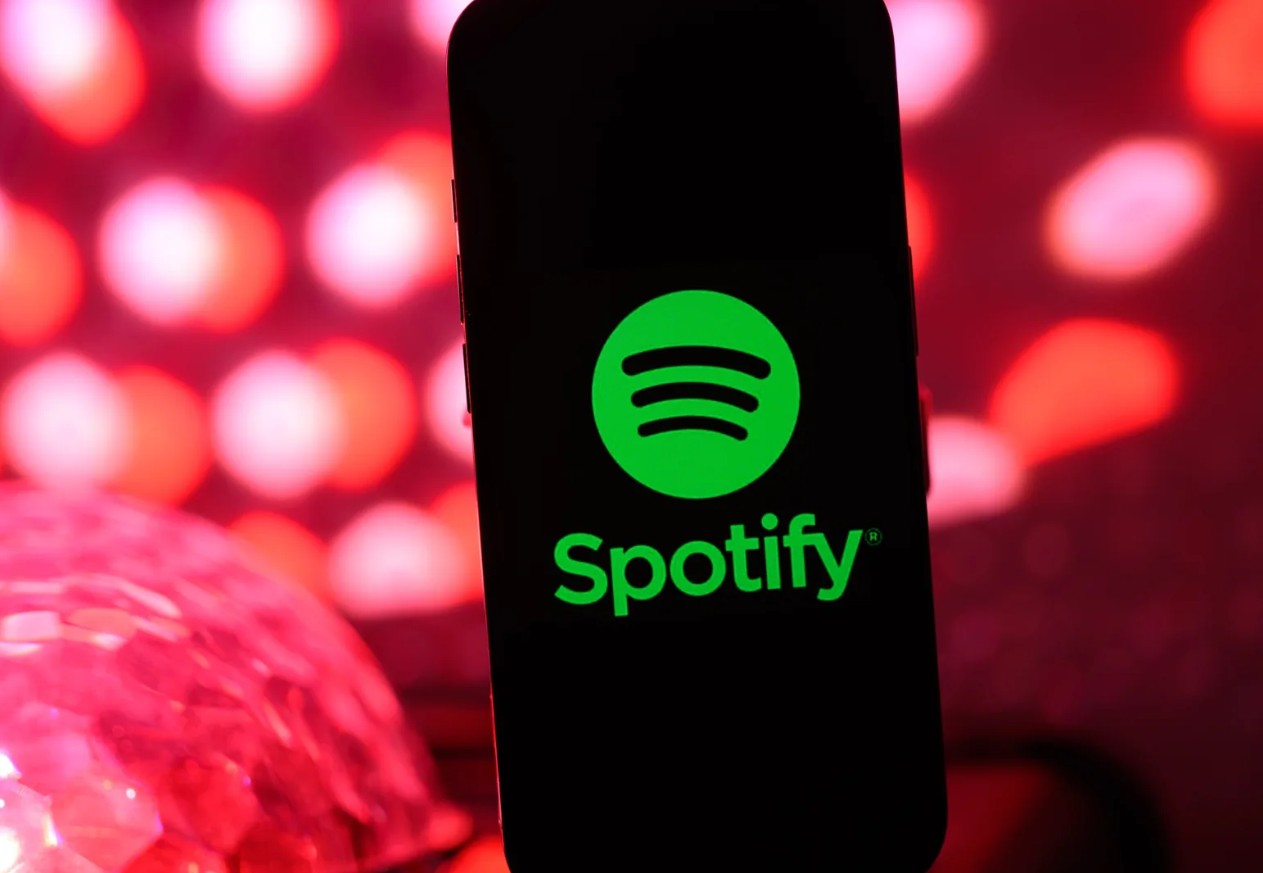
A pirate activist group known as Anna’s Archive has claimed to have scraped and begun releasing a massive archive of Spotify’s music catalog, asserting it has backed up nearly all of the platform’s most popular tracks. As of Tuesday. Spotify has confirmed the breach.

Anna’s Archive claims to have scraped 86 million audio files from Spotify, representing approximately 99.6% of total listens on the platform, with the entire archive totaling around 300 terabytes in size.

The archive includes metadata for 256 million tracks—covering an estimated 99.9% of Spotify’s catalog—already released via torrent, with the actual music files planned for future release in order of popularity. The group has also indicated that individual file downloads may be added if there is sufficient demand.

The group states this constitutes the “world’s first preservation archive” for music, prioritizing tracks by popularity and aiming to protect humanity’s musical heritage from potential loss due to disasters or corporate decisions.

The full release of the music torrents are expected to in the coming days, organized by popularity and quality—160 kbit/s for popular tracks and 75 kbit/s for less popular ones to conserve space.

Spotify has confirmed the incident and stated that it has identified and disabled the user accounts involved in the unlawful scraping. The company emphasized its ongoing commitment to protecting artists and rights holders, noting it has implemented new safeguards against such anti-copyright attacks, and is actively monitoring for suspicious behavior.

Anna’s Archive, known for its shadow library of books and academic papers, frames the action as a preservation effort rather than pure piracy, arguing that existing digital archives are overly focused on popular content and high-quality files. The group acknowledges that Spotify does not contain all music ever produced but considers it a strong starting point.

AAzXCkfWc740EhWPlYCMNUZkGJP8PAD5DrEtONI1CfVGSXmgrEn2PR7fWdNTJrth7VKqH4i-ejSTRQ0FJERrH45Gwm2TR75ygt8uakl5zWQIq8dqCWZI2KuIpqaHuA8_i1oCdS8bsYVdOQWBABQirIwGO8-WG5h3k8apU2AAj63qqbgnXOZzUlTfBnf4D-WUvP3wNk-BlA410fjnn4f0gG8l4FGCPq5uu-E5eKNV=w1280
AAzXCkdoVIcnt0jcwVHxWv3dw8Sp_fn6sfxMtHBfOEaEK8KzaxMVRK6mhEyWdj1ghDiUU502g4Dhl2DNxwUa9h4Pbfm7_xaFOWF8xNaS-RWumg4pTBKZ0KpotNVNeLlqgnE9fzO5dts3_VKjpFr8SiIcArtGQVpM8eLCiNCx5EKTH3Mk0_kiC6v1D44tn1aBRscN4IarcFPVMxwdm7Z3OEX8V7Oztl6TFivNS-fKn68=w1280

The breach raises concerns about the potential use of the 300TB dataset to train AI models without consent, a growing ethical and legal issue in the tech industry. The group’s actions also highlight vulnerabilities in how public metadata and DRM can be exploited to access copyrighted content at scale.


community logo
Join the keneci Community
To read more articles like this, sign up and join my community today
0
What else you may like…
Videos
Posts
Articles
SpaceX Starlink Internet Satellites

With Starlink internet, data is continuously being sent between a ground dish and a Starlink satellite orbiting 550km above. Furthermore, the Starlink satellite zooms across the sky at 27,000 km/hr! MORE VIDEOS ON KENECI NETWORK RUMBLE CHANNEL: https://rumble.com/c/Keneci

00:28:08
Elon Musk, DOGE Speak On Waste And Fraud

US Department of Government Efficiency Services (USDS) led by Elon Musk speak on the "mind-boggling" fraud and waste in UInited States federal government

00:00:45
January 17, 2025
SpaceX Launches Starship 7th Test Flight

SpaceX successfully executed its second-ever “chopsticks” catch of a Super Heavy booster (or Booster 14) using the “Mechazilla” launch tower on Thursday(Jan. 16), during the seventh uncrewed test flight of the company's 123-meter Starship rocket. However, the megarocket's upper stage(or Ship 33) was lost approximately 8.5 minutes into the flight in a “rapid unscheduled disassembly(RUD)” or explosion

00:10:30
Welcome to Keneci Network!

Join the conversations!

December 09, 2025
Bitcoin White Paper By Satoshi Nakamoto

Bitcoin white paper

Bitcoin_White_Paper.pdf
September 17, 2024
Charges Against Sean 'Diddy' Combs In Grand Jury Indictment

The rapper was charged with racketeering conspiracy, sex trafficking by force, fraud or coercion, and transportation to engage in prostitution in the indictment unsealed Tuesday(Sept. 17)

Combs-Indictment-24-Cr.-542.pdf
post photo preview
Google Gemini To Power Apple AI, Siri, In Multi-year Collaboration

Apple and Google have officially confirmed a multi-year collaboration under which the next generation of Apple Foundation Models will be based on Google’s Gemini models and cloud technology, enabling future Apple Intelligence features, including a significantly upgraded Siri, to be launched later this year.

This partnership marks a major strategic shift for Apple, which had previously relied on OpenAI’s ChatGPT for some AI functions, and signals a decisive move to leverage Google’s advanced AI capabilities to accelerate its own AI ambitions while maintaining strict privacy standards.

The collaboration centers on Apple using Google’s Gemini models as the foundational technology for its own Apple Foundation Models, which will power a range of AI-driven features across Apple’s ecosystem.

The new Siri, expected to debut in the OS 26.4 update in March or April 2026, will be built on this Gemini foundation, offering enhanced personalization, in-app actions, and on-screen awareness.

Despite the deep integration of Gemini technology, Apple will customize the models for its own use, meaning the resulting Siri will not be identical to Google’s Gemini or Google Assistant.

Apple emphasized that all Apple Intelligence features, including the new Siri, will continue to run on Apple devices and its Private Cloud Compute architecture, ensuring user data remains protected and does not flow to Google’s servers.

A joint statement by both companies stated that after a thorough evaluation, Google’s AI technology was determined to provide the most capable foundation for its models, a decision that has been viewed positively by Wall Street and has contributed to Alphabet’s market capitalization surpassing $4 trillion.

"Apple and Google have entered into a multi-year collaboration under which the next generation of Apple Foundation Models will be based on Google's Gemini models and cloud technology," the statement reads on X. "These models will help power future Apple Intelligence features, including a more personalized Siri coming this year.

"After careful evaluation, Apple determined that Google's Al technology provides the most capable foundation for Apple Foundation Models and is excited about the innovative new experiences it will unlock for Apple users. Apple Intelligence will continue to run on Apple devices and Private Cloud Compute, while maintaining Apple's industry-leading privacy standards."

The deal follows speculation that Apple might pay Google around $1 billion annually to use its models, though the financial terms of the agreement have not been publicly disclosed.

This partnership builds on Apple’s existing relationship with Google as the default search engine on its devices, a long-standing arrangement that generates significant revenue for Apple.

Commenting on the collaboration, xAI and Tesla CEO Elon Musk wrote on X, "This seems like an unreasonable concentration of power for Google, given that the also have Android and Chrome."

Read full Article
post photo preview
Elon Musk Seeks Custody Of Child After Ashley St. Clair Pro-transgender Remarks

Tesla and SpaceX CEO Elon Musk announced Monday, that he plans to file for full custody of his one-year-old son with Ashley St. Clair, citing concerns over her recent public statements supporting transgender surgery for minors.

Musk stated in a post on X that her remarks implied she might consider transitioning their young son, which he described as a serious parental concern. “I will be filing for full custody today, given her statements implying she might transition a one-year-old boy,” he wrote.

The announcement follows St. Clair’s apology for past anti-transgender comments and her expressed efforts to learn about and advocate for the transgender community, including acknowledging past harm to Musk’s son Xavier Alexander who pretends to be a girl Vivian Jenna Wilson.

“I feel immense guilt for my role…" St. Clair wrote in part on X. "And even more guilt that things I have said in the past may have caused my son’s sister more pain.” She expressed remorse for prior anti-transgender remarks, stating she has been trying privately to learn and advocate for the transgender community.

This comment contradicts St. Clair's previous public statements and a book she wrote advocating against transgender mutilation of children. Many conservatives online swiftly pointed out her hypocrisy, calling her a "grifter."

Musk has also repeatedly criticized what he calls “woke mind virus” and external pressures on minors, arguing against medical or irreversible gender transition decisions for children.

Replying to an X user who urged him to be more discerning in the women he mates, Musk admitted, "Yeah, I sure dig my own grave and inadvertently cause pain for many people I care about. Iam very worried about population collapse destroying civilization, but this doesn't really solve that problem."

St. Clair revealed in early 2025 that she had given birth to Musk’s 13th child, a son, and later filed for sole legal and physical custody in New York, alleging Musk’s limited involvement in the child’s life. The Tesla CEO has acknowledged providing financial support but disputes claims of disengagement, saying that tensions arose after legal proceedings began. 

The custody dispute is deeply tied to Musk’s broader public opposition to transgender ideology, particularly influenced by his estrangement from Xavier Alexander Musk who legally changed his name and severed ties with him in 2022.

Read full Article
January 11, 2026
post photo preview
Twilight: SpaceX Launches 40 Satellites Including NASA's Pandora Exoplanet Observatory

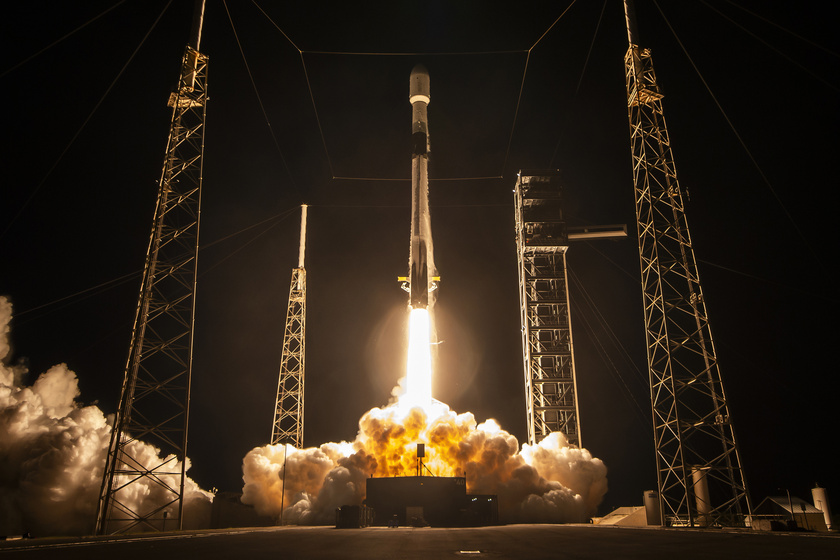
A SpaceX Falcon 9 rocket launched the first "Twilight" rideshare mission on Sunday, (Jan. 11), from Vandenberg Space Force Base’s Space Launch Complex 4 East at 13:44 UTC, carrying  40 payloads into a dusk-dawn sun-synchronous orbit, a trajectory that allows satellites to maintain consistent lighting conditions for observations.

The Falcon 9’s first stage booster (B1097), completed its fifth flight and successfully landed back at Landing Zone 4 (LZ-4) at Vandenberg Space Force Base about 8.5 minutes after liftoff. This marked the 32nd landing at LZ-4 and the 557th booster landing in SpaceX’s history. The first stage had previously launched three batches of Starlink V2 Mini Optimized satellites and the Sentinel-6B spacecraft.

The 40 payloads were deployed over a 90-minute window, beginning about 61 minutes after liftoff and concluding more than 2.5 hours into the mission. The mission was named "Twilight" due to its deployment into a dusk-dawn sun-synchronous orbit, which straddles the terminator—the line between day and night on Earth—providing stable lighting conditions ideal for long-duration observations.

The primary payload was NASA’s Pandora exoplanet observatory, a 325-kilogram small satellite developed under NASA’s Astrophysics Pioneers program and led from Goddard Space Flight Center, with mission operations based at the University of Arizona in Tucson.

Pandora is equipped with a 0.45-meter (17-inch) Cassegrain telescope developed jointly by Corning Incorporated and Lawrence Livermore National Laboratory, and its spacecraft bus was supplied by Blue Canyon Technologies.

The mission’s core objective is to disentangle exoplanet atmospheric signals from stellar variability by repeatedly observing starlight passing through planetary atmospheres during transits. It will conduct long-duration observations—approximately 24 hours per visit—on at least 20 known exoplanets, with some program materials suggesting up to 39 planets could be studied over a broader timeline.

Most of the more than 6,000 alien planets we know of have been discovered via the "transit method."

Transits also allow astronomers to characterize known exoplanets, especially their atmospheres. Different elements and molecules absorb light at specific wavelengths, so studying the spectrum of starlight that has passed through an atmosphere can reveal a great deal about that atmosphere's composition.

However, such work is complicated by stellar complexity. Star surfaces are not uniform; they often feature patches of varying brightness, like the sunspots that speckle our own star. Pandora will help astronomers account for such complexity, if all goes to plan.

Daniel Apai of the University of Arizona, a lead scientist on the Pandora team, described the mission as "a bold new chapter in exoplanet exploration," emphasizing its potential to refine techniques for detecting atmospheric signals and guide future searches for habitable worlds.

"Pandora aims to disentangle the star and planet spectra by monitoring the brightness of the exoplanet's host star in visible light while simultaneously collecting infrared data," NASA officials wrote in a mission description. "Together, these multiwavelength observations will provide constraints on the star's spot coverage to separate the star's spectrum from the planet's."

Tjhe satellite will focus on planets with atmospheres that are dominated by water or hydrogen, agency officials added. The mission includes a one-month commissioning phase followed by a one-year primary science campaign, with all data to be made publicly available.

The mission’s $20 million budget cap reflects its role as a cost-constrained, high-impact experiment designed to complement larger observatories like the Kepler and James Webb Space Telescope (JWST).

The Twilight mission also carried a diverse array of secondary payloads. Among them were three NASA CubeSats: the Star-Planet Activity Research CubeSat (SPARCS), developed by Arizona State University, and the Black Hole Coded Aperture Telescope (BlackCAT), operated by researchers at Penn State University.

Additionally, the mission included 10 Aether spacecraft from Kepler Communications, which form part of a low Earth orbit optical data relay network. Capella Space contributed two advanced Acadia Earth-imaging radar satellites for high-resolution imaging. Exolaunch managed the deployment of 22 satellites, including Dcubed-1/Araqys-D1, which will demonstrate on-orbit 3D printing of a boom structure.

Other payloads included nine Lemur satellites from Spire Global for weather and maritime monitoring.

Sunday's mission is part of SpaceX’s broader rideshare program, distinct from its Transporter and Bandwagon series, and marks the first dedicated flight under the Twilight banner. To date, the company has launched 15 such flights in its Transporter series and four via Bandwagon.

Read full Article
See More
Available on mobile and TV devices
google store google store app store app store
google store google store app tv store app tv store amazon store amazon store roku store roku store
Powered by Locals