keneci Network
News • Comedy • Science & Tech
France Riots: Europe Burns As Rioters Wreck Havoc Over Economic Woes, Failed Policies
October 19, 2026
post photo preview

The historic Limoges Town Hall, built in 1883 and designated a landmark in 1975, was "largely lost" after masked protesters forced entry and set it ablaze on Saturday. The fire caused the roof and spire to collapse, destroying two-thirds of the exterior; the building had previously survived both World Wars and served briefly as the seat of the Belgian government-in-exile in 1940.

France’s nationwide unrest stems from weeks of student protests over deteriorating school conditions, which expanded into mass demonstrations against rising living costs and fuel prices. The country experienced some of the worst street violence it has seen in decades, drawing together a volatile mix of secondary school and university students, former "Yellow Vests," climate activists, farmers, and opportunistic groups.

On Saturday, an estimated 550,000 to 800,000 people took to the streets, with violence erupting in cities including Paris, Marseille, Lyon, and Lille.

About 1,200 to 2,000 people were arrested, over 150 police officers were injured, and widespread looting targeted shops and public buildings. In Saint-Étienne, a 17-year-old protester suffered severe injuries (losing a hand) after a police-deployed grenade detonated.

Prime Minister Sébastien Lecornu blamed the violence on "ultra-left" groups and criminals, stating the government would not be intimidated, while Interior Minister Laurent Nuñez reported that rioters had the "sole objective to burn, break and loot." President Emmanuel Macron strongly condemned the violence, vandalism, and attacks on public buildings, vowing that perpetrators would be prosecuted.

Unrest also spread to other European nations, driven by similar economic grievances. While France saw the most catastrophic structural damage, smaller or parallel protests and riots broke out in several other European countries over economic pressures and localized grievances.

In Italy, Portugal, and Belgium, Student and public groups marched against household budget constraints, housing costs, and education affordability, though reports indicate these demonstrations were less violent than those in France and Albania.

In Italy, rallies over the cost of living in cities like Milan and Bologna turned violent. Demonstrators clashed with police, forcing the temporary closure of transit hubs like the Duomo metro station in Milan and causing dozens of injuries and detentions among law enforcement and protesters.

In Liège, Belgium, demonstrations over economic strains escalated into property damage and clashes, resulting in dozens of arrests—including minors.

In Portugal, thousands marched in Lisbon over low wages, skyrocketing rents, and a severe housing shortage, setting up protest tents in Rossio square.

Student-led protests in Tirana, Albania, took on an explicitly anti-government tone, entering their fifth consecutive day of fierce clashes. Beyond standard demands for education reform and jobs, protesters called for the resignation of Prime Minister Edi Rama over corruption allegations. 35 people were wounded and 167 arrested.

The protests in Tirana, started with the controversy over a luxury coastal development project linked to an investment firm founded by Jared Kushner (son-in-law of US President Donald Trump). Police deployed water cannons and tear gas against crowds.

Across Western and Southern Europe, persistent inflation, high energy/fuel prices, and stagnant real wages have created deep financial anxiety among working-class families and the younger demographic.

Critics blame left-wing western leaders and their lax immigration and misguided energy policies. The convergence of students, union workers, and disparate political movements highlights a broader breakdown in trust regarding public institutions and the government.


community logo
Join the keneci Network Community
To read more articles like this, sign up and join my community today
0
What else you may like…
Videos
Posts
Articles
SpaceX Starlink Internet Satellites

With Starlink internet, data is continuously being sent between a ground dish and a Starlink satellite orbiting 550km above. Furthermore, the Starlink satellite zooms across the sky at 27,000 km/hr! MORE VIDEOS ON KENECI NETWORK RUMBLE CHANNEL: https://rumble.com/c/Keneci

00:28:08
Elon Musk, DOGE Speak On Waste And Fraud

US Department of Government Efficiency Services (USDS) led by Elon Musk speak on the "mind-boggling" fraud and waste in UInited States federal government

00:00:45
January 17, 2025
SpaceX Launches Starship 7th Test Flight

SpaceX successfully executed its second-ever “chopsticks” catch of a Super Heavy booster (or Booster 14) using the “Mechazilla” launch tower on Thursday(Jan. 16), during the seventh uncrewed test flight of the company's 123-meter Starship rocket. However, the megarocket's upper stage(or Ship 33) was lost approximately 8.5 minutes into the flight in a “rapid unscheduled disassembly(RUD)” or explosion

00:10:30
Welcome to Keneci Network!

Join the conversations!

December 09, 2025
Bitcoin White Paper By Satoshi Nakamoto

Bitcoin white paper

Bitcoin_White_Paper.pdf
September 17, 2024
Charges Against Sean 'Diddy' Combs In Grand Jury Indictment

The rapper was charged with racketeering conspiracy, sex trafficking by force, fraud or coercion, and transportation to engage in prostitution in the indictment unsealed Tuesday(Sept. 17)

Combs-Indictment-24-Cr.-542.pdf
post photo preview
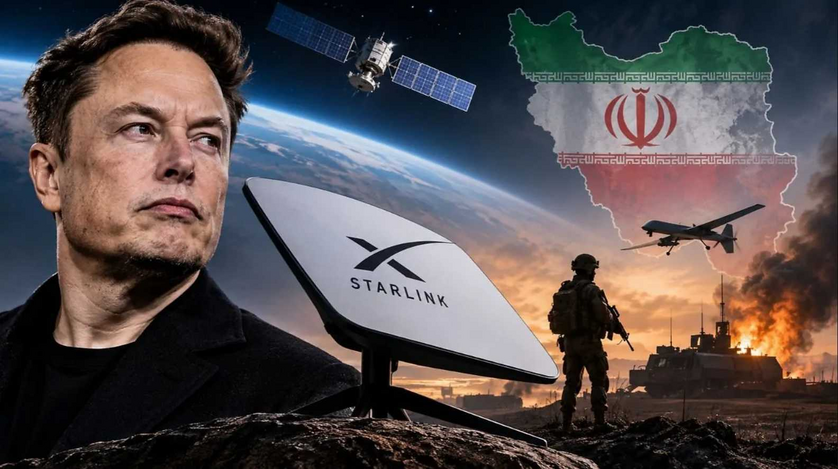
Iran Exploited Starlink Earlier In US-Israel-Iran War, Enraging Elon Musk: Report

Iran reportedly used Starlink satellite internet for command-and-control and drone operations against U.S. forces in the opening days of the war, while the U.S. military operated LUCAS drones on a cheaper Starshield plan meant only for stationary or slow-moving ground operations, enraging SpaceX CEO Elon Musk, who fired at least two SpaceX executives.

The war began February 28, 2026, when the U.S. and Israel launched strikes on Iran; Tehran retaliated with ballistic missiles and drones targeting U.S. bases across the Middle East. In the first week of March, SpaceX detected two unauthorized uses of Starlink tied to Iran’s campaign.

A classified U.S. Central Command(CENTCOM) update delivered to Defense Secretary Pete Hegseth over the summer confirmed Iran used Starlink as an alternative communications channel after U.S. forces degraded traditional networks, and to oversee one-way attack drone operations.

The timing of the CENTCOM update coincided with the March 1 drone strike on a U.S. tactical operations center in Port Shuaiba, Kuwait, which killed six servicemen. Iranian use of Starlink in that specific attack was not confimed. SpaceX reportedly began imposing emergency network restrictions within hours of the attack.

Musk was reportedly enraged and "fuming" upon learning of the exploitation, particularly because two months earlier he had already restricted Starlink/Starshield use after Russia was caught powering long-range drones with it. He fired at least two executives over the unauthorized access.

Starlink is not licensed to operate in Iran, yet Musk had previously said the service was active there; the U.S. government reportedly had about six thousand terminals smuggled into Iran after January protests. Shutting down Starlink would also cut off dissidents and ordinary Iranians using it to bypass state internet controls.

Once commercial terminals enter gray-market circulation, preventing hostile actors from acquiring or seizing them is difficult. Musk, in an X post then, said that using commercial Starlink terminals for weapon systems violates SpaceX’s terms of service and would be shut down.

Separately, the U.S. military was flying LUCAS (Low-cost Uncrewed Combat Attack System) drones on Starshield while paying for a ~$5,000/terminal ground plan instead of the ~$25,000/terminal aerial plan—a fivefold difference. SpaceX executives argued this violated commercial terms, and the issue fueled public clashes in May 2026, over Starshield pricing. The company reportedly demanded the Pentagon pay the higher aerial rate, which the Donald Trump administration ultimately agreed to.

Within hours of the March 1 Port Shuaiba strike, SpaceX introduced strict identity-verification requirements for terminals moving faster than 100 mph, mirroring a 70 km/h speed cap implemented in Ukraine earlier in 2026 after Russian forces mounted Starlink dishes onto attack drones. The company paused its Indirect Reselling Program—which had allowed third-party sub-resellers to distribute dishes with limited oversight—and mandated strict know-your-customer (KYC) identity verification for every terminal buyer and activation.

The Pentagon declined to confirm the classified report’s existence, with Press Secretary Kingsley Wilson stating the department was "not aware" of the specific CENTCOM update to the Office of the Secretary of Defense, and declined to comment on either Iran's alleged use of Starlink or the Starshield pricing arrangement.

Read full Article
post photo preview
Rocket Lab Launches 14th StriX SAR Satellite For Synspective On 'Night Owls Never Sleep' Mission

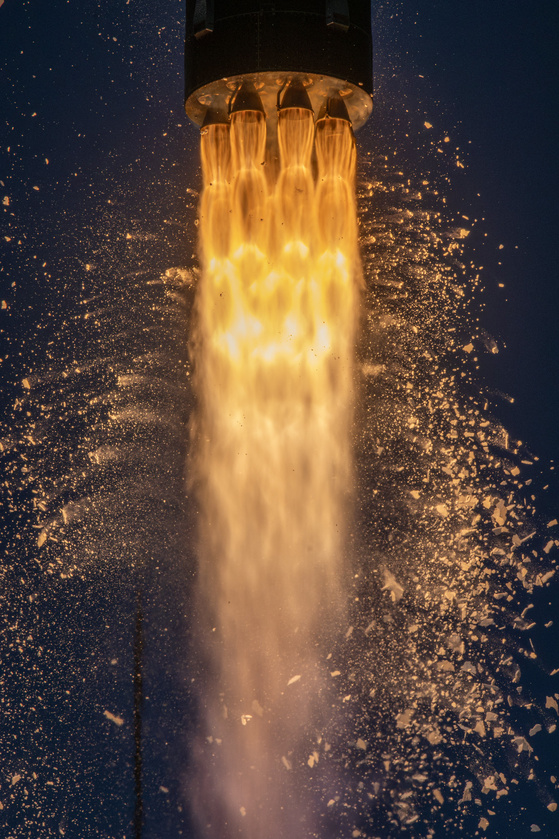
Rocket Lab launched its 101st Electron rocket on the “Night Owls Never Sleep” mission on Friday (Nov. 27) at 0015 UTC, from Launch Complex 1 (LC-1) on the Māhia Peninsula, New Zealand, deploying the 14th StriX synthetic aperture radar (SAR) satellite for Synspective, marking the company’s 22nd launch of 2026 and a record-breaking 19th orbital flight for the year.

The mission deployed the satellite into a 569 kilometers(km) low Earth orbit with a 38-degree inclination, nearly 54 minutes after liftoff. Previous missions have utilized sun-synchronous orbits. The StriX constellation provides high-resolution Earth imagery, a ground resolution of 1-3m and a swath width of 10-30km, regardless of weather or daylight, supporting applications in disaster response, infrastructure monitoring, and urban planning.

This flight maintains Rocket Lab’s 100% success rate for Synspective, having launched all 14 StriX satellites to date. The company is Rocket Lab’s largest launch customer, with 47 missions booked in total. A recent contract signed in September 2026 covers 20 dedicated launches between 2028 and 2031, bringing the total manifest to 33 dedicated missions through 2031.

Read full Article
November 27, 2026
post photo preview
Tesla To Acquire German Precision Parts Maker EMAG For Optimus Robot Production

Tesla filed a proposal on eartlier this week (Nov. 23), to acquire specific assets from German machine-tool maker EMAG, with the transaction officially listed by Germany’s Federal Cartel Office (Bundeskartellamt) as case B5-132/26 on November 27. The deal is classified as an asset acquisition (Vermögenserwerb) covering precision manufacturing systems, electrochemical machining, and laser processing capabilities essential for producing humanoid robot drive components.

Tesla registered a new German entity, Tesla Machining Technologies Management SE ($131,405 or €120,000 capital), with its business address at EMAG’s headquarters in Salach, near Stuttgart. Unconfirmed reports suggest about 220 EMAG employees may transfer to Tesla, while EMAG’s operations in nearby Eislingen would remain independent.

The strategic goal is for Tesla to produce in-house, high-precision gears—such as flexsplines, wave generators, and planetary gears—used in Optimus robot actuators. This move addresses reliability bottlenecks identified by CEO Elon Musk during the third-quarter earnings call and aims to secure supply chain control for Tesla’s mass production targets, potentially scaling to 20,000 units per week.

EMAG has faced financial struggles, reporting a $45 million (€42 million) loss on $543 million (€496 million) in revenue in 2024, and had previously announced plans to cut jobs.

The Federal Cartel Office has up to one month for a first-phase review, with a potential five-month second phase if deeper investigation is required.

Neither Tesla nor EMAG has officially confirmed the deal’s specific financial terms, the exact scope of assets being sold, or a closing date. The acquisition follows Tesla’s previous integration of German automation expertise through the purchases of Grohmann Engineering and Manz’s Reutlingen operations.

Read full Article
See More
Available on mobile and TV devices
google store google store app store app store
google store google store app tv store app tv store amazon store amazon store roku store roku store
Powered by Locals