keneci Network
News • Comedy • Science & Tech
Roadster: Tesla Unveils Next-gen Flying Car, In Collaboration With SpaceX
October 16, 2026
post photo preview

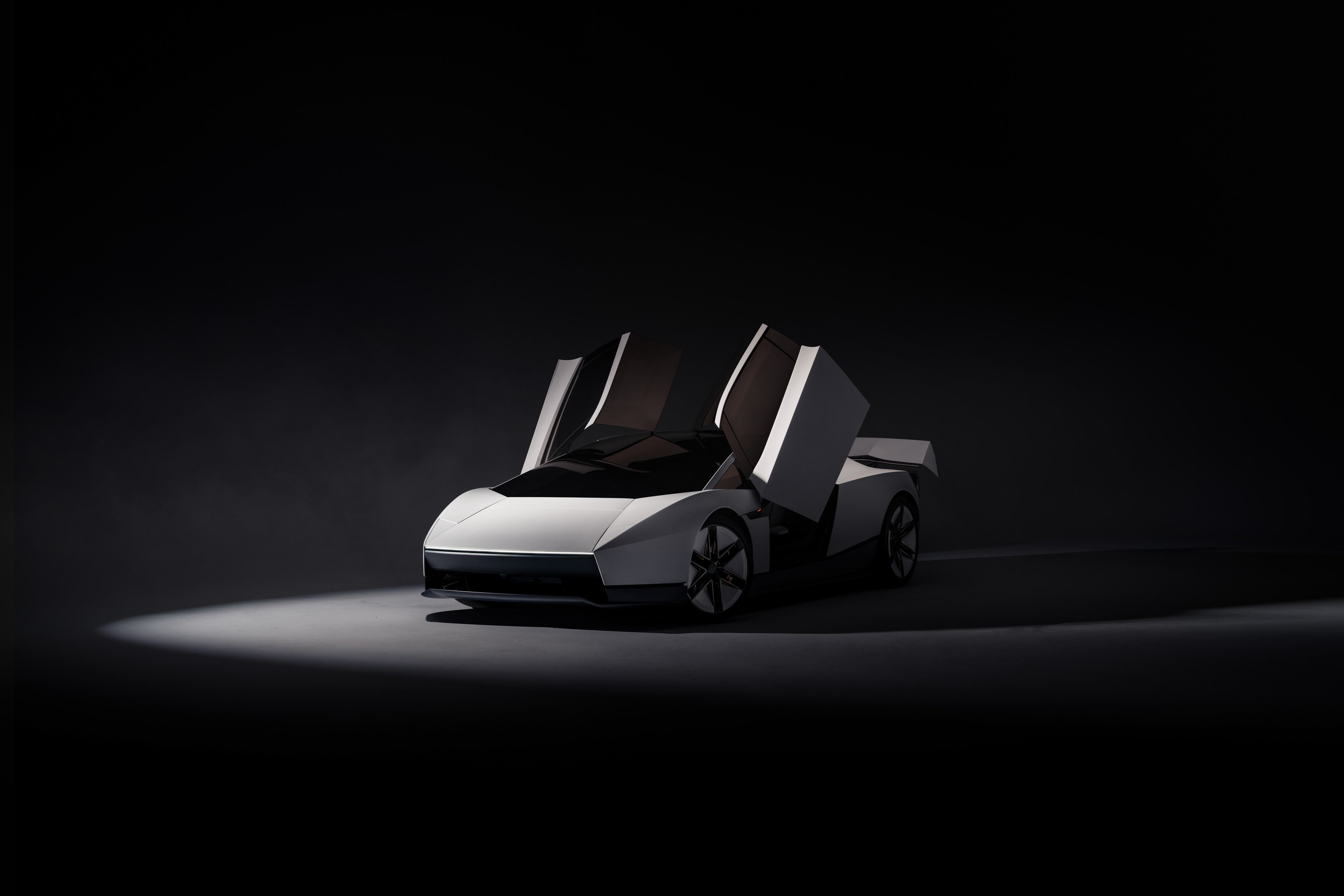
In a futuristic live demonstration at SpaceX McGregor, Texas test site Thursday night, Tesla unveiled its next-generation Roadster, nearly nine years since its initial 2017 prototype reveal. Developed in collaboration with SpaceX, the electric supercar utilizes cold-gas thrusters and advanced aerodynamics to achieve unprecedented performance metrics, including a demonstrated 0-60 miles per hour(mph) time in 0.81 seconds and the ability to perform mid-air flips and vertical ramp climbs.

The Roadster features SpaceX-inspired propulsion system which has tri-motor electric drive and 4 SpaceX cold-gas rear thrusters, and uses compressed air stored in ultra-high-pressure tanks rather than chemical propellants. The vehicle employs a fan-based multi-mode suction system capable of generating up to 2G active aero downforce to maximize ground grip, allowing it to drive upside down on vertical surfaces.

The supercar automatically adjusts ground clearance and underbody airflow to glue the chassis to the track regardless of speed. Traditional tires struggle with mechanical grip under instant electrical and rocket torque.

For aerial maneuvers, the car utilizes attitude-control and main thrusters to execute rolls and controlled landings. During the live demonstration the supercar successfully drove up a multi-story ramp, flipped in mid-air, and landed on its wheels, while also achieving the 0.81-second acceleration benchmark in a live test.

"When we started redesigning the Roadster, we didn't just want to build an incremental improvement over the original concept," Chief Designer Franz von Holzhausen said during the live demonstration. "We wanted to delete the boundary between aerospace engineering and automotive design. Working directly with the SpaceX team allowed us to integrate hardware that has never existed on a street-legal vehicle before."

CEO Elon Musk said: "There will never be another car like this, if you could even call it a car. We radically increased the design goals... Combining Tesla electric powertrain technology with SpaceX rocket thrusters creates a vehicle that defies conventional physics. Achieving 0 to 60 in 0.81 seconds is incredible, but the maneuverability and active flight-assist capabilities are what really make this a true science fiction machine on the road."

Tesla Roadster will come in the following configurations and specifications.

A Performance mode with two-seater designed for road use, featuring active aerodynamics and a multi-mode suction system. It claims a 0-60 mph time of under 1.6 seconds and is available by reservation with a $50,000 deposit.

The Thrust mode is a two-seater race-ready variant that adds rear-mounted cold-gas thrusters to boost acceleration. It achieves 0-60 mph in under 0.9 seconds (demonstrated at 0.81s) and is offered as a limited release with a $250,000 deposit.

The third mode is Rocket, a single-seater "air-ready" configuration featuring perimeter-mounted thrusters for upward and rotational movement, enabling flight capabilities. It claims a 0-60 mph time of under 0.59 seconds, a top speed exceeding 230 mph, and a range of over 300 miles. Access is strictly "invite only," and it is not approved for public road use.

The next-generation Roadster prototype was initially revealed in late 2017 with base specs promising a 0–60 mph time of 1.9 seconds, a 200 kWh battery pack, and a 620-mile range.

Musk teased a "SpaceX package" featuring 10 small cold-gas thrusters, initially targeting a ~1.1-second 0–60 time. The project underwent multiple redesign cycles to integrate new powertrain components, advanced battery cell technologies, and specialized high-pressure air systems. The refined design moves from prototype concept to production engineering with 2028 release date.


community logo
Join the keneci Network Community
To read more articles like this, sign up and join my community today
0
What else you may like…
Videos
Posts
Articles
SpaceX Starlink Internet Satellites

With Starlink internet, data is continuously being sent between a ground dish and a Starlink satellite orbiting 550km above. Furthermore, the Starlink satellite zooms across the sky at 27,000 km/hr! MORE VIDEOS ON KENECI NETWORK RUMBLE CHANNEL: https://rumble.com/c/Keneci

00:28:08
Elon Musk, DOGE Speak On Waste And Fraud

US Department of Government Efficiency Services (USDS) led by Elon Musk speak on the "mind-boggling" fraud and waste in UInited States federal government

00:00:45
January 17, 2025
SpaceX Launches Starship 7th Test Flight

SpaceX successfully executed its second-ever “chopsticks” catch of a Super Heavy booster (or Booster 14) using the “Mechazilla” launch tower on Thursday(Jan. 16), during the seventh uncrewed test flight of the company's 123-meter Starship rocket. However, the megarocket's upper stage(or Ship 33) was lost approximately 8.5 minutes into the flight in a “rapid unscheduled disassembly(RUD)” or explosion

00:10:30
Welcome to Keneci Network!

Join the conversations!

December 09, 2025
Bitcoin White Paper By Satoshi Nakamoto

Bitcoin white paper

Bitcoin_White_Paper.pdf
September 17, 2024
Charges Against Sean 'Diddy' Combs In Grand Jury Indictment

The rapper was charged with racketeering conspiracy, sex trafficking by force, fraud or coercion, and transportation to engage in prostitution in the indictment unsealed Tuesday(Sept. 17)

Combs-Indictment-24-Cr.-542.pdf
post photo preview
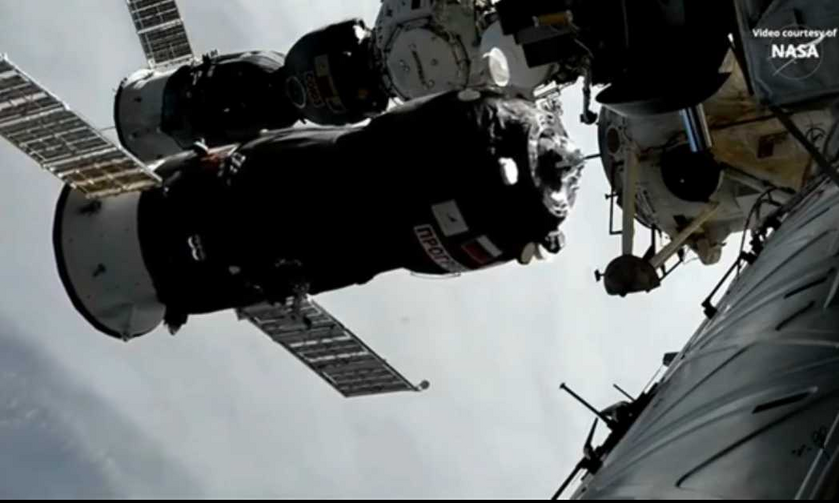
Roscosmos MS-36 Cargo Capsule Arrives At The ISS Carrying Over 2.4 metric tons Of Supplies

MS-36 or Progress 97 cargo capsule docked with the Rassvet module on the International Space Station (ISS) on Thursday (Nov. 26), at 1208 UTC, arriving three minutes ahead of schedule. The uncrewed cargo spacecraft launched from the Baikonur Cosmodrome in Kazakhstan at 1017 UTC, on Nov. 24, atop a Soyuz-2.1b rocket, completing a two-day autonomous journey to deliver approximately three tons of essential provisions.

In a unique operational change, the spacecraft docked at the Rassvet module to allow crew members to unload cargo, avoiding the sealed PrK transfer tunnel at the Zvezda service module which has an ongoing air leak.

MS-36 carried 750 kilograms(kg) of fuel, 51 kg of oxygen, 420 kg of drinking water, and 261 kg of food for the Expedition 75 crew, alongside 657 kg of equipment for various scientific experiments. A primary payload is the Teledroid humanoid robot’s control system, designed to assist cosmonauts with external maintenance tasks in vacuum and extreme temperatures.

After unloading, MS-36 is scheduled to relocate to Zvezda’s aft port to perform orbital reboosts, marking the first time a cargo mission splits unloading and engine burns across two different ports. The capsule will remain attached for about six to eight months before departing for a destructive re-entry to dispose of station waste.

=================

Roscosmos Soyuz-2.1b rocket launched the Progress MS-36 (a.k.a. Progress 97) cargo spacecraft to the International Space Station(ISS) Tuesday (Nov. 24) at 1017 UTC from Site 31 at the Baikonur Cosmodrome in Kazakhstan, carrying over 2.4 metric tons of supplies for the Expedition 75 crew aboard ISS.

MS-36 reached orbit and is scheduled to autonomously dock with the ISS's Poisk module on Thursday. Then cosmonauts currently living on the ISS — Pyotr Dubrov, Anna Kikina and Sergey Teteryatnikov — will unload Progress 97 through Poisk. But the freighter will then hop over to a different port aft one of the PrK transfer tunnel to perform ISS orbit-reboosting engine burns, leading it to Russia's Zvezda service module, marking the first cargo mission to split unloading and orbital correction across different ports.

A primary payload on MS-36, is the control system for the Teledroid, a torso-type humanoid robot with 30 degrees of freedom developed by NPO Android Technics. Designed to assist cosmonauts during spacewalks, the robot can operate standard tools in vacuum and extreme temperatures; it will be tested via virtual simulation, internal pressurized trials, and external operations on the station’s exterior.

MS-36 will likely stay docked to the ISS for about six months, after which it will be loaded up with trash and sent home to burn up in Earth's atmosphere.

MS-36 launch was significantly delayed from its original August 2026 target due to the collapse of the service platform at Baikonur’s Site 31 in November 2025, which required approximately three months for repairs. Other than SpaceX's Dragon capsule, which is reusable and makes parachute-aided ocean splashdowns at the end of its missions, Japan's HTV-X vehicle and Northrop Grumman's Cygnus spacecraft are expendable.

Read full Article
November 25, 2026
post photo preview
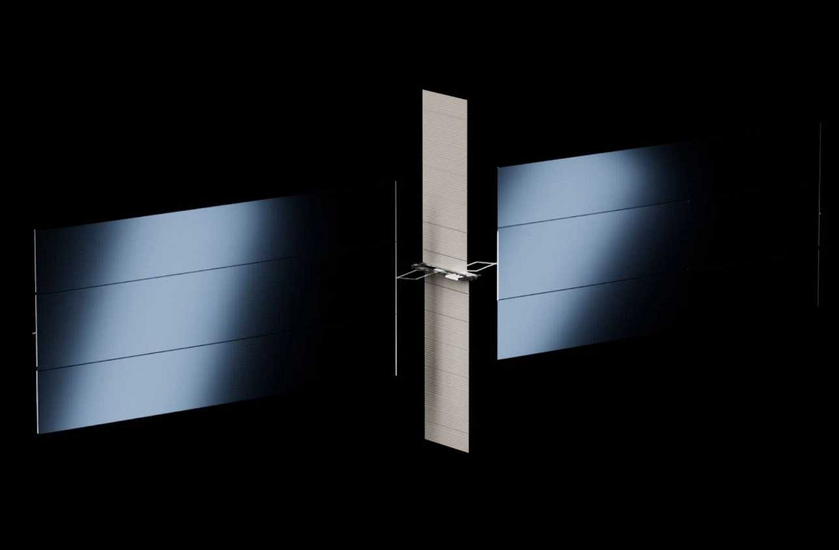
Starmind: US Regulators Approve SpaceX Plan To Deploy 1 Million Space Data Center Satellites

The U.S. Federal Communications Commission, FCC approved SpaceX’s plan to deploy up to 1 million Starmind satellites for orbital data centers, marking the first authorization in U.S. history for a space-based data center constellation.

According to the 15-year FCC license, SpaceX is required to deploy first satellite by Nov 2033; 100,000 by Nov 2035; 500,000 by Nov 2038; full 1 million by Nov 2040. The satellites will orbit at 500–1,002 kilometers, using 210 kilowat(kW) solar arrays, 250 kW peak compute, and laser links to Starlink; with Ka-band frequewncies authorized for backup and emergency communications only.

FCC Chairman Brendan Carr in a statement declared, “America is leading the world into the era of super intelligence... The FCC supercharges that effort today by granting, for the first time ever, authorization to deploy 1 million orbital compute modules for data centers in space. This action opens a bold new frontier for the computing infrastructure needed to power America’s leadership and growth.”

He added, “Compute campuses or data centers are essential to sustaining America’s leadership in SI. By moving compute capacity beyond Earth, SpaceX and the many competitors working on their own orbital data centers are meeting the moment. This is the kind of American ingenuity that can unite our strengths in space and advanced technology, reinforce our economic leadership, and expand prosperity here at home.”

The FCC noted the system “promises to bring the human race closer to a Kardashev II civilization—one that can harness the full power of the sun.”

Elon Musk in an X post responding to Musk, wrote: “Much appreciated. This will be a great asset to America and the world.”

SpaceX must file a final debris mitigation plan before deploying above 600 km; a request to park retired satellites in disposal orbits was deferred. Petitions from Amazon Leo, Viasat, and the American Astronomical Society were dismissed; the AAS said it's “disheartened and dismayed” by the decision.

Applied in Jan 2026 after SpaceX acquired xAI; the plan was featured in SpaceX’s June IPO pitch. The first-generation AI1 satellite, built on Nvidia Vera Rubin NVL72 racks, could launch as early as Q3 2027

Read full Article
November 24, 2026
post photo preview
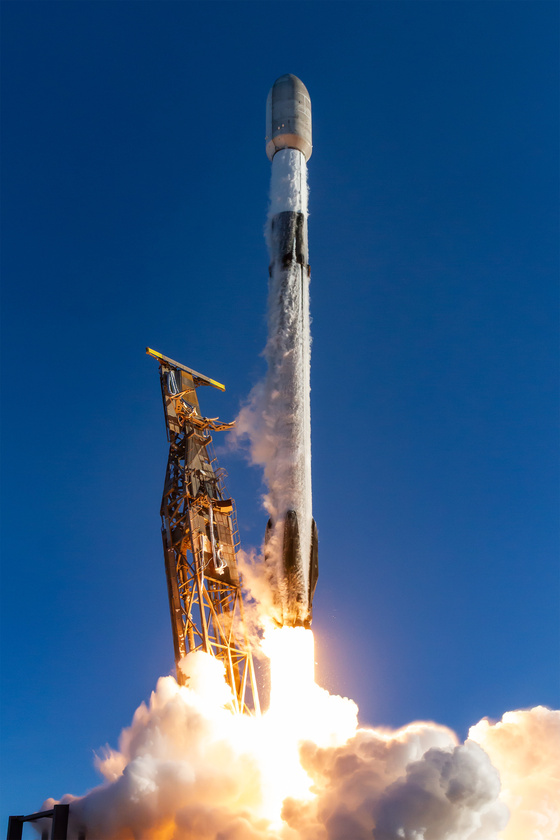
USSF-266: SpaceX Falcon 9 Launches Mysterious Payload To Orbit For The US Space Force

SpaceX Falcon 9 launched the USSF-266 mission for the U.S. Space Force on Tuesday (Nov. 24), at 1608 UTC from Space Launch Complex 4E (SLC-4E), Vandenberg Space Force Base, carrying classified payload to be deployed into a polar low-Earth orbit.

Following stage separation less than three minutes into the ascent, the Falcon 9 Block 5 first-stage booster, B1081 executed a controlled reentry and successfully landed vertically on the autonomous droneship Of Course I Still Love You (OCISLY) in the Pacific Ocean, about 8 minutes after liftoff. A historic milestone for B1081 by completing its 29th flight. This landing marked the 236th successful recovery for OCISLY and the 681st overall booster landing in SpaceX’s history.

USSF-266 is the third mission in the TH series for the Space Force’s Sensing and Targeting portfolio, following TH-1 (USSF-259) and TH-2 (USSF-481). Each prior mission in this series resulted in the cataloging of 17 new objects, suggesting the deployment of multiple satellites built on SpaceX’s Starshield bus.

Read full Article
See More
Available on mobile and TV devices
google store google store app store app store
google store google store app tv store app tv store amazon store amazon store roku store roku store
Powered by Locals