keneci Network
News • Comedy • Science & Tech
Starshield Restriction Disrupts Ukraine's Drone Missions Against Russia
October 15, 2026
post photo preview

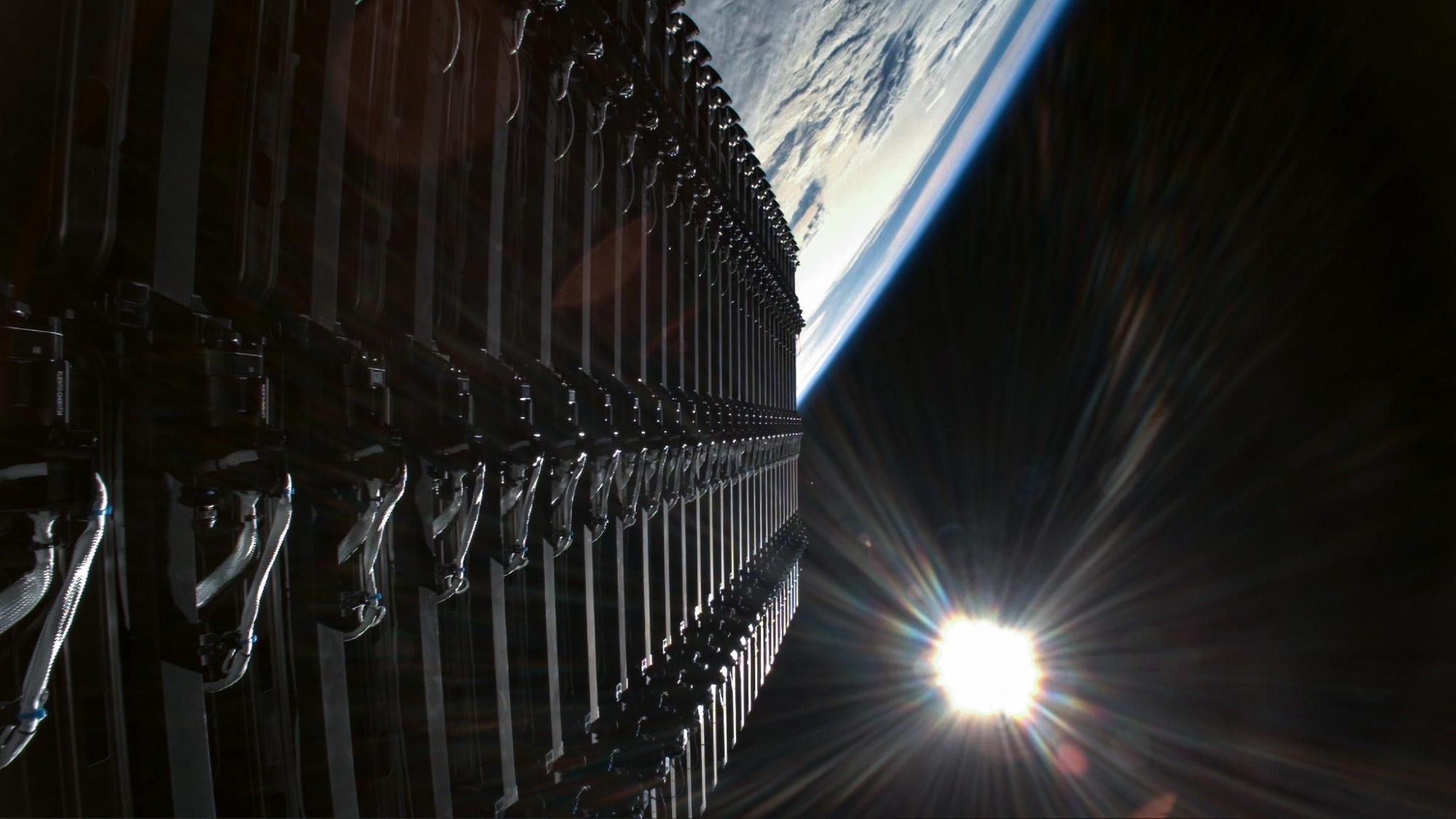
A 160 kilometer/hour(km/h) speed limit was imposed Wednesday, on Starshield terminals -- SpaceX's military-grade version of its Starlink satellite communications service -- without prior warning to Ukrainian forces. This restriction caused connectivity drops at speeds as low as 72 km/h in some units, forcing the cancellation of several drone missions, including mid-range strikes and air defense intercepts against Russian Shahed drones.

Starshield dedicated satellites are owned by the US government. SpaceX builds, launches, and maintains them as contractor. Pentagon has ownership and operational oversight -- with mission directors, kill switches in Government-owned, contractor operated (GOCO) setups -- but day-to-day operations still rely on SpaceX personnel, infrastructure, and cooperation.

The Starshield deployment in Ukraine operates under a Pentagon-funded contract covering about 3,000 hardened military terminals, valid until mid-May 2027.

While commercial Starlink Mini terminals naturally cap out near 160 km/h, military-grade Starshield terminals were specifically integrated into high-speed aircraft and interceptor drones to counter jet-powered Russian Shahed drones. When these Ukrainian drones exceeded 160 km/h during target intercepts, the satellite links dropped immediately, causing several high-priority missions to fail, according to Ukraine's 7th Rapid Reaction Corps.

Ukrainian officials said this restriction undermined their most effective current defense against jet-powered Shahed drones. Defense technology advisor Serhii Beskrestnov ("Flash") and Ukrainian drone unit commanders reported that the geo-fencing and velocity restrictions were enacted without advance notice. He claimed the move was "not a coincidence" and linked it to the current political situation, noting that U.S. President Donald Trump had recently demanded Kyiv stop striking Russian oil refineries.

Ukraine's President Volodymyr Zelensky and senior advisers raised concerns about the timing, noting that Russian forces appeared to exploit the gap during air attacks overnight. He described the disruption as a "pity" in an interview with Piers Morgan after meetings in London with British leaders. "It's a big mistake... people will die," he said, and emphasized continued reliance on U.S. partnership.

Ukrainian officials reportedly reached out to representatives of U.S. President Trump's administration, the U.S. DoD, and SpaceX leadership to request an exemption for high-speed interceptor systems defending against missile and drone strikes.

SpaceX CEO Elon Musk clarified the distinction between commercial Starlink and government Starshield. "Starshield systems are owned and controlled by the US government," he wrote on X replying to Ukrainian Defense Minister Mykhailo Fedorov. "Any limits on speed or usage are decided by the US military and ultimately POTUS. Starlink is a commercial service owned and controlled by SpaceX. Usage of Starlink is limited to civilian or defensive activities and cannot be used for offensive military action, as doing so would be inappropriate for a commercial company."

By the evening Wednesday, the Ukrainian Defense Ministry reported that connection quality had improved at speeds up to 160 km/h, though the speed cap remained in place.

Poland, which funded over 29,000 Starlink and Starshield terminals provided to Ukraine, publicly cautioned SpaceX and U.S. leadership regarding unilateral restrictions that compromise Eastern European frontline defense operations.


community logo
Join the keneci Network Community
To read more articles like this, sign up and join my community today
0
What else you may like…
Videos
Posts
Articles
SpaceX Starlink Internet Satellites

With Starlink internet, data is continuously being sent between a ground dish and a Starlink satellite orbiting 550km above. Furthermore, the Starlink satellite zooms across the sky at 27,000 km/hr! MORE VIDEOS ON KENECI NETWORK RUMBLE CHANNEL: https://rumble.com/c/Keneci

00:28:08
Elon Musk, DOGE Speak On Waste And Fraud

US Department of Government Efficiency Services (USDS) led by Elon Musk speak on the "mind-boggling" fraud and waste in UInited States federal government

00:00:45
January 17, 2025
SpaceX Launches Starship 7th Test Flight

SpaceX successfully executed its second-ever “chopsticks” catch of a Super Heavy booster (or Booster 14) using the “Mechazilla” launch tower on Thursday(Jan. 16), during the seventh uncrewed test flight of the company's 123-meter Starship rocket. However, the megarocket's upper stage(or Ship 33) was lost approximately 8.5 minutes into the flight in a “rapid unscheduled disassembly(RUD)” or explosion

00:10:30
Welcome to Keneci Network!

Join the conversations!

December 09, 2025
Bitcoin White Paper By Satoshi Nakamoto

Bitcoin white paper

Bitcoin_White_Paper.pdf
September 17, 2024
Charges Against Sean 'Diddy' Combs In Grand Jury Indictment

The rapper was charged with racketeering conspiracy, sex trafficking by force, fraud or coercion, and transportation to engage in prostitution in the indictment unsealed Tuesday(Sept. 17)

Combs-Indictment-24-Cr.-542.pdf
post photo preview
USSF-266: SpaceX Falcon 9 Launches Mysterious Payload To Orbit For The US Space Force

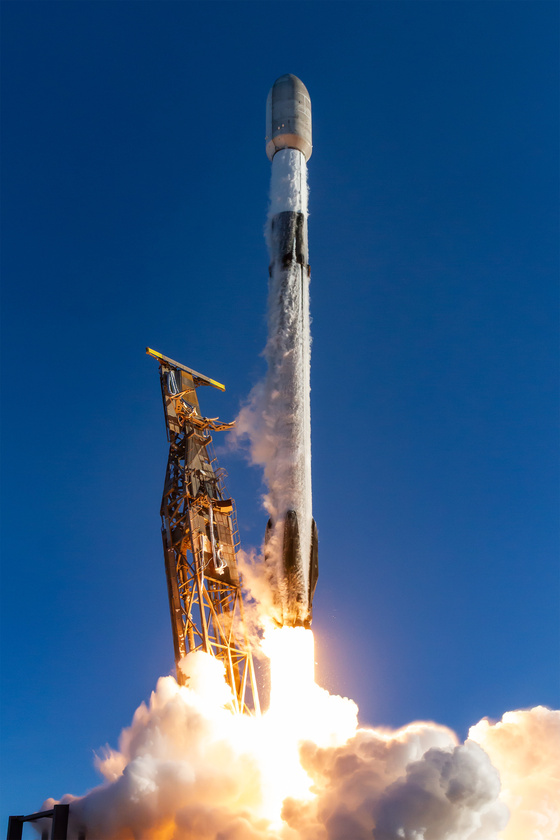
SpaceX Falcon 9 launched the USSF-266 mission for the U.S. Space Force on Tuesday (Nov. 24), at 1608 UTC from Space Launch Complex 4E (SLC-4E), Vandenberg Space Force Base, carrying classified payload to be deployed into a polar low-Earth orbit.

Following stage separation less than three minutes into the ascent, the Falcon 9 Block 5 first-stage booster, B1081 executed a controlled reentry and successfully landed vertically on the autonomous droneship Of Course I Still Love You (OCISLY) in the Pacific Ocean, about 8 minutes after liftoff. A historic milestone for B1081 by completing its 29th flight. This landing marked the 236th successful recovery for OCISLY and the 681st overall booster landing in SpaceX’s history.

USSF-266 is the third mission in the TH series for the Space Force’s Sensing and Targeting portfolio, following TH-1 (USSF-259) and TH-2 (USSF-481). Each prior mission in this series resulted in the cataloging of 17 new objects, suggesting the deployment of multiple satellites built on SpaceX’s Starshield bus.

Read full Article
post photo preview
LE-04: Ariane 6 Rocket Launches 36 Amazon Leo Satellites

An Ariane 6 rocket carrying 36 Amazon Leo satellites lifted off from Europe's Spaceport in Kourou, French Guiana, at 1114 UTC Tuesday(Nov. 24), on the A271 (or LE-04) mission, marking the 10th flight of the Ariane 6 rocket and the fourth launch dedicated to Amazon’s constellation in 2026.

The rocket flew in the Ariane 64 variant, equipped with four P160C enhanced-performance solid rocket boosters (A64 VA271) to maximize payload capacity. After a 2-hour and 4-minute flight, all 36 satellites were successfully deployed into Low Earth Orbit (LEO) at an altitude of about 460 kilometers.

This deployment brings the total number of Amazon Leo satellites placed in orbit by Arianespace to 136 in less than ten months, contributing to a global constellation currently numbering around 432 satellites, and aiming for eventually more than 3,200.

Amazon is expanding its broadband network to rival Starlink -- which currently consists of more than 11,000 satellites -- utilizing multiple launch providers including SpaceX, Blue Origin, and Arianespace to mitigate launch bottlenecks. Arianespace aims to increase its launch cadence to 12 flights per year by 2030.

LE-04 mission was critical for Amazon as it marked their first satellite deployment since a United Launch Alliance Vulcan Centaur rocket failed on November 15, resulting in the loss of 40 satellites. Vulcan will be grounded for a while as ULA investigates the failure and works to fix whatever caused it.

Blue Origin's New Glenn hasn't flown since April, when the rocket failed to deliver AST SpaceMobile's BlueBird 7 satellite to the proper orbit. The Ariane 6, the successor to Arianespace's Ariane 5 heavy lifter, debuted in July 2024 and has nine launches under its belt to date.

Tuesday's launch was originally scheduled for the previous day (Nov. 23) but was scrubbed due to a technical issue affecting the rocket’s ground support systems according to Arianespace. The countdown was halted before mobile gantry removal, though the rocket and satellites remained in stable, safe conditions.

Read full Article
post photo preview
MS-36: Roscosmos Soyuz-2.1b Launches Progress 97 Cargo Mission To The ISS

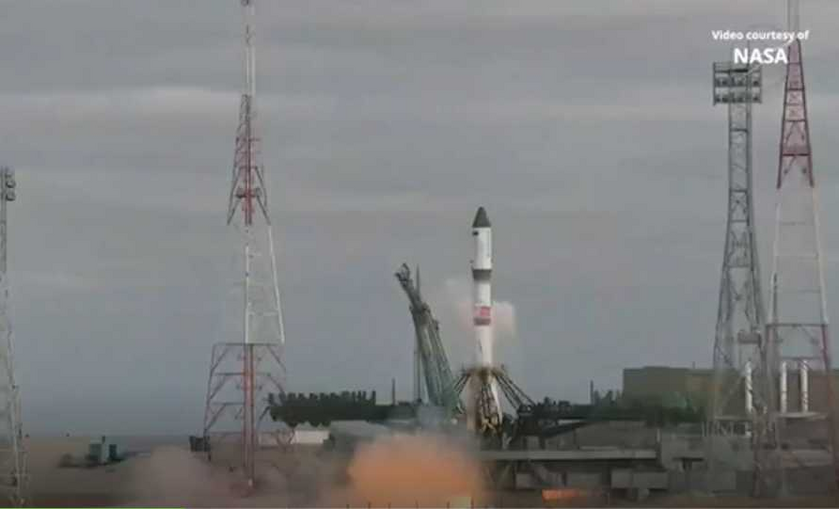
Roscosmos Soyuz-2.1b rocket launched the Progress MS-36 (a.k.a. Progress 97) cargo spacecraft to the International Space Station(ISS) Tuesday (Nov. 24) at 1017 UTC from Site 31 at the Baikonur Cosmodrome in Kazakhstan, carrying over 2.4 metric tons of supplies for the Expedition 75 crew aboard ISS.

MS-36 reached orbit and is scheduled to autonomously dock with the ISS's Poisk module on Thursday. Then cosmonauts currently living on the ISS — Pyotr Dubrov, Anna Kikina and Sergey Teteryatnikov — will unload Progress 97 through Poisk. But the freighter will then hop over to a different port aft one of the PrK transfer tunnel to perform ISS orbit-reboosting engine burns, leading it to Russia's Zvezda service module, marking the first cargo mission to split unloading and orbital correction across different ports.

A primary payload on MS-36, is the control system for the Teledroid, a torso-type humanoid robot with 30 degrees of freedom developed by NPO Android Technics. Designed to assist cosmonauts during spacewalks, the robot can operate standard tools in vacuum and extreme temperatures; it will be tested via virtual simulation, internal pressurized trials, and external operations on the station’s exterior.

MS-36 will likely stay docked to the ISS for about six months, after which it will be loaded up with trash and sent home to burn up in Earth's atmosphere.

MS-36 launch was significantly delayed from its original August 2026 target due to the collapse of the service platform at Baikonur’s Site 31 in November 2025, which required approximately three months for repairs. Other than SpaceX's Dragon capsule, which is reusable and makes parachute-aided ocean splashdowns at the end of its missions, Japan's HTV-X vehicle and Northrop Grumman's Cygnus spacecraft are expendable.

Read full Article
See More
Available on mobile and TV devices
google store google store app store app store
google store google store app tv store app tv store amazon store amazon store roku store roku store
Powered by Locals