keneci Network
News • Comedy • Science & Tech
SpaceX Crew-13 Mission Astronauts Arrive At The ISS, In Fastest US Spaceflight To The Orbital Station
October 01, 2026
post photo preview

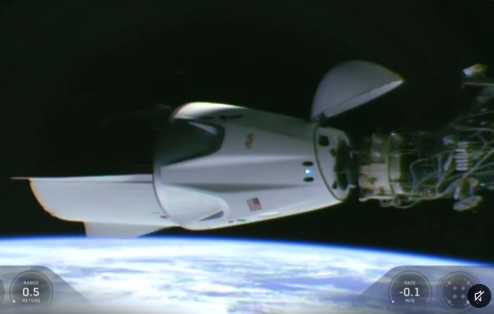
SpaceX Crew-13 mission's Crew Dragon Grace successfully docked to the forward-facing port of the International Space Station (ISS)'s Harmony module, at 2305 UTC on Thursday (Oct. 1), completing the fastest U.S. spaceflight to the station in history. Grace, launched from Florida’s Cape Canaveral Space Force Station at 1510 UTC, reached the ISS in just 7 hours and 55 minutes, breaking the previous record by approximately five hours.

The previous record was 12 hours and 33 minutes, set in November 2024 by SpaceX's Dragon cargo capsule during the robotic CRS-31 resupply flight. The fastest that astronauts had made the trip in a U.S. vehicle was 14 hours and 43 minutes, which was achieved by the Crew-11 mission in August 2025.

"We got lucky this time," Julianna Scheiman, director of NASA science and Dragon programs at SpaceX, said during Crew-13's post-launch press conference today.

"The space station was in an opportune spot in space, and the orbital mechanics, the physics of it all, worked out for it to be the shortest launch-to-docking time we've had to date," she said, adding that "this is close to the fastest it could be."

Crew-13 didn't set the overall speed record to the ISS, however — not even close. In May 2020, a Russian Soyuz spacecraft carrying three astronauts reached the orbiting lab just 3 hours and 3 minutes after lifting off from Baikonur Cosmodrome in Kazakhstan. The Soyuz caught up to the ISS after just two orbits of Earth.

The Soyuz isn't faster or more powerful than a cargo or crew-carrying Dragon capsule. Rather, the difference in chase-down times comes down primarily to choices made by mission controllers; Russia tends to target more aggressive "fast-track" trajectories.

Crew-13 mission crew consists of mission Commander and NASA astronaut Jessica Watkins, mission pilot and NASA astronaut Luke Delaney, mission pilot and Canadian Space Agency astronaut Joshua Kutryk and Roscosmos cosmonaut Sergey Teteryatnikov. They joined the Expedition 75 core crew and the departing SpaceX Crew-12 astronauts, temporarily raising the orbital station's population to 11.

Crew-13 astronauts' mission includes conducting scientific research on stem-cell derived tissues for Parkinson’s and heart disease, testing zero-g crop production, and performing routine station maintenance.

The new crew will relieve the four astronauts of Crew-12 mission, which launched in mid-February. NASA astronauts Jessica Meir and Jack Hathaway, the ESA's Sophie Adenot and cosmonaut Andrey Fedyaev, will return to Earth in their Crew Dragon capsule this month, according to NASA officials.


community logo
Join the keneci Network Community
To read more articles like this, sign up and join my community today
0
What else you may like…
Videos
Posts
Articles
SpaceX Starlink Internet Satellites

With Starlink internet, data is continuously being sent between a ground dish and a Starlink satellite orbiting 550km above. Furthermore, the Starlink satellite zooms across the sky at 27,000 km/hr! MORE VIDEOS ON KENECI NETWORK RUMBLE CHANNEL: https://rumble.com/c/Keneci

00:28:08
Elon Musk, DOGE Speak On Waste And Fraud

US Department of Government Efficiency Services (USDS) led by Elon Musk speak on the "mind-boggling" fraud and waste in UInited States federal government

00:00:45
January 17, 2025
SpaceX Launches Starship 7th Test Flight

SpaceX successfully executed its second-ever “chopsticks” catch of a Super Heavy booster (or Booster 14) using the “Mechazilla” launch tower on Thursday(Jan. 16), during the seventh uncrewed test flight of the company's 123-meter Starship rocket. However, the megarocket's upper stage(or Ship 33) was lost approximately 8.5 minutes into the flight in a “rapid unscheduled disassembly(RUD)” or explosion

00:10:30
Welcome to Keneci Network!

Join the conversations!

December 09, 2025
Bitcoin White Paper By Satoshi Nakamoto

Bitcoin white paper

Bitcoin_White_Paper.pdf
September 17, 2024
Charges Against Sean 'Diddy' Combs In Grand Jury Indictment

The rapper was charged with racketeering conspiracy, sex trafficking by force, fraud or coercion, and transportation to engage in prostitution in the indictment unsealed Tuesday(Sept. 17)

Combs-Indictment-24-Cr.-542.pdf
post photo preview
Tesla Q3 2026 Earnings Call: Company Beats Revenue Expectations

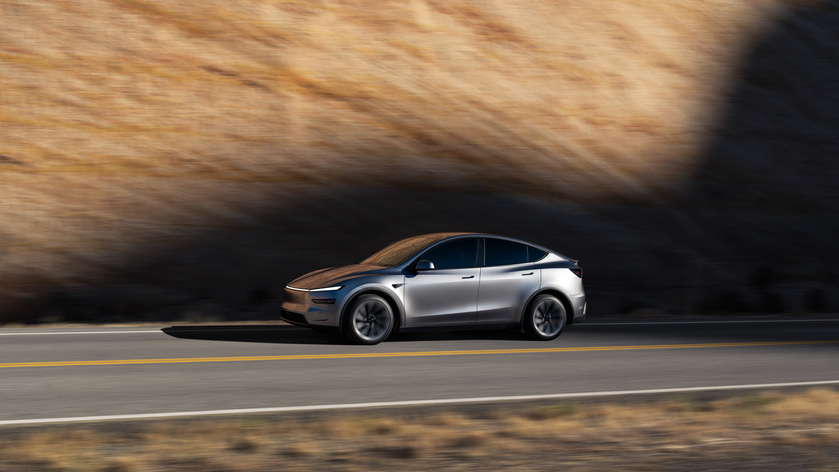
Tesla reported its third quarter (Q3 2026) revenue of $28.05 billion, slightly beating estimates, while non-GAAP EPS of $0.48 exceeded the $0.43 consensus, despite a 56% year-over-year drop in operating income due to heavy spending on AI and Optimus humanoid robots.

Tesla delivered 486,532 vehicles, with CEO Elon Musk saying demand is "exceeding production by a significant margin," driven largely by Full Self-Driving (FSD) interest. While core automotive revenue fell 3% to $20.56 billion, services and other revenue surged 33% to $4.61 billion, hitting a record gross profit.

“We believe that FSD is driving demand in markets where it is available, and we continue to work with regulators to get it approved in other markets,” the company said in its investor deck.

Ashok Elluswamy, Tesla’s vice president of Autopilot, said on the earnings call that the company plans to give some customer cars access to its forthcoming FSD (Unsupervised) systems around the second quarter of next year.

Auto gross margins rebounded to 18.1%, and overall gross margin expanded by 160 basis points to 19.6%, though high R&D costs suppressed net income.

The Cybercab, Tesla’s two-seat autonomous robotaxi, launched unsupervised service in Austin, Texas, with the fleet growing by a factor of 10 since launch.

Tesla plans to expand the Cybercab fleet to Dallas in November and other cities by year-end, with the Robotaxi service expected to contribute financially in 2027. Musk clarified that the Cybercab will primarily operate as a Tesla-owned transport-as-a-service, distinct from consumer vehicles like the Model 3 and Model Y.

The vehicle utilizes 50% fewer parts than other Tesla models, with production ramping at Giga Texas to support both internal fleet needs and future customer deliveries.

“It’s not like going to move the needle this quarter,” Musk said, “I think it starts to become noticeable in Q2 and then probably a big deal by Q3 or Q4 of next year.”

Barring regulatory intervention and protectionism, Musk predicted that Tesla “will end up doing a majority of all passenger miles on Earth in any country where it is allowed to operate freely.”

Tesla maintains its target of 5 million vehicles per year by 2030, with new factories in Berlin and Reno (Semi) supporting this expansion.

Optimus humanoid robots have entered production, with Musk noting that the AI architecture is still being refined to handle open-ended tasks without pre-programmed exoskeletons. Tesla aims to ship Optimus to customers in about a year, targeting an annualized production rate of 20,000 units per week by mid-2027.

An Optimus video demonstrating non-preprogrammed tasks is expected within a month, and the Tesla AI5 chip integration is slated for April 2027.

Capital expenditure for Optimus and AI compute is rising, with Musk highlighting the massive scale of the Terafab chip plant, which will cost tens of billions in equipment shared with SpaceX.

Tesla returned to positive free cash flow of $1.53 billion, down from $3.99 billion in the prior year, while maintaining $45.4 billion in cash and investments. Musk lowered the annual capital spending forecast to about $20 billion, down from the previous $25 billion+ guidance, citing efficiency in current projects.

Read full Article
October 20, 2026
post photo preview
Elon Musk Favors SpaceX-Tesla Merger, As Company Beats Revenue Expectations: Q3 2026 Earnings Call

SpaceX reported $14.58 billion in Q3 2026 revenue, a 161% year-over-year increase that significantly beat Wall Street estimates of approximately $12.7 billion. The company achieved its first-ever profitable quarter with $4.4 billion in net income and $0.35 in adjusted EPS, driven primarily by explosive growth in its Artificial Intelligence segment, which saw revenue surge 830% to $7.6 billion.

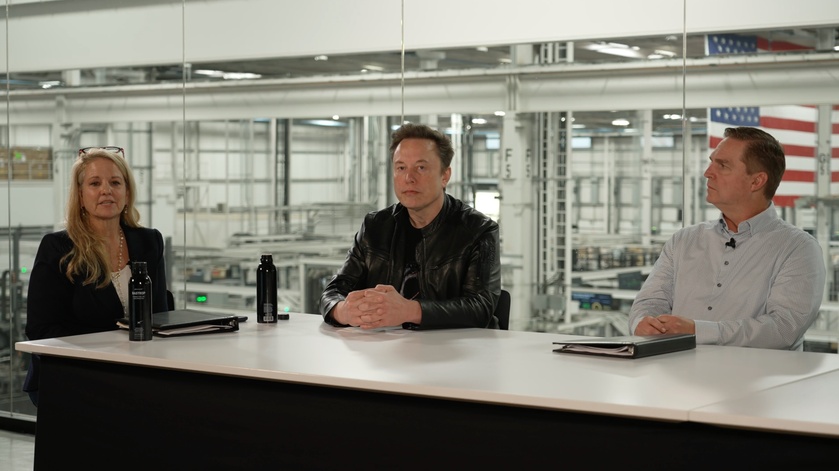
During the livestreamed Q3 2026 earnings call, CEO Elon Musk, President Gwynne Shotwell and CFO Bret Johnsen discussed Starlink mobile, Starship, AI data center buildout and possible SpaceX-Tesla merger.

Musk said that forming a merger with Tesla would be a "good idea" and confirmed that special committees of independent directors have been established at both companies to discuss the tie-up. He cautioned that the merger is not a certainty and noted the high hurdle of requiring a 50% vote of all Tesla shares.

"I do think there’s a lot of merit to combining the companies as we are pretty much in the superintelligence singularity, and there’s a lot to be gained from cooperating,” Musk said, referring to the development of software, chips and more.

“Do I think it would be a good idea? Yes,” Musk said. “But at the end of the day, the shareholders have to be supportive of this.”

Musk said that on the Tesla side, “we will need a 50% vote of all shares -- not just those who vote -- but of all shareholders, and that’s quite a high hurdle.”

The Connectivity segment reported $5.2 billion in revenue with 13.6 million consumer subscribers. Starlink Mobile surpassed 22 million monthly users, with new carrier partnerships activated in countries such as Uganda, the Democratic Republic of Congo, and Costa Rica.

Musk highlighted relentless demand from hyperscalers for SpaceX data centers, citing investments in the Colossus infrastructure and AI offerings like Grok. The AI segment's rapid growth is attributed to cloud services, the acquisition of Cursor, and increased enterprise adoption of Grok. He also said on that SpaceX aims to reach “volume production” of AI chips, now in development with partners Tesla and Intel, during the third quarter of 2028 at the Terafab factory that’s planned in Texas.

SpaceX successfully launched its first revenue-generating Starship mission, deploying 26 Starlink V3 satellites. Musk emphasized the goal of fully recovering the orbital launch vehicle and targeting a crucial orbital refueling demonstration for early 2027.

Johnsen forecasted Q1 2027 revenue between $33 billion and $37 billion, while Musk projected annual recurring revenue could reach $500 billion to $1 trillion by the end of 2027. Capital expenditures came in at $19.59 billion, slightly above estimates but lower than anticipated given the scale of AI investments.

This was SpaceX’s second-ever public earnings report following its June 2026 IPO. The company’s valuation sits at approximately $2 trillion, while Tesla is valued at roughly $1.5 trillion. The shift to profitability marks a significant transition for the spaceflight giant, with its AI and satellite communications units now outpacing its traditional launch services in revenue contribution.

Read full Article
October 20, 2026
post photo preview
Bandwagon-5: SpaceX Falcon 9 Deploys Starfall, 31 Other Payloads On Rideshare Mission

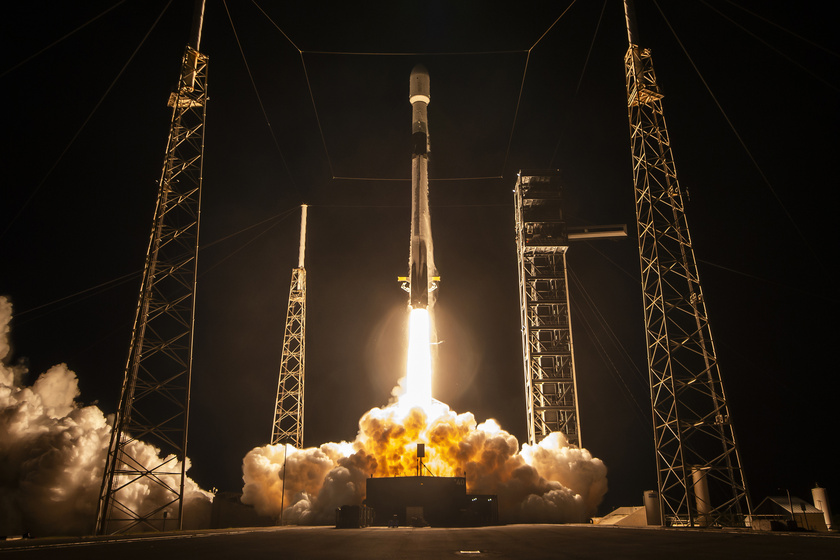
SpaceX Falcon 9 launched the Bandwagon-5 rideshare mission on Tuesday (Oct. 20), at 1104 UTC from Space Launch Complex 40 (SLC-40) at Cape Canaveral Space Force Station, Florida, carrying 32 payloads, including the company’s own Starfall reentry capsule.

The Falcon 9 first stage booster B1085 landed on the droneship A Shortfall of Gravitas** in the Atlantic Ocean about nine minutes after liftoff as planned. B1085 previously supported 18 missions including Crew-9, RRT-1, Blue Ghost M1, Fram2, SXM-10, MTG-S1, EchoStar XXV, SXM-11 and 10 Starlink missions.

About 57 minutes after liftoff, the Falcon 9 upper stage started deploying the 32 payloads, with Starfall separating from the upper stage 2 hours and 48 minutes after launch. The payloads include a mix of cubesats and microsats for commercial, government, and research customers across a mid-inclination low Earth orbit.

Standing 0.75 meters tall and 3.1 meters wide, Starfall is a 2,100-kilogram disk-shaped, uncrewed reentry vehicle designed for affordable point-to-point cargo delivery and returning microgravity-manufactured goods. It can return up to 1,000 kilograms of payload to Earth. This flight marked the capsule's second demonstration mission, following its debut on June 23, 2026.

"Starfall enables affordable, routine access to a microgravity environment, providing unique opportunities for on-orbit manufacturing, scientific research, and testing," SpaceX wrote on X.

Starfall wasn't the only reentry capsule on Bandwagon-5. Among the other 31 payloads, was W-Series 7, the latest orbital "mini-factory" built and operated by the California company Varda Space Industries. The W-Series spacecraft are designed to both host the production of valuable goods such as pharmaceuticals and bring them safely down to Earth, the company has said.

The other payloads on Bandwagon-5 are a mix of "cubesats and microsats," according to SpaceX's mission description. Among them are Pelican-12, a sharp-eyed Earth-observation satellite built by the San Francisco company Planet; and payloads from operators such as Tomorrow.io, Capella Space, Umbra Lab, HawkEye 360 (radio-frequency monitoring), Iceye, and Xona Space Systems.

Bandwagon is one of two SpaceX rideshare programs that deploy several payloads at a time for various customers. The other, known as Transporter, has been busier, flying 18 missions to date.

Read full Article
See More
Available on mobile and TV devices
google store google store app store app store
google store google store app tv store app tv store amazon store amazon store roku store roku store
Powered by Locals