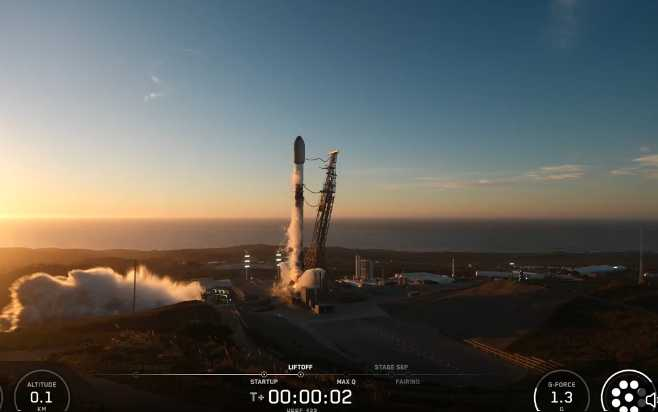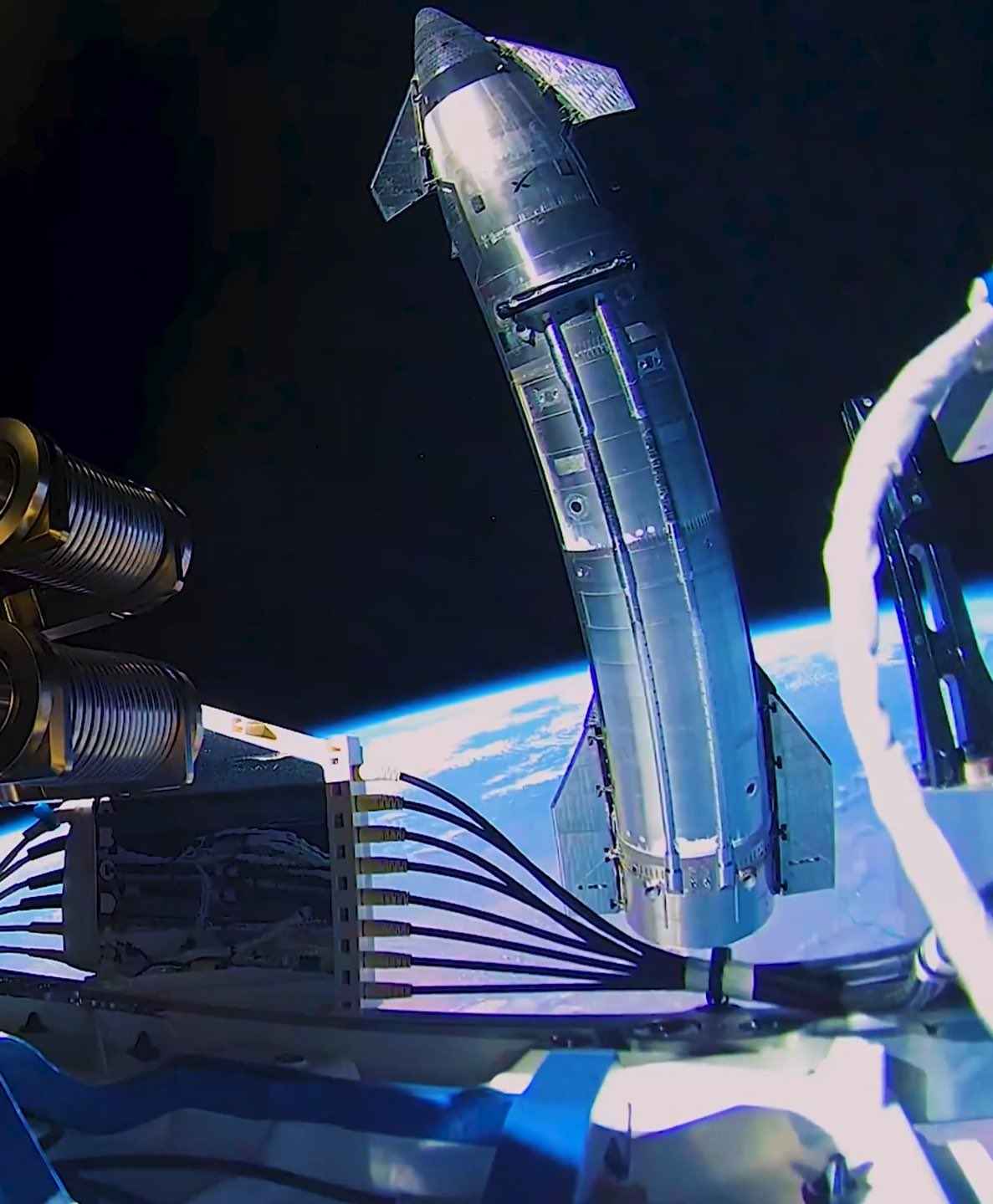
SpaceX’s Starship megarocket, standing approximately 124 meters tall, lifted off from Starbase in South Texas at 1248 UTC Monday (Sept. 28) for its 14th test flight. This mission marked the first-ever orbital launch of the world’s largest and most powerful rocket, achieving a critical milestone after 13 previous suborbital tests.
Flight 14 is the third Starship launch to feature Version 3 of the vehicle, a relatively mature iteration that's capable of deploying satellites and reaching the moon and Mars, among other tasks.
After liftoff, two of Super Heavy's engines shut down but that didn't stop the booster (B21) from completing hot-staging, separation and controlled splashdown in the Gulf of Mexico about seven minutes after liftoff. Meanwhile, the upper stage or Ship 41 continued on its upward ascent.
SpaceX spokesperson Dan Huot initially announced orbit insertion was called off, only to reverse course as flight controllers decided to press ahead.
"We are not giving up yet," Huot said. "We will continue to hang out."
And the call came just a few minutes later: Starship was "go" for orbit.
Ship 41 successfully reached orbit about 25 minutes after liftoff using a single Raptor engine burn. Despite an engine shutdown during ascent, the vehicle reached an altitude of roughly 275 kilometers.
"Starship is orbital," mission control confirmed, eliciting cheers from the SpaceX employees watching the launch live at Starbase.
"First orbital flight of Starship successful!" SpaceX CEO Elon Musk said on SpaceX's X platform.
Starship proceeded to deploy 26 next-generation Starlink V3 satellites from the space vehicle's PEZ-style dispenser, over a 30-minute stretch starting at about 34 minutes after liftoff. These are the first members of a megaconstellation that will eventually consist of about 100,000 satellites, according to Musk.
This deployment was historic, as it was the first time Starship carried and released operational revenue-generating satellites, with previous flights using simulators or expendable payloads.
The Starlink V3 satellites are larger and more powerful than previous versions, with each rocket capable of carrying up to 60 such satellites in future operational missions. Three of the deployed satellites were equipped with cameras to image Starship’s heat shield tiles. SpaceX engineers will study this imagery to see if they can improve the heat shield, which allows the vehicle to survive the fiery trip down through Earth's atmosphere at the end of its missions.
After payload deployment, Ship 41 kept circling Earth for a while after deploying the Starlink satellites — though not nearly as long as originally planned. SpaceX wanted Ship to complete about six orbits and splash down off the coast of Chile 9 hours and 50 minutes after launch, but mission controllers decided to land nearly seven hours earlier.
Ship 41 started reentering our planet's atmosphere about two hours and 40 minutes after launch and went subsonic — breaking the sound barrier, in the fast-to-slow direction — 26 minutes later. The vehicle splashed down intact in the northern Pacific Ocean three hours and eight minutes after liftoff, causing another eruption of cheers from the folks gathered at Starbase. The Ship then toppled over and exploded when it hit the waves, providing a dramatic capper to a very exciting day for SpaceX.
The mission was originally planned to last about 10 hours, circling Earth six times before a Pacific Ocean splashdown. However, SpaceX opted to end the flight early, bringing Starship home after approximately three hours of orbital operations.
The vehicle splashed down in the Northern Pacific near Hawaii around 1500 UTC, with the Super Heavy booster having previously separated and splashed down in the Gulf of Mexico.
According to SpaceX's summary of Flight 14:
"On Monday, September 28 at 7:48 a.m. CT, Starship lifted off from Starbase, Texas on its 14th flight and first attempt to go to orbit. This was the first orbital Starship flight and the first to deliver meaningful payload to orbit with 26 Starlink V3 satellites.
"The mission began with the Super Heavy booster igniting all of its 33 Raptor 3 engines and ascending over the Gulf of America. During the initial climb to space, a single Raptor engine on the booster shutdown. The successful first-stage ascent was followed by a hot-staging maneuver and Starship’s upper stage igniting all six of its Raptor engines to continue onward to space.
"Super Heavy performed its directional flip maneuver and relit 31 of the planned 33 Raptor engines for the boostback burn. The boostback maneuver on this flight was intentionally designed to burn through the remaining liquid oxygen inside the booster’s main tank to test the limits of booster performance ahead of future return to launch site missions. The booster then reignited 11 of the planned 13 engines for the high-thrust portion of the landing burn before down-selecting to five engines for trajectory fine-tuning, and then down to three engines before splashing down in the Gulf. Upon landing burn shutdown, the Super Heavy’s flight termination system was triggered in a demonstration of the safety hardware.
"During Starship’s ascent burn, a single Raptor vacuum engine shut down early. Starship still achieved its planned, passively safe suborbital trajectory by burning its remaining five engines for longer than planned to compensate for the loss of thrust.
"After entering its suborbital trajectory, the flight control team assessed Starship’s systems and determined the three sea-level Raptors engines needed for subsequent burns were healthy and gave a “go” for orbital operations. Starship then reignited a single Raptor sea-level engine to perform an orbit insertion burn and entered into orbit around Earth for the first time.
"After a brief coast, Starship then deployed all 26 Starlink V3 satellites. Contact was made soon after with every satellite over laser links, ground stations, and Starlink user terminals. The satellites will now conduct on-orbit checkouts and raise their orbits before they begin serving customers.
"Following payload deploy, Starship entered into a coast phase around Earth. Out of an abundance of caution given the engine issue experienced during ascent, the flight control team decided to limit the duration spent on orbit and proceeded with deorbiting Starship to a splashdown location in the northern Pacific Ocean. This area was one of two pre-coordinated landing zones identified before launch that was cleared of sea and air traffic.
"Starship then relit a single Raptor sea-level engine and performed its first ever deorbit burn. That maneuver successfully brought the vehicle out of orbit and sent Starship through atmospheric reentry and descent to the intended splashdown point.
"The first orbital Starship flight concluded with the vehicle relighting all three Raptor sea-level engines in a landing burn and flip maneuver before splashing down on target in the Pacific Ocean."
Despite the shortened duration and the mid-flight engine anomaly, Musk and SpaceX officials declared the mission a major success because it achieved the primary objectives of reaching orbit and deploying operational payloads.
The success of Flight 14 validates Starship’s readiness for NASA’s Artemis program, where a modified version is selected to serve as the Human Landing System for returning astronauts to the Moon.