keneci Network
News • Comedy • Science & Tech
Yemen War: Houthi Attacks On Saudi Arabia Intensify Amid Escalating US-Iran Tensions
September 19, 2026
post photo preview

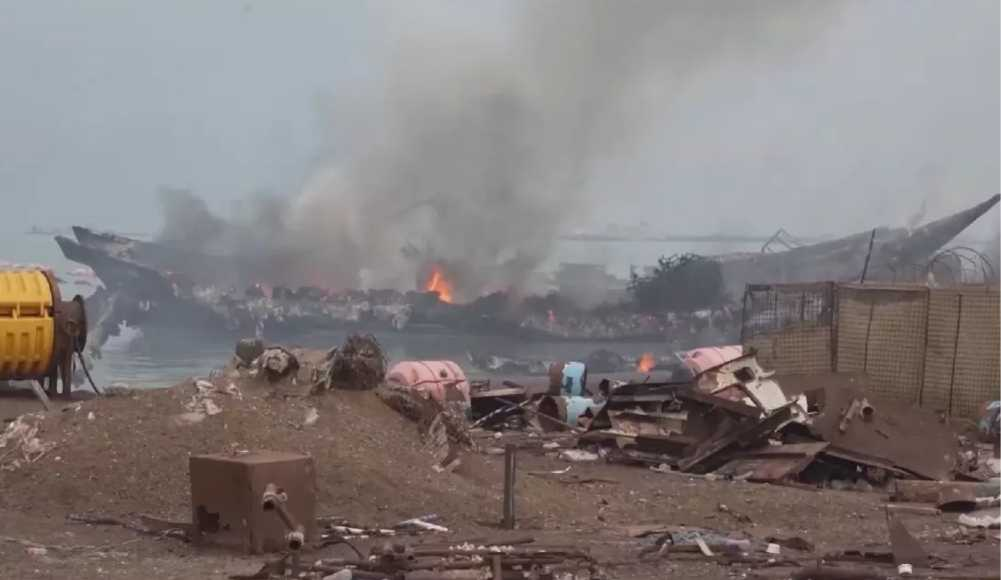
The conflict between the Houthis and Saudi Arabia has escalated in recent days, into a full-scale war, with the Houthis launching repeated missile and drone strikes on Saudi cities, oil infrastructure, and air bases, while Saudi warplanes have intensified airstrikes on Yemen, causing significant civilian casualties and displacement.

The Houthis claim to have targeted multiple high-value assets in southern and western Saudi Arabia using dozens of ballistic missiles and drones. Key targets include the Saudi Aramco facility in Yanbu, the King Khalid Air Base in Khamis Mushait, and the Abha International Airport.

Saudi authorities on Wednesday, warned of a "red line" after intercepting a Houthi drone near the holy city of Mecca, which Riyadh condemned as a terrorist attack.

The Houthis also released video claiming to have shot down a Saudi F-15 fighter jet over Marib Governorate using a locally manufactured surface-to-air missile, though Saudi authorities have not confirmed the loss.

The Saudi-led coalition has vowed to respond "firmly" to the Houthi aggression.

Saudi warplanes have conducted massive retaliatory campaigns, with Houthi spokesperson Yahya Saree alleging that up to 450 airstrikes were carried out across seven Yemeni provinces in a single week. Saudi F-15 fighter jets carried out dozens of airstrikes over Houthi-controlled territory, targeting weapons depots, launch sites, and troop movements in provinces including Taiz, Hajjah, and around Sanaa.

More recently, the Houthis accused Saudi Arabia of launching 26 attacks in just 24 hours, targeting Houthi-held territories in Taiz and Hajjah.

Houthi leadership seeks to compel Riyadh to ease remaining sea and air blockades on Houthi-controlled territory, facilitate public-sector salary payments from energy revenues, and halt support for anti-Houthi forces in Yemen.

While Saudi Arabia had spent recent years attempting to negotiate a direct diplomatic exit from the Yemeni civil war, the renewed cycle of strikes—initiated following Houthi moves near economic regions like Marib and Red Sea trade corridors—has severely disrupted the de-escalation pathway.

The United Nations Security Council condemned the attacks for causing civilian casualties and threatening maritime security in the Bab el-Mandeb strait.

The humanitarian situation in Yemen is critical, with the UN estimating that 125,000 people have been displaced since the start of September, and the Saudi-backed government reporting that approximately 150 civilians have been killed by Houthi forces since early September. The U.S. has tightened travel warnings for Saudi Arabia, banning government employees from traveling within 32 kilometers of the Yemen border.

The conflict has severely disrupted global energy supplies; Houthi attacks on Saudi pipelines and the Red Sea coast have disrupted up to 4% of global oil shipments and forced Saudi Arabia to rely more heavily on alternative routes.

This recent Yemen-Saudi Arabia escalation occurs against the backdrop of heightened Middle Eastern confrontations involving Iran, the U.S., and regional proxy forces. The Houthis have increasingly linked their military actions to broader regional dynamics, using long-range strike capabilities to pressure both Riyadh and international maritime security along Red Sea routes and the Bab al-Mandeb Strait.


community logo
Join the keneci Network Community
To read more articles like this, sign up and join my community today
0
What else you may like…
Videos
Posts
Articles
SpaceX Starlink Internet Satellites

With Starlink internet, data is continuously being sent between a ground dish and a Starlink satellite orbiting 550km above. Furthermore, the Starlink satellite zooms across the sky at 27,000 km/hr! MORE VIDEOS ON KENECI NETWORK RUMBLE CHANNEL: https://rumble.com/c/Keneci

00:28:08
Elon Musk, DOGE Speak On Waste And Fraud

US Department of Government Efficiency Services (USDS) led by Elon Musk speak on the "mind-boggling" fraud and waste in UInited States federal government

00:00:45
January 17, 2025
SpaceX Launches Starship 7th Test Flight

SpaceX successfully executed its second-ever “chopsticks” catch of a Super Heavy booster (or Booster 14) using the “Mechazilla” launch tower on Thursday(Jan. 16), during the seventh uncrewed test flight of the company's 123-meter Starship rocket. However, the megarocket's upper stage(or Ship 33) was lost approximately 8.5 minutes into the flight in a “rapid unscheduled disassembly(RUD)” or explosion

00:10:30
Welcome to Keneci Network!

Join the conversations!

December 09, 2025
Bitcoin White Paper By Satoshi Nakamoto

Bitcoin white paper

Bitcoin_White_Paper.pdf
September 17, 2024
Charges Against Sean 'Diddy' Combs In Grand Jury Indictment

The rapper was charged with racketeering conspiracy, sex trafficking by force, fraud or coercion, and transportation to engage in prostitution in the indictment unsealed Tuesday(Sept. 17)

Combs-Indictment-24-Cr.-542.pdf
post photo preview
Trump Backs Vance's Remarks Over Iran War, Denies Reports He's Unhappy With Him

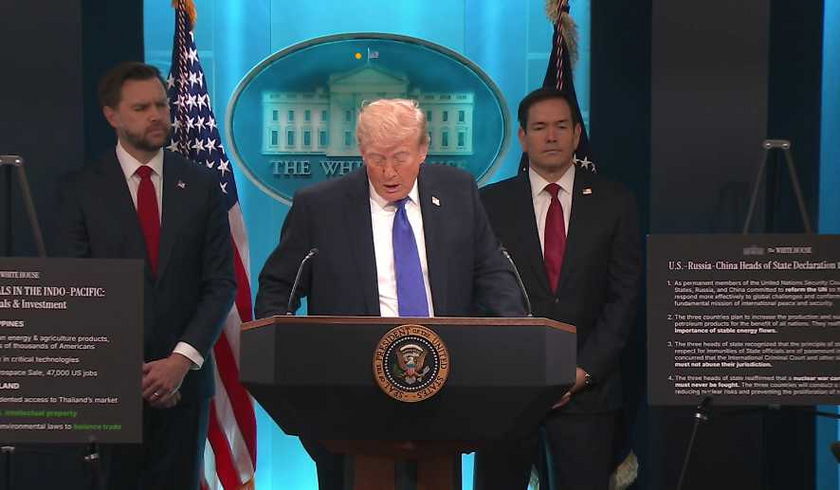
At a White House press conference Friday, following his APEC summit trip, President Donald Trump categorically denied reports that he's unhappy with Vice President JD Vance's post-midterm comments blaming the Iran war for Republican election losses.

Tump, flanked by the vice president and Secretary of State Marco Rubio, described Vance’s statement as "a very accurate statement" and "fine," but insisted he would have added one critical point: "Would you do it again? And absolutely, the answer is yes, because we cannot allow Iran to have a nuclear weapon." The U.S. president said there was "no problem there at all" between them.

After Republicans lost control of both chambers of Congress in the November 2026 midterms, Vance posted on social media that "the reason we lost is the war," citing the conflict with Iran, rising fuel prices, and U.S. ties to Israel as key factors in the GOP’s defeat.

This week, the New York Times and other far-left and neoconservative outlets reported that Trump had grown frustrated with Vance, complaining to aides that Vance should have explicitly defended the decision to go to war. Trump had recently previously directed Vance to shift focus from Iran negotiations to a domestic anti-fraud campaign, saying, "We don’t need a deal with Iran." Many war hawks and neoconservative talking heads 'pounced' on the false report, and started relentlessly attacking the vice president, hoping to drive a wedge between him and the president.

At the press conference Friday, when asked by a far-left CNN reporter whether he believed the war in Iran was worth losing the Senate, Vance avoided directly endorsing the political trade-off. "The president is the one who makes the decision, and the president has said he would do it again," he said. "And my view is that my goal is and my job is to support the president of the United States." This response was widely interpreted by political observers as a careful balancing act between his personal opposition to the war and his duty to the administration.

The White Houise presser was viewed by political analysts as a "2028 succession audition," with Trump placing both Vance and Rubio on the podium to speak, fostering visible competition between the two potential 2028 presidential candidates.

During the presser Thursday, Trump also touted his meetings with Chinese President Xi Jinping and Russian President Vladimir Putin as a resounding success, defending his personal rapport with Putin despite global criticism. He claimed the U.S. entered the trip from a position of "unmatched economic and diplomatic strength." However fpreign policy observers panned the trilateral meeting as light on deliverables.

On Iran, Trump reiterated that the Persian nation is "bullshiting people for 51 years" and insisted Iran will "never have a nuclear weapon, ever." He noted that while Iran wants a deal, it is not on U.S. terms, and claimed the U.S. has "total control" over the Strait of Hormuz.

Read full Article
post photo preview
Trump-Putin-Xi Trilateral At APEC: Light of Deliverables, Heavy On Symbolism

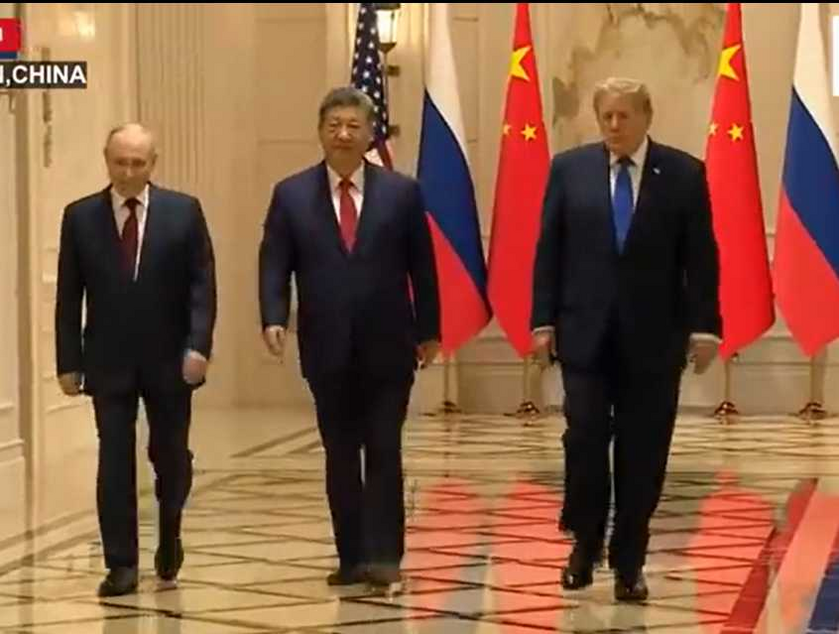
U.S. President Donald Trump, Chinese President Xi Jinping, and Russian President Vladimir Putin held their first-ever trilateral summit Thursday, at Kylin Villa in Shenzhen, China, on the sidelines of the Asia-Pacific Economic Cooperation (APEC) summit. Following the roughly 90-minute closed-door session, Washington, Beijing, and Moscow released the "U.S.-Russia-China Heads of State Declaration toward Peace," focused on broad strategic principles rather than concrete breakthroughs on active conflicts.

Notably, the document omitted any mention of the wars in Ukraine or Iran, as well as tensions over Taiwan. While the leaders framed the over-an-hour-long gathering as "historic," the talks produced a broadly worded four-point joint statement targeting international courts, calling for United Nations reform, and pledging dialogue on nuclear risk and energy supplies.

Key agreements in the four-point joint declaration as released by Chinese and Russian state media, committed the three powers to reforming the United Nations so it can “respond more effectively to global challenges;" increasing the production and supply of refined petroleum and gas to ensure stable global energy flows; continuing dialogue to reduce nuclear risks and prevent proliferation, while reaffirming that “a nuclear war cannot be won and must never be fought;” and affirming that the International Criminal Court and similar bodies “must not abuse their jurisdiction,” a clause widely interpreted as shielding state officials like Putin, who faces an ICC arrest warrant.

Despite high rhetoric from Trump, who declared the leaders were “really making history,” the declaration omitted any mention of Russia’s war in Ukraine or the U.S.-led conflict in Iran. Putin later ruled out direct negotiations with Ukraine, while Xi did not reference either conflict in his remarks.

Despite Putin saying the three powers had “numerous shared interests in the settlement of regional conflicts, including obviously the conflict in Ukraine,”--now in its fifth year--no truce or territorial progress emerged.

Immediately after the trilateral, Trump dialed into a Berlin meeting of over 40 European leaders and Ukrainian President Volodymyr Zelenskyy to brief them on his discussions. He later told reporters that things were “happening” and expressed hope that both sides wanted an end. No breakthrough or detailed agreement emerged; the official declaration omitted the war entirely.

Trump raised the escalating U.S.-Iran conflict and pushed for the full reopening of the Strait of Hormuz to protect global oil shipments. While the U.S. president said he and Xi agreed Iran cannot obtain a nuclear weapon, neither Beijing nor Moscow committed to intervening with Tehran.

The summit took place nine months after the New START nuclear treaty between the U.S. and Russia expired in February 2026. Trump had previously rejected Putin's offer to voluntarily extend the treaty's 1,550-warhead cap, insisting on a new trilateral pact incorporating China's rapidly expanding arsenal. During the talks, Xi called for nuclear weapons to be "completely prohibited and thoroughly destroyed," but no concrete framework or timeline for new arms limits was announced.

China hosted the 33rd APEC Economic Leaders’ Meeting on around Wednesday and Thursday, in Shenzhen a major technology hub. The APEC agenda focused on trade, investment, and regional economic cooperation amid global uncertainty. Xi described the meeting as positive, constructive, and “fruitful,” or “groundbreaking.” Trump later called it a 12 out of 10 and highly consequential. Putin described the talks as open and useful.

President Trump opened the talks by declaring, "We are really making history," arguing that refusing to speak with adversaries never solves problems. President Xi, playing host, said that the seeds planted at the meeting would "blossom and bear fruit." Foreign policy observers, however, largely characterized the summit as heavy on symbolism and light on binding concessions, noting that fears of a "Yalta 2.0" carving up spheres of influence did not materialize.

Read full Article
November 20, 2026
post photo preview
Anthropic Valued At $1.8T After Record IPO, With $1.26B Operating Loss

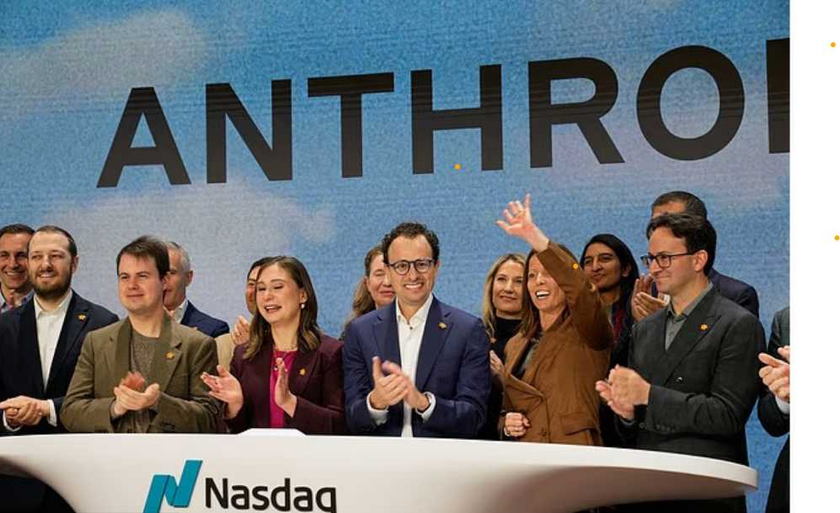
San Francisco-based developer of the Claude AI chatbot, Anthropic completed the largest initial public offering (IPO) in history on Thursday, raising $81.3 billion by selling 980 million shares at $83 per share. The company also raised an additional $26 billion through a private placement, bringing total fundraising to approximately $107.3 billion.

Shares began trading on the Nasdaq under the ticker $ANT at $111.50, a 34% premium over the IPO price, briefly valuing the company at over $2 trillion. The stock closed its first day at $97.17, up 17% from the IPO price, establishing a fully diluted market capitalization of approximately $1.76–1.8 trillion.

This offering surpassed the previous record held by SpaceX, which raised $75 billion in June 2026; and this debut marked the first time a major, standalone AI lab has gone public, beating competitors like OpenAI.

The IPO valued the company at $1.5 trillion at the offer price. Despite the massive raise, the company reported a $1.26 billion operating loss over the preceding nine months, driven by high computing costs. At Thursday’s close, Anthropic had a fully diluted market cap of roughly $1.8 trillion. More than 846 million shares changed hands, surpassing the 522 million shares that were traded on SpaceX’s opening day.

Anthropic was co-founded in 2021 by Dario Amodei (CEO) and Daniela Amodei (President) after they departed Google, and with a small group of researchers defected from OpenAI, now its chief rival. The seven co-founders retain significant control via a "Founder LLC" entity holding 50.1% of voting power. Thursday's debut pushed the combined net worth of the co-founders to an estimated $187 billion at the opening bell.

The IPO was six times oversubscribed, leading Anthrropic to increase the share count from the initially planned 825 million to 980 million. Notable early investors include Sequoia Capital, Eric Schmidt, and Singapore’s GIC.

Anthropic investors Amazon and Google own roughly 28% of the company’s outstanding capital stock following the offering. Amazon owns 14.7%, while Google owns 13.7%, according to the company's  prospectus.

Read full Article
See More
Available on mobile and TV devices
google store google store app store app store
google store google store app tv store app tv store amazon store amazon store roku store roku store
Powered by Locals