keneci Network
News • Comedy • Science & Tech
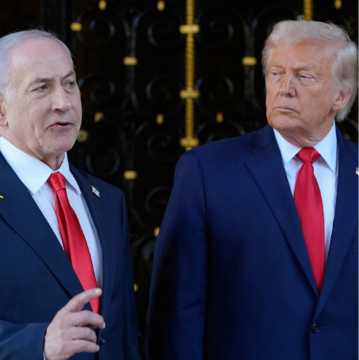
Trump Admin Plan To Supply $2.8B Worth Of 2000-pound Bombs To Israel, Critics Outraged
September 16, 2026
post photo preview

The President Donald Trump administration is reportedly preparing a $2.8 billion arms sale to Israel for 40,000 heavy 2,000-pound bombs, comprising 20,000 MK-84s and 20,000 BLU-117s, plus 20,000 I-2000 penetrator warheads.

The MK 84 and BLU-117 are among the most destructive non-nuclear conventional munitions in the U.S. arsenal. Defense experts note that while effective against hardened underground infrastructure, their broad blast radius and shrapnel field cause severe collateral damage in densely populated urban environments.

This would be the largest single sale of these munitions to Israel in recent years, funded by U.S. taxpayer military aid. The deal has been informally notified to congressional committees but still requires formal approval from Congress.

This package comes as U.S.-Israeli operations against Iran continue, with fighting stretching across Gaza, Lebanon, Syria, and the Gulf.

The Biden administration previously paused transfers of these specific munitions due to concerns over civilian casualties in Gaza and Lebanon, where they have been regularly used by the IDF.

A prior $2.04 billion package approved in 2025 included 35,529 bomb bodies and 4,000 penetrator warheads, with deliveries beginning in 2026.

“All foreign arms sales are moving through the appropriate process. We do not comment on pending sales,” a US offical reportedly said.

U.S. public support for Israel has declined since 2023; a June 2026 Quinnipiac University poll found 66% of Democrats believe the U.S. is too supportive of Israel.

The proposed deal triggered backlash among foreign policy realists and "America First" conservatives, most notably commentator Tucker Carlson.

Critics note the munitions are linked to numerous civilian casualties in Gaza, where more than 73,000 Palestinians have been killed according to local health authorities.

The report intensified a widening rift within the conservative coalition between non-interventionist "America First" populist figures—who oppose continuous foreign military aid—and traditional neoconservative supporters of robust defense backing for Israel. Progressive and human rights organizations have similarly denounced the deal, citing the ongoing humanitarian toll and destruction in Gaza and southern Lebanon.

In an X post Tuesday, Carlson criticized the scale, noting the shipment equals 40,000 tons of bombs 7.5 times the tonnage dropped in the largest WWII U.S. air raid on Berlin. He said the MK-84 has a half-mile destruction radius, causes rock to melt and flesh to vaporize within 100 feet, and that the U.S. military generally avoids using it in urban areas due to high civilian death tolls.

Carlson called out key figures overseeing or supporting the weapons sale approval pipeline, including U.S. Ambassador to Israel Mike Huckabee, Secretary of State Marco Rubio, and congressional leadership, questioning why U.S. taxpayer resources continue to fund large-scale foreign warfare rather than domestic priorities.


community logo
Join the keneci Network Community
To read more articles like this, sign up and join my community today
0
What else you may like…
Videos
Posts
Articles
SpaceX Starlink Internet Satellites

With Starlink internet, data is continuously being sent between a ground dish and a Starlink satellite orbiting 550km above. Furthermore, the Starlink satellite zooms across the sky at 27,000 km/hr! MORE VIDEOS ON KENECI NETWORK RUMBLE CHANNEL: https://rumble.com/c/Keneci

00:28:08
Elon Musk, DOGE Speak On Waste And Fraud

US Department of Government Efficiency Services (USDS) led by Elon Musk speak on the "mind-boggling" fraud and waste in UInited States federal government

00:00:45
January 17, 2025
SpaceX Launches Starship 7th Test Flight

SpaceX successfully executed its second-ever “chopsticks” catch of a Super Heavy booster (or Booster 14) using the “Mechazilla” launch tower on Thursday(Jan. 16), during the seventh uncrewed test flight of the company's 123-meter Starship rocket. However, the megarocket's upper stage(or Ship 33) was lost approximately 8.5 minutes into the flight in a “rapid unscheduled disassembly(RUD)” or explosion

00:10:30
Welcome to Keneci Network!

Join the conversations!

December 09, 2025
Bitcoin White Paper By Satoshi Nakamoto

Bitcoin white paper

Bitcoin_White_Paper.pdf
September 17, 2024
Charges Against Sean 'Diddy' Combs In Grand Jury Indictment

The rapper was charged with racketeering conspiracy, sex trafficking by force, fraud or coercion, and transportation to engage in prostitution in the indictment unsealed Tuesday(Sept. 17)

Combs-Indictment-24-Cr.-542.pdf
post photo preview
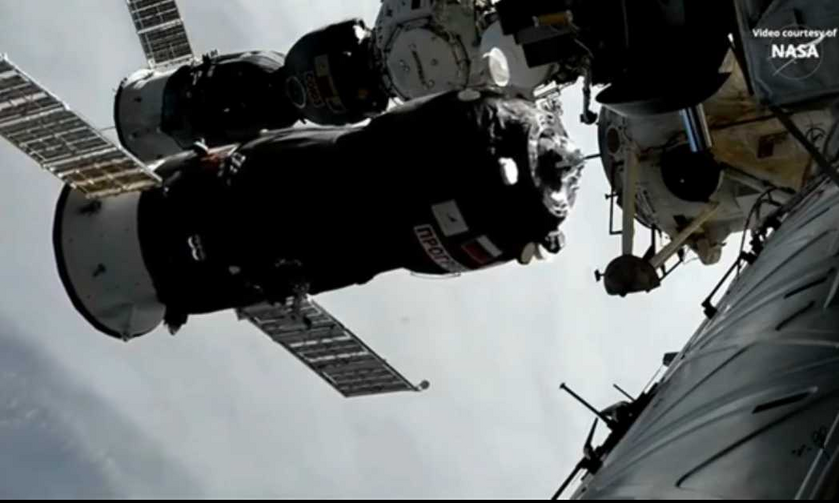
Roscosmos MS-36 Cargo Capsule Arrives At The ISS Carrying Over 2.4 metric tons Of Supplies

MS-36 or Progress 97 cargo capsule docked with the Rassvet module on the International Space Station (ISS) on Thursday (Nov. 26), at 1208 UTC, arriving three minutes ahead of schedule. The uncrewed cargo spacecraft launched from the Baikonur Cosmodrome in Kazakhstan at 1017 UTC, on Nov. 24, atop a Soyuz-2.1b rocket, completing a two-day autonomous journey to deliver approximately three tons of essential provisions.

In a unique operational change, the spacecraft docked at the Rassvet module to allow crew members to unload cargo, avoiding the sealed PrK transfer tunnel at the Zvezda service module which has an ongoing air leak.

MS-36 carried 750 kilograms(kg) of fuel, 51 kg of oxygen, 420 kg of drinking water, and 261 kg of food for the Expedition 75 crew, alongside 657 kg of equipment for various scientific experiments. A primary payload is the Teledroid humanoid robot’s control system, designed to assist cosmonauts with external maintenance tasks in vacuum and extreme temperatures.

After unloading, MS-36 is scheduled to relocate to Zvezda’s aft port to perform orbital reboosts, marking the first time a cargo mission splits unloading and engine burns across two different ports. The capsule will remain attached for about six to eight months before departing for a destructive re-entry to dispose of station waste.

=================

Roscosmos Soyuz-2.1b rocket launched the Progress MS-36 (a.k.a. Progress 97) cargo spacecraft to the International Space Station(ISS) Tuesday (Nov. 24) at 1017 UTC from Site 31 at the Baikonur Cosmodrome in Kazakhstan, carrying over 2.4 metric tons of supplies for the Expedition 75 crew aboard ISS.

MS-36 reached orbit and is scheduled to autonomously dock with the ISS's Poisk module on Thursday. Then cosmonauts currently living on the ISS — Pyotr Dubrov, Anna Kikina and Sergey Teteryatnikov — will unload Progress 97 through Poisk. But the freighter will then hop over to a different port aft one of the PrK transfer tunnel to perform ISS orbit-reboosting engine burns, leading it to Russia's Zvezda service module, marking the first cargo mission to split unloading and orbital correction across different ports.

A primary payload on MS-36, is the control system for the Teledroid, a torso-type humanoid robot with 30 degrees of freedom developed by NPO Android Technics. Designed to assist cosmonauts during spacewalks, the robot can operate standard tools in vacuum and extreme temperatures; it will be tested via virtual simulation, internal pressurized trials, and external operations on the station’s exterior.

MS-36 will likely stay docked to the ISS for about six months, after which it will be loaded up with trash and sent home to burn up in Earth's atmosphere.

MS-36 launch was significantly delayed from its original August 2026 target due to the collapse of the service platform at Baikonur’s Site 31 in November 2025, which required approximately three months for repairs. Other than SpaceX's Dragon capsule, which is reusable and makes parachute-aided ocean splashdowns at the end of its missions, Japan's HTV-X vehicle and Northrop Grumman's Cygnus spacecraft are expendable.

Read full Article
November 25, 2026
post photo preview
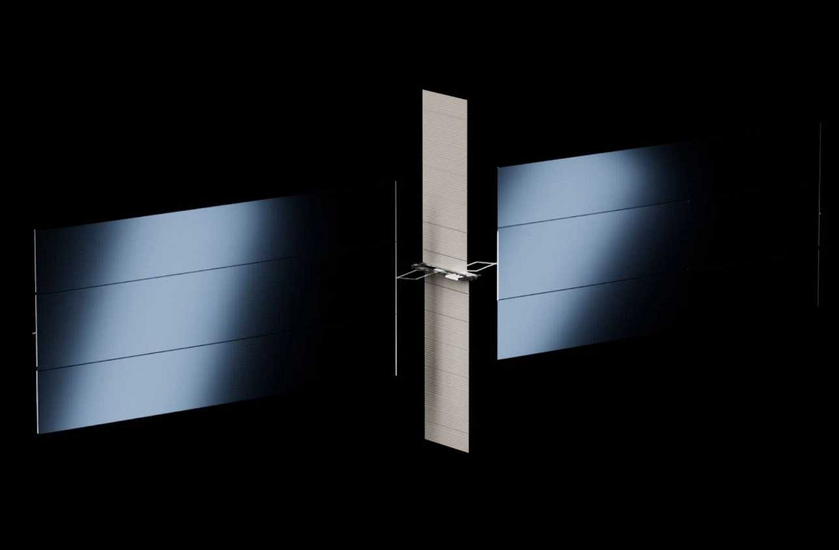
Starmind: US Regulators Approve SpaceX Plan To Deploy 1 Million Space Data Center Satellites

The U.S. Federal Communications Commission, FCC approved SpaceX’s plan to deploy up to 1 million Starmind satellites for orbital data centers, marking the first authorization in U.S. history for a space-based data center constellation.

According to the 15-year FCC license, SpaceX is required to deploy first satellite by Nov 2033; 100,000 by Nov 2035; 500,000 by Nov 2038; full 1 million by Nov 2040. The satellites will orbit at 500–1,002 kilometers, using 210 kilowat(kW) solar arrays, 250 kW peak compute, and laser links to Starlink; with Ka-band frequewncies authorized for backup and emergency communications only.

FCC Chairman Brendan Carr in a statement declared, “America is leading the world into the era of super intelligence... The FCC supercharges that effort today by granting, for the first time ever, authorization to deploy 1 million orbital compute modules for data centers in space. This action opens a bold new frontier for the computing infrastructure needed to power America’s leadership and growth.”

He added, “Compute campuses or data centers are essential to sustaining America’s leadership in SI. By moving compute capacity beyond Earth, SpaceX and the many competitors working on their own orbital data centers are meeting the moment. This is the kind of American ingenuity that can unite our strengths in space and advanced technology, reinforce our economic leadership, and expand prosperity here at home.”

The FCC noted the system “promises to bring the human race closer to a Kardashev II civilization—one that can harness the full power of the sun.”

Elon Musk in an X post responding to Musk, wrote: “Much appreciated. This will be a great asset to America and the world.”

SpaceX must file a final debris mitigation plan before deploying above 600 km; a request to park retired satellites in disposal orbits was deferred. Petitions from Amazon Leo, Viasat, and the American Astronomical Society were dismissed; the AAS said it's “disheartened and dismayed” by the decision.

Applied in Jan 2026 after SpaceX acquired xAI; the plan was featured in SpaceX’s June IPO pitch. The first-generation AI1 satellite, built on Nvidia Vera Rubin NVL72 racks, could launch as early as Q3 2027

Read full Article
November 24, 2026
post photo preview
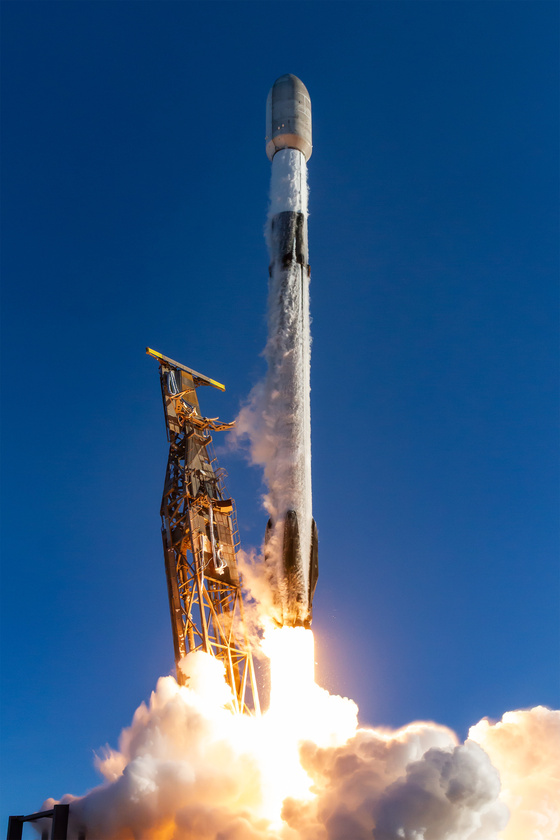
USSF-266: SpaceX Falcon 9 Launches Mysterious Payload To Orbit For The US Space Force

SpaceX Falcon 9 launched the USSF-266 mission for the U.S. Space Force on Tuesday (Nov. 24), at 1608 UTC from Space Launch Complex 4E (SLC-4E), Vandenberg Space Force Base, carrying classified payload to be deployed into a polar low-Earth orbit.

Following stage separation less than three minutes into the ascent, the Falcon 9 Block 5 first-stage booster, B1081 executed a controlled reentry and successfully landed vertically on the autonomous droneship Of Course I Still Love You (OCISLY) in the Pacific Ocean, about 8 minutes after liftoff. A historic milestone for B1081 by completing its 29th flight. This landing marked the 236th successful recovery for OCISLY and the 681st overall booster landing in SpaceX’s history.

USSF-266 is the third mission in the TH series for the Space Force’s Sensing and Targeting portfolio, following TH-1 (USSF-259) and TH-2 (USSF-481). Each prior mission in this series resulted in the cataloging of 17 new objects, suggesting the deployment of multiple satellites built on SpaceX’s Starshield bus.

Read full Article
See More
Available on mobile and TV devices
google store google store app store app store
google store google store app tv store app tv store amazon store amazon store roku store roku store
Powered by Locals