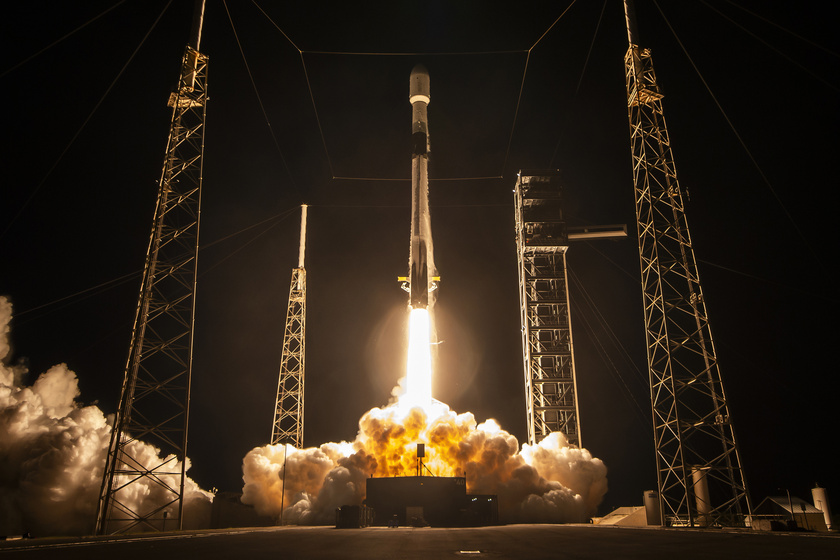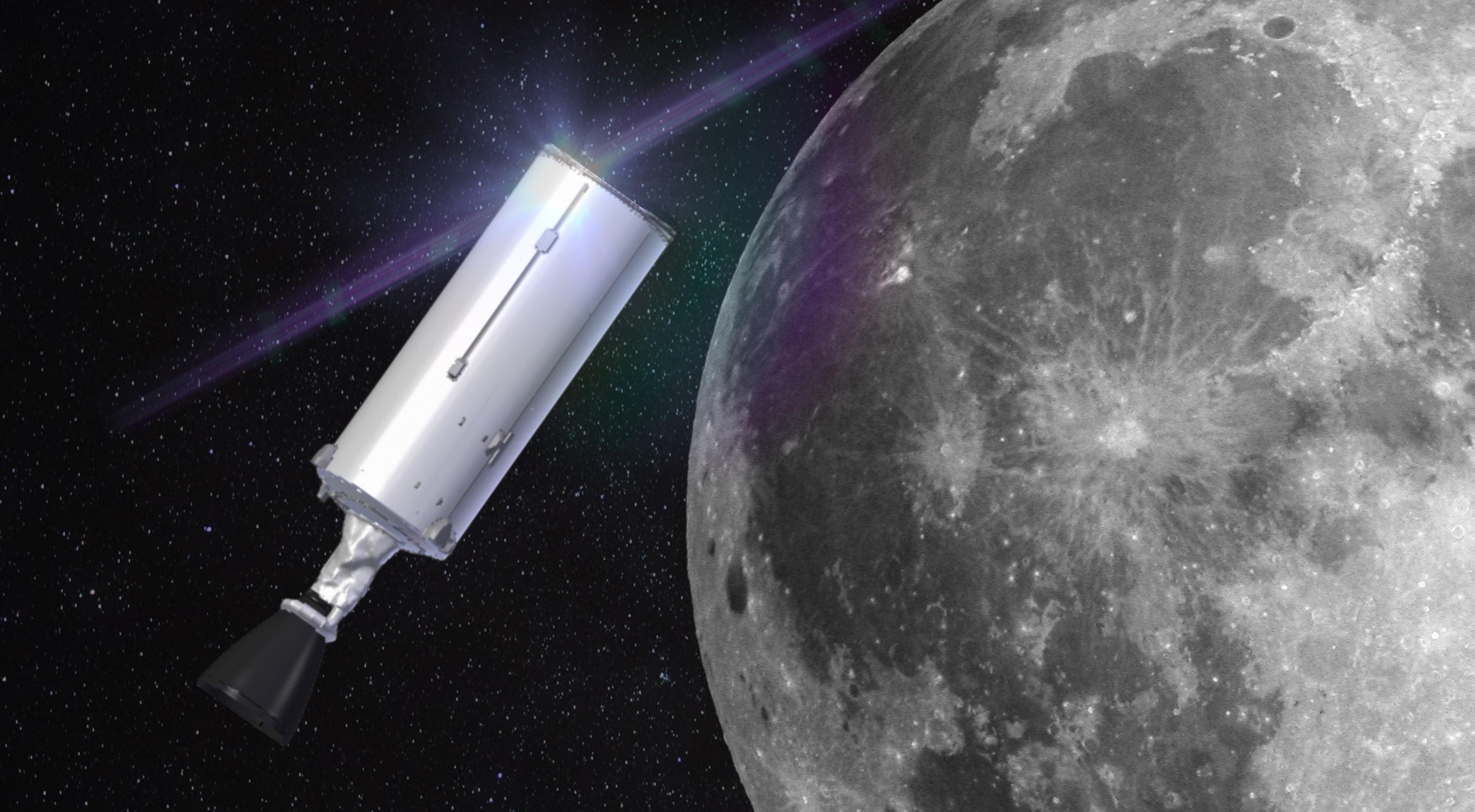
A ~4,000 kilogram (kg) upper stage of a SpaceX Falcon 9 rocket impacted the Moon near the Einstein Crater on Wednesday (Aug. 5), at about 0635 UTC, traveling at roughly 8,690 kilometer/hour(km/h). The object, which had been drifting since its launch on January 15, 2025, was carrying the Blue Ghost 1 lander for Firefly Aerospace and the Resilience lander for ispace toward the Moon as part of NASA’s Commercial Lunar Payload Services.
The rocket stage remained in space because the high-energy mission required extra thrust, leaving it in a deep-space orbit where gravitational forces and solar radiation gradually nudged it into a collision course.
NASA confirmed the impact poses no danger to Earth and is expected to create a crater approximately 18–27 meters wide and 4 meters deep, blasting a dust plume up to 100 kilometers into space.
To dissect what exactly happened, scientists are utilizing NASA’s Lunar Reconnaissance Orbiter and South Korea’s Danuri (Pathfinder Lunar Orbiter) to capture before-and-after imagery of the impact site. This accidental collision provides a rare opportunity to study lunar impact dynamics, regolith ejection, and the potential hazards of space debris for future Artemis missions and lunar bases.
While the impact flash was likely obscured by daylight, astronomers aim to analyze the dust plume and crater formation to refine models for planetary surface evolution and debris mitigation.
"NASA’s Lunar Reconnaissance Orbiter and NASA’s ShadowCam instrument on the Korea Pathfinder Lunar Orbiter will look for opportunities to capture before‑and‑after imagery of the impact site," NASA spokesperson Rob Garner, of NASA's Goddard Space Flight Center in Maryland, told Space.com. "Image availability depends on several factors, including the impact location, lighting conditions, and when each spacecraft’s orbit next carries it over the area, which may take a few days to receive any imagery."
This was certainly not the original intended outcome for this rocket's upper stage. But it presents an opportunity for researchers, who plan to take advantage of it to learn more about the moon.
"NASA’s Meteoroid Environments Office will attempt to image the impact around the predicted time using ground‑based telescopes at the agency's Marshall Space Flight Center in Huntsville [Alabama]," Garner added. "Because the impact flash and plume are expected to be faint, the chance of seeing anything from Earth remains low, and local weather can affect observations as well. Any data collected will help scientists better understand impacts from artificial objects and the potential effects on future lunar exploration."
So far, observations from Earth have revealed some information. Scientists at the Lowell Observatory in Flagstaff, Arizona reported detections of a lunar plume from the impact.
"We can safely say that we measured a response from the rocket stage impact as a sodium and lithium gas plume a few 10’s of kilometers in size lasting between 5 and 10 minutes after impact," Carl Schmidt told Inside Outer Space's Leonard David.
Such images of the event would provide "an opportunity to test pipelines for measuring flash properties to locate impact events seismically, and to better understand the multi-modal hazards posed to future lunar infrastructure and astronauts from space debris impacting the moon," researchers led by Benjamin Fernando of Los Alamos National Laboratory in New Mexico wrote in a recent paper discussing the then-upcoming event.
While you've likely seen the first stages of Falcon 9 rockets gracefully land back on Earth for reuse, the rocket's upper stage is disposable. Typically, it's sent to burn up in our atmosphere after its missions are over.
In a post on X, SpaceX wrote, "On January 15, 2025, Falcon 9 successfully deployed Firefly Aerospace’s Blue Ghost Mission 1 and ispace’s RESILIENCE lunar landers on a trajectory to the Moon from pad 39A in Florida.
"For most of our missions, we plan a controlled deorbit of the Falcon second stage so it safely reenters over the ocean. For higher energy missions like those to a lunar transfer orbit, nearly all performance on the vehicle is devoted to successfully placing the payload in the intended orbit, and a controlled disposal maneuver is not always possible.
"We actively work to be as responsible as possible with hardware left in space to ensure space safety, including for more complex missions. In this case, over time, solar activity and gravity led the second stage toward the Moon. Impacts like this are rare, but they can happen with objects in these types of orbits, and we worked with NASA on the optimal disposal solution.
"Our focus remains on advancing reliable access to space while working toward even more sustainable operations with Starship in the future. As a fully reusable vehicle, Starship is designed to eliminate expendable upper stages entirely, reducing hardware left in orbit and enabling even more missions to the Moon, Mars, and beyond."