keneci Network
News • Comedy • Science & Tech
US Strikes Hit Iran In 1st Post-MOU Incident, As Israel-Lebanon Framework Agreement Trigger Protests In Beirut
June 26, 2026
post photo preview

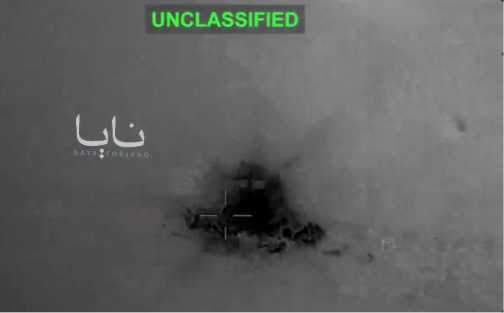
U.S. Central Command (CENTCOM) conducted airstrikes on Friday, against Iranian missile and drone storage facilities and coastal radar sites near Sirik, marking the first kinetic U.S. response since the June 19 Memorandum of Understanding (MOU).

The strikes were a direct retaliation for an Iranian one-way attack drone strike on the Singapore-flagged cargo ship M/V Ever Lovely on Thursday, June 25, which damaged the vessel's upper deck as it transited the Strait of Hormuz along the Omani coast. Reports indicate that Iranian naval forces also fired warning shots and missiles at vessels deemed to be using unauthorized routes, highlighting the volatility of the security situation in the critical energy corridor.

CENTCOM declared the attack a "clear violation" of the ceasefire, asserting that Iran's actions undermined freedom of navigation in the vital trade corridor.

President Donald Trump characterized the drone assault as a "foolish violation" of the agreement, confirming that Iran launched four drones, three of which were intercepted while one successfully hit the ship. Vice President JD Vance responded on the social platform X with the statement: "Violence will be met with violence. If they have disagreements about how the MOU is being applied, they can pick up the phone."

Vance emphasized that the U.S. would not tolerate breaches of the deal, which was intended to open the Strait of Hormuz to oil traffic and constrain Iran's nuclear program.

The Islamic Revolutionary Guard Corps (IRGC) claimed to have repelled the U.S. attack and threatened "swift and decisive" countermeasures against further aggression. Within hours, the IRGC said its forces have retaliated with attacks on locations hosting the US military in the region.

Diplomatic tensions escalated following a visit by U.S. Secretary of State Marco Rubio to the Gulf, where he issued a joint statement with the Gulf Cooperation Council (GCC) demanding "free, unconditional, and unrestricted navigation" through the Strait of Hormuz without tolls.

Iran's foreign ministry immediately protested this stance, asserting that the strait should be governed jointly by Iran and Oman, and rejecting external attempts to assert control over the waterway. This dispute over transit fees and sovereignty occurred despite ongoing peace negotiations mediated by Pakistan and Qatar, which had recently established a roadmap for a final deal.


Israel-Lebanon Framework Agreement Trigger Protests In Beirut

The latest escalation coincided with a separate US-brokered framework agreement between Israel and Lebanon, announce in Washington D.C., Friday, marking a highly contentious first step aimed at winding down the conflict between Israel and Hezbollah.

Israeli Ambassador Yechiel Leiter and Lebanese Ambassador Nada Hamadeh Moawad signed the trilateral text at the U.S. State Department, witnessed by Rubio.

The agreement establishes a newly created "Military Coordination Group for Lebanon" (MCG4L), facilitated by the United States, to oversee the implementation. Alongside the framework, the U.S. announced an immediate $100 million humanitarian assistance package for Lebanon.

The agreement does not outline an immediate, full Israeli withdrawal. Instead, it relies on a phased, benchmark-driven mechanism. Israel has agreed to a minor pullback of its forces from two specific "pilot zones" in southern Lebanon—identified as Zoetir East and Zoetir West. Control of these areas will be gradually handed over to the Lebanese Armed Forces (LAF).

Further Israeli withdrawals are not bound to a fixed timetable. Instead, they are strictly tied to measurable benchmarks of the Lebanese army successfully disarming and dismantling Hezbollah infrastructure in those areas.

Israeli Prime Minister Benjamin Netanyahu released a video statement tempering expectations of a major withdrawal. He emphasized that Israel will strictly maintain its original "security zone" (buffer zone) to keep its northern towns out of range of Hezbollah anti-tank missiles. The Prime Minister's Office added that the IDF maintains "freedom of military action throughout the security zone to eliminate threats of any kind."

Lebanese Prime Minister Nawaf Salam and Ambassador Moawad defended the framework, framing it as a vital "first step" toward restoring full Lebanese sovereignty, securing a permanent cessation of hostilities, and forcing an ultimate, comprehensive Israeli withdrawal from all occupied Lebanese territories.

Because the framework explicitly targets the disarmament of Hezbollah and was negotiated entirely without their involvement, it triggered immediate, explosive pushback in Lebanon

Hours after the announcement—which coincided with the religious peak of Ashura—thousands of Hezbollah and Shiite ally supporters took to the streets of Beirut. Convoys of men on motorcycles waved flags and rode through central areas near the parliament and along the main airport highway, protesting what they view as a formalization of Israeli occupation.

Hezbollah lawmaker Hassan Fadlallah issued a stark warning, stating that Lebanese authorities "will not be able to enforce the agreement signed in Washington unless they go, with American support, to civil war." Hezbollah officials also slammed the deal as a deliberate attempt to derail the separate "Islamabad process"--the ongoing U.S.-Iran negotiations.


community logo
Join the keneci Network Community
To read more articles like this, sign up and join my community today
0
What else you may like…
Videos
Posts
Articles
SpaceX Starlink Internet Satellites

With Starlink internet, data is continuously being sent between a ground dish and a Starlink satellite orbiting 550km above. Furthermore, the Starlink satellite zooms across the sky at 27,000 km/hr! MORE VIDEOS ON KENECI NETWORK RUMBLE CHANNEL: https://rumble.com/c/Keneci

00:28:08
Elon Musk, DOGE Speak On Waste And Fraud

US Department of Government Efficiency Services (USDS) led by Elon Musk speak on the "mind-boggling" fraud and waste in UInited States federal government

00:00:45
January 17, 2025
SpaceX Launches Starship 7th Test Flight

SpaceX successfully executed its second-ever “chopsticks” catch of a Super Heavy booster (or Booster 14) using the “Mechazilla” launch tower on Thursday(Jan. 16), during the seventh uncrewed test flight of the company's 123-meter Starship rocket. However, the megarocket's upper stage(or Ship 33) was lost approximately 8.5 minutes into the flight in a “rapid unscheduled disassembly(RUD)” or explosion

00:10:30
Welcome to Keneci Network!

Join the conversations!

December 09, 2025
Bitcoin White Paper By Satoshi Nakamoto

Bitcoin white paper

Bitcoin_White_Paper.pdf
September 17, 2024
Charges Against Sean 'Diddy' Combs In Grand Jury Indictment

The rapper was charged with racketeering conspiracy, sex trafficking by force, fraud or coercion, and transportation to engage in prostitution in the indictment unsealed Tuesday(Sept. 17)

Combs-Indictment-24-Cr.-542.pdf
September 10, 2026
post photo preview
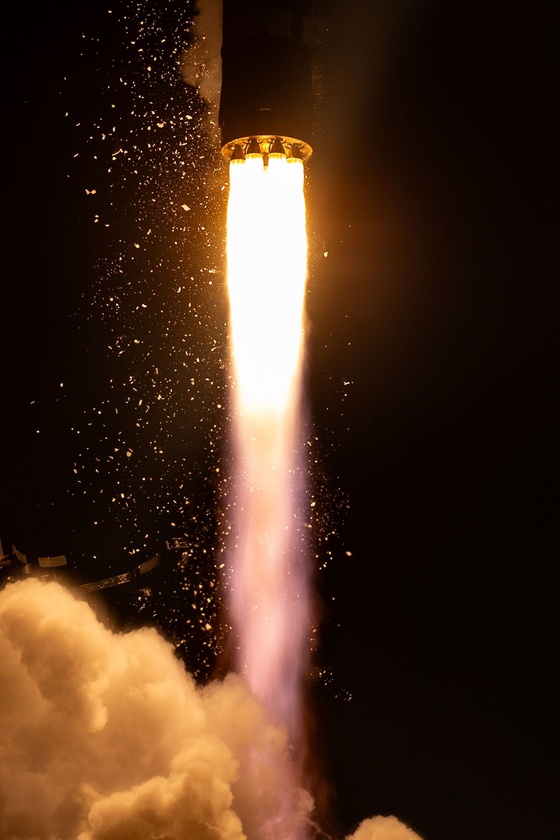
USSF-153: SpaceX Launches Classified Satellite For US Space Force

SpaceX Falcon 9 launched the classified USSF-153 mission on Thursday (Sept. 1) at 1542 UTC from Space Launch Complex 4E(SLC-4E) at Vandenberg Space Force Base, carrying carried an undisclosed payload to low Earth orbit (LEO) for the U.S. Space Force.

The Falcon 9 first-stage booster, B1081, completed its 27th flight, after executing a precision landing on the autonomous droneship 'Of Course I Still Love You' in the Pacific Ocean about 8.5 minutes after liftoff, marking the 660th overall Falcon 9 booster recovery. Residents in surrounding California counties reported hearing sonic booms as the booster returned through the atmosphere at supersonic speeds.

USSF-153 is a classified mission, with industry analysts suggesting the cargo likely consists of classified satellites potentially utilizing SpaceX’s Starshield platform, based on trajectory similarities to previous Starlink deployments.

"Starshield leverages SpaceX's Starlink technology and launch capability to support national security efforts," SpaceX wrote in a description of the Starshield program.

Due to the classified nature of the flight, post-launch telemetry and orbital parameters were withheld, with SpaceX's livestream ending shortly after the booster's recovery.

This operation marked the 104th Falcon 9 mission of 2026 and served as the fifth national security launch for the company this year, following missions such as NROL-105 and USSF-366.

Read full Article
September 10, 2026
post photo preview
Iranian Strikes On US Bases In Jordan, Damaged Multiple Aircraft, Despite CENTCOM Denials

Iranian ballistic missile strikes overnight Wednesday, targeted the Muwaffaq Salti Air Base in Jordan, reportedly damaging multiple US military aircraft** stationed there. An A-10 Thunderbolt (Warthog) suffered a direct hit that resulted in a missing wing, while about eight F-15 fighter jets sustained light damage. The damaged F-15s were subsequently repaired and returned to service, with no US fatalities reported at the base.

US forces in Jordan launched more than 30 Patriot missiles to intercept the Iranian attack, which occurred following weeks of relative calm in the escalating US-Iran conflict.

The strikes on Muwaffaq Salti Air Base were reportedly launched by Iran's Islamic Revolutionary Guard Corps (IRGC) and came directly in response to a major U.S. naval action where American forces targeted and sank five Iranian oil tankers following Iran's attempts to strike U.S. naval assets and commercial shipping. The IRGC launched coordinated missile attacks targeting key regional hubs housing American forces, including installations in Jordan, Kuwait, and Bahrain.

Read full Article
September 08, 2026
post photo preview
Iranian Missile Barrage Hits US Bases In Jordan, Naval Ships, After US Attacks On Iran's Oil Tankers

U.S. Central Command (CENTCOM) on Tuesday, destroyed five Iranian crude oil tankers in retaliation for repeated ballistic missile attacks by the Islamic Revolutionary Guard Corps (IRGC) on a U.S. Navy warship in the last few days. Four tankers were hit in the Gulf of Oman and one near Kharg Island, Iran’s primary oil export hub; these vessels had moved 45 million barrels of Iranian oil since 2019.

The strikes were part of a new “tanker for tanker” policy approved by President Trump, escalating a broader campaign to cripple Iran’s economy after earlier U.S. strikes on three tankers on September 5 following IRGC attacks on U.S. destroyers DDG-119 and DDG-53.

In retaliation to Tuesday's attacks, the IRGC launched a ballistic missile barrage at U.S.-linked bases in Jordan, specifically targeting the Al-Azraq air base (housing F-35, F-16, and F-15 fighter jet facilities) and the Muwaffaq Salti and Prince Hassan military bases. Jordan’s air defenses intercepted 18 of the 20 missiles launched, with the two remaining landing away from population centers.

The IRGC also claimed it attacked U.S. Navy destroyers and warned of strikes on tankers in Kuwait and Bahrain.

Meanwhile, Iran claimed to have seized a U.S. underwater drone near the Strait of Hormuz. State media identified the craft as the Dive-LD, a 19-foot autonomous submarine manufactured by U.S. defense firm Anduril Industries. This occurred amid ongoing U.S. naval operations to escort commercial shipping through the strait, where ~40 ships transited daily carrying millions of barrels of oil.

The ongoing conflict has transformed the Persian Gulf into a high-intensity maritime battleground involving commercial shipping disruptions, drone warfare, and subsea mining attempts. The war began on February 28, 2026, when pre-emptive U.S. and Israeli military strikes hit Iranian nuclear facilities, leadership command centers, and strategic targets.

Read full Article
See More
Available on mobile and TV devices
google store google store app store app store
google store google store app tv store app tv store amazon store amazon store roku store roku store
Powered by Locals