keneci Network
News • Comedy • Science & Tech
Nvidia Unveils RTX Spark, N1X, For Agentic AI-era Windows PC: Computex 2026
June 01, 2026
post photo preview

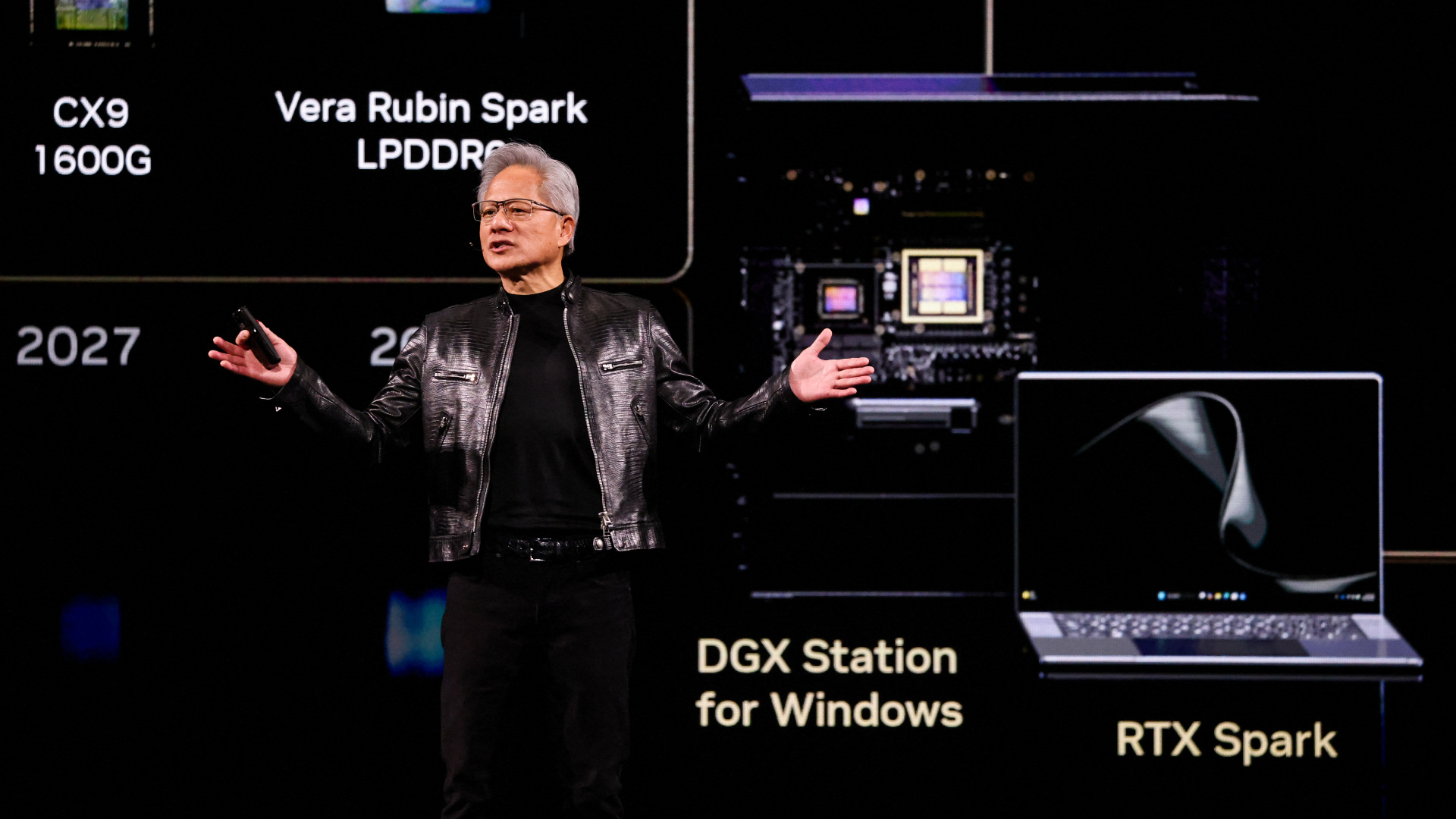
At Computex 2026 on Monday in Taipei, NVIDIA CEO Jensen Huang unveiled the RTX Spark platform, a new Arm-based superchip designed to reinvent the Windows PC for the era of agentic AI.

Developed in partnership with MediaTek and Microsoft, the platform centers on the N1X processor, which integrates a 20-core Arm CPU and a Blackwell GPU with 6,144 CUDA cores, capable of delivering RTX 5070-class performance and running 120-billion-parameter AI models locally. The chip is manufactured on TSMC’s 3nm process and supports up to 128GB of unified LPDDR5X memory, enabling laptops as thin as 14mm and weighing as little as three pounds.

“This reinvention of the computer is as big of a deal as the reinvention of the phone into what we now know as the smartphone,” Huang said, pointing to the fact agentic AI will run across all the new computers.

“Microsoft and Nvidia are going to reinvent the PC,” he added. “This is the first completely reengineered, reinvented line of PCs that has happened in 40 years.”

Huang described the RTX Spark as a "reinvention of the computer" comparable to the rise of the smartphone, emphasizing that AI agents will become the primary interface for personal computing. He outlined a vision where PCs serve as personal AI sandboxes that run continuously, handling tasks like 12K video editing, 3D rendering, and AAA gaming at 1440p/100+ fps.

The Nvidia CEO also announced the Vera Rubin microprocessor is in full production for AI agents and introduced Nvidia DSX, a framework for building scalable AI factories, stating that "compute is revenue" and "compute is profit." He dismissed concerns that AI would reduce software engineering jobs, arguing it instead makes the profession more valuable and productive.

“This is going to be our new major growth driver,” Huang said. “These CPUs are going to be both performant, but they also have to be extremely energy efficient, so that we can cram as much CPU as we can into the factory without taking away power from the token generation.”

“Fast CPUs have become essential to keeping the AI factory moving,” said Ian Buck, Nvidia’s vice president of hyperscale and high-performance computing.

Buck said that Vera can produce tokens 1.8 times faster than x86 today, “advancing overall agent token performance, enabling smarter, longer-thinking agents and in the end, generating more data center token revenue.”

Microsoft CEO Satya Nadella announced the detail of the integration of RTX Spark with Windows 11 and Copilot+ capabilities. The first wave of RTX Spark devices, including the Microsoft Surface Laptop Ultra, Dell XPS 16, ASUS ProArt P14/P16, HP OmniBook X/Ultra, Lenovo Yoga Pro 9n, and MSI Prestige N16 will ship in Fall 2026. Adobe confirmed it is rebuilding Photoshop and Premiere to leverage RTX Spark’s unified memory for AI-native pipelines.

RTX Spark's high-end specifications suggest a premium market positioning, competing with Qualcomm’s Snapdragon and traditional x86 processors from Intel and AMD.


community logo
Join the keneci Network Community
To read more articles like this, sign up and join my community today
0
What else you may like…
Videos
Posts
Articles
SpaceX Starlink Internet Satellites

With Starlink internet, data is continuously being sent between a ground dish and a Starlink satellite orbiting 550km above. Furthermore, the Starlink satellite zooms across the sky at 27,000 km/hr! MORE VIDEOS ON KENECI NETWORK RUMBLE CHANNEL: https://rumble.com/c/Keneci

00:28:08
Elon Musk, DOGE Speak On Waste And Fraud

US Department of Government Efficiency Services (USDS) led by Elon Musk speak on the "mind-boggling" fraud and waste in UInited States federal government

00:00:45
January 17, 2025
SpaceX Launches Starship 7th Test Flight

SpaceX successfully executed its second-ever “chopsticks” catch of a Super Heavy booster (or Booster 14) using the “Mechazilla” launch tower on Thursday(Jan. 16), during the seventh uncrewed test flight of the company's 123-meter Starship rocket. However, the megarocket's upper stage(or Ship 33) was lost approximately 8.5 minutes into the flight in a “rapid unscheduled disassembly(RUD)” or explosion

00:10:30
Welcome to Keneci Network!

Join the conversations!

December 09, 2025
Bitcoin White Paper By Satoshi Nakamoto

Bitcoin white paper

Bitcoin_White_Paper.pdf
September 17, 2024
Charges Against Sean 'Diddy' Combs In Grand Jury Indictment

The rapper was charged with racketeering conspiracy, sex trafficking by force, fraud or coercion, and transportation to engage in prostitution in the indictment unsealed Tuesday(Sept. 17)

Combs-Indictment-24-Cr.-542.pdf
post photo preview
Liquid Network Hacker Returns $268M in Bitcoin, Keeps $47M

Liquid Network has recovered 3,400 BTC (about $268 million) after an exploit drained nearly 4,000 BTC (about $320 million) from its federation wallet. The attacker, who identified as a "white hat," retained 598.5 BTC (about $47 million) in an address linked to the withdrawal, representing roughly 15% of the stolen funds.

The incident stemmed from a range-proof verification cache bug in Elements, the open-source software powering Liquid nodes, which allowed the creation of unbacked L-BTC tokens. No private keys or federation wallets were compromised; instead, attackers exploited the issuance logic to generate valid-looking tokens that were then pegged out via SideSwap, draining 95% of Liquid’s Bitcoin reserves.

Liquid immediately froze network operations and disabled bridge nodes to secure the remaining assets. The network remained paused while node operators updated their bridge software and verified the security fixes.

Communication between the attacker and Blockstream occurred entirely on-chain via Bitcoin OP_RETURN messages.

The hacker consolidated the stolen Bitcoin into a single address and broadcasted an OP_RETURN message reading: "we are whitehats. contact us on chain."

Blockstream established formal contact around Bitcoin block 965,822 by embedding encrypted text and a PGP signature in an OP_RETURN transaction.

The attacker sent encrypted details of the exploit back to Blockstream, stating they would not return the funds until the bug was fully patched across all network nodes.

Blockstream replied with a PGP-signed OP_RETURN message confirming against their official key on record: "Bridge nodes are patched, safe to return the funds," after which the attacker broadcast the return transaction.

While the return mitigated immediate insolvency risks, Liquid Network operations remain paused to restore 1:1 backing, and the status of the retained $47 million remains unclear, with no formal bounty agreement published.

Liquid official communications referred to the actor as a "purported white-hat hacker." Security experts and crypto community members heavily debated labeling the hacker a true "white hat," noting that taking funds by force prior to negotiations is extortion rather than responsible disclosure.

Read full Article
September 06, 2026
post photo preview
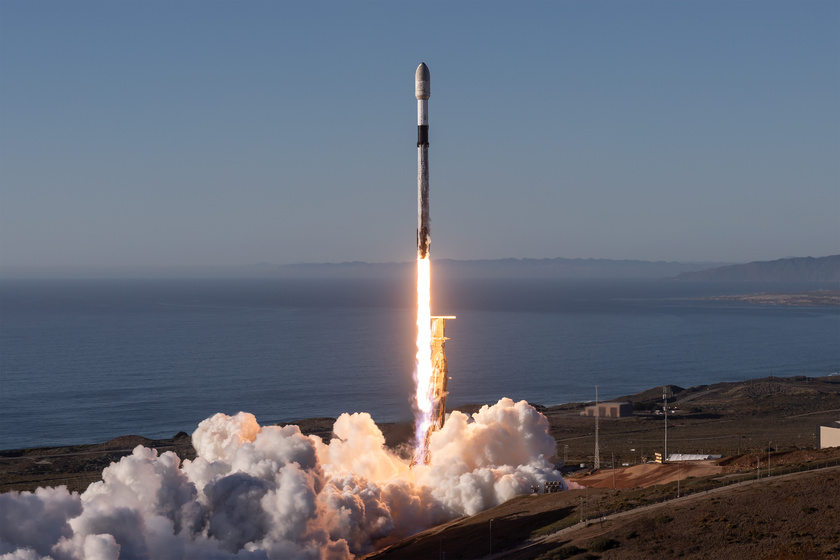
Spectrum: German Company Launches Europe's Ist Privately-developed Rocket To Orbit

German startup Isar Aerospace successfully launched its Spectrum rocket into orbit from Andøya Spaceport in northern Norway at 2012 UTC on Saturday (Sept. 5), marking the first privately developed rocket to reach orbit from continental Europe.

After liftoff, the rockety's first stage burned for two-and-a-half minutes, separated, and the second stage ignited to reach orbital velocity. After a circularization burn, the payload fairing was discarded, and the payloads were deployed.

The "Onward and Upward" mision deployed five small satellites (CubeSats) and a non-separating technology experiment, completing the full flight sequence that failed during the small launch rocket’s inaugural launch 17 months earlier. Payloads included CyBEEsat, TriSat-S, Platform 6, FramSat-1, SpaceTeamSat1 and “Let It Go.”

"This is right now making history — making history for Spectrum, making history for Isar, making history for Europe,” Nikolaos Perakis, Spectrum chief engineer at Isar, said during Saturday's launch webcast. "I'm incredibly proud of this massive achievement."

The first test flight in March 2025, from Andøya, "Going Full Spectrum," lasted only about 30 seconds before crashing into the Norwegian Sea. An investigation revealed that a pressure relief valve malfunctioned, causing a loss of attitude control during the roll maneuver.

"A comprehensive investigation was completed within two months of the launch," Isar wrote in a September 2025 update. "The findings identified an unintended opening of the vent valve and a loss of attitude control at the start of the roll maneuver as the initiating events that led to the in-flight failure."

The return-to-flight mission faced multiple scrubs in 2026 due to weather, technical issues, and a boat straying into the launch range. Bad weather and an intruding boat scuttled multiple attempts in March, and an April 9 try was scrubbed due to a leak in a composite overwrapped pressure vessel.

Isar next tried to fly on June 15 but stood down after "detecting off-nominal behavior in the vehicle's fluid systems," according to a company update that day on X. But the company got that issue under control, rolling Spectrum back to the pad for today's launch.

"We had some delays, obviously," Petrakis said during the webcast. "We had some setbacks, but we came back stronger from them. And it validates this tremendous amount of engineering across all the teams, and that's what brings us into orbit."

So Saturday was a very big day for Isar, which is thinking big with Spectrum. “Flight 2 is a big, big milestone, big success," Petrakis said. "But this is just the beginning. So I'm really looking forward to the next steps."

Saturday's achievement positions Isar Aerospace as the first European commercial space company to deliver satellites into orbit from European soil, challenging the dominance of providers like Rocket Lab and SpaceX and complementing existing European heavy-lift systems like Ariane 6. The company has secured a $232 million (€200 million) contract with the European Space Agency (ESA) under the European Launcher Challenge and aims to manufacture 30+ rockets annually at its facility near Munich.

Spectrum is 28 meters tall with a 2-meter diameter; and utilizes automated-wound carbon fiber composite for primary structure to reduce mass and improve manufacturing throughput. The rocket's first stage is powered by nine Aquila sea-level engines and one vacuum-optimized Aquila engine powers the second stage. The small launch vehicle uses liquid oxygen (LOX) and liquid propane, a choice made for density and ease of sourcing compared to methane or kerosene.

AG8ngQU1GZNwb3E7BFGJQWxhHn6ZTiKiUhpwEGR7EVBqyd8eeXidmIee0NAd8j98MVS1pQYo0VfrhLi-SZu2Ckf7KFBSX1dE3TGXEZ9YCc5jkJRO5c6gA_8TeWvXaT6b-p-I4cvagYRCjg3X-TQjApAbmnKF4oOIMfrGV3vfdF4owERVycbTJJHRdRws7MKkpMxZVCXY_7kN7uiaa7vbgYdkvPZnzfkQg0GfkVQlzqpX=w1280
AG8ngQWh7iKKO5ystXfeMzHwtu_jfVwNDa0XGVYObsN0Vy62QGhfbA_60u95cj_bDfs6dH2DGgIEn69r-r--q4r3U3qQEVaqvrZnopdENA0YVsN_2PK-1gXgxLhfyAda4WmTK7eLccHYj2oD_BUMNXU284j-OcGxWpuzSxDMkHY-BYMcm-wr-68qad0g8DX8mSF0jdooTW6qxAZIoBti8uCa7dYGWO1Cte7GzdfO3qJRLwo=w1280
AG8ngQU-1pOpYj9SpMugdet_mF-3fQs6gMn9BUQ9z2P-v1BnyclMMxJoFvm4joN1Ut2C6MvAM5mKZSFptSVIAg2nA8ziOjYu25KShPZfYnEqP8rMDQYx0QNIcQFEPtWohMao2wmys4W7hVgj7Cehf0c3Tj0LoOYxDvuKk0Tg5si0c8ij1-5rJ7sniT_iEdCpS-qoDQkkI8x4goQ7E631ikLdJvOHEYuLROp7cD0grKNb6t0=w1280

Spectrum is designed to carry up to 1,000 kilogram(kg) to Low Earth Orbit (LEO) and about 700 kg to Sun-Synchronous Orbit (SSO). The company is aiming for a price point of about $11,600 (€10,000) per kg.

Read full Article
September 06, 2026
post photo preview
Tit-for-tat: Iran Strikes US Navy Ships After American Attack On 3 Iranian Civilian Oil Tankers

The Islamic Revolutionary Guard Corps (IRGC) attacked six vessels Saturday, after U.S. Central Command (CENTCOM) struck three Iranian oil tankers. The IRGC claimed it targeted three oil tankers transiting the Strait of Hormuz on "unauthorized" routes and three U.S.-affiliated ships in other areas, using anti-ship missiles.

CENTCOM announced earlier that U.S. forces had "permanently disabled" two Iranian crude carriers and "completely destroyed" a third after the IRGC launched ballistic missiles at a U.S. aircraft carrier and a guided-missile destroyer, which successfully evaded the attacks with no American personnel harmed, CENTCOM claimed.

This exchange marks a significant escalation in the U.S.-Iran conflict that began in late February 2026. The strikes on Saturday, were part of a new U.S. "tanker for tanker" policy, first implemented earlier in the week week when the U.S. hit two Iranian government tankers in response to IRGC attacks on commercial shipping in the Strait of Hormuz.

Trump administration executed a targeted operational shift from striking military sites (such as radars or launchers) toward hitting Iran's commercial oil assets. Using a combination of Navy and Air Force fighters and drones, CENTCOM struck three Iranian crude oil tankers

M/T Downy was struck at the stern off Kharg Island (Iran’s primary crude export hub) and "permanently disabled." M/T Stark 1 struck at the stern near the coastal city of Jask and also "permanently disabled." And M/T Kylo (Noxen), an unladen tanker struck in multiple critical areas in the Gulf of Oman, rendering it inoperable; it subsequently sank.

CENTCOM claimed the targeted tankers was part of a "multibillion-dollar shadow network" funding the IRGC and its regional proxies.

"Let the message to the IRGC be clear: If you shoot at two of our ships, we will impose an even higher economic cost—taking out three of yours," CENTCOM's Admiral Brad Cooper said in a statement. "We will not hesitate to defend American forces, and if necessary, destroy Iran’s limited and exposed oil fleet."

The IRGC Navy warned other vessels not to transit the strait via "unauthorized" waterways, threatening to target them. Iran’s Foreign Ministry condemned the U.S. strikes as "illegal and aggressive" violations of the UN Charter, while Iranian state media confirmed the crew evacuations from the hit tankers.

Defense Secretary Pete Hegseth posted on social media, "If Iran shoots at U.S. ships, we will destroy (and sink) their oil tankers." President Donald Trump had earlier described the conflict as "small potatoes" and declared the Strait of Hormuz "open."

The Strait of Hormuz is the world's most critical oil transit chokepoint, normally handling ~20% of global petroleum. Tensions escalated sharply after a naval blockade and military actions effectively closed off unapproved shipping routes.

US shift to "Tanker-for-Tanker" warfare, transitioning from neutralizing offensive threats (like mine-laying capabilities and coastal radar installations) to targeting the "shadow network" fleet that generates revenue for the IRGC, observers say, is likely to exacerbate the global energy crisis.

Read full Article
See More
Available on mobile and TV devices
google store google store app store app store
google store google store app tv store app tv store amazon store amazon store roku store roku store
Powered by Locals