keneci Network
News • Comedy • Science & Tech
ViaSat-3 F3: SpaceX Falcon Heavy Launches Huge Communication Satellite In 12th Mission
April 29, 2026
post photo preview

SpaceX launched its Falcon Heavy rocket at 1413 UTC on Wednesday (April 29) from Launch Complex 39A(LC-39A) at NASA’s Kennedy Space Center, Florida, carrying the huge ViaSat-3 F3 satellite into orbit. This mission marked the 12th flight for the Falcon Heavy and its first launch in 18 months, following the October 2024 Europa Clipper mission.

The Falcon Heavy’s two side boosters, B1072 and B1075, returned to Cape Canaveral Space Force Station about eight minutes after launch, with B1072 landing at Landing Zone 2 and B1075 touching down at the newer Landing Zone 40 at Space Launch Complex 40. As is standard for Falcon Heavy missions, the central core booster (B1098) was not recovered and was jettisoned into the Atlantic Ocean.

B1075 previously supported 21 missions: SDA Tranche 0 (SDA-0A), SARah-2/3, Transporter-11 and 18 Starlink missions. The second side booster (B1072) previously supported the launch of the GOES-U mission.

Falcon Heavy employs three modified, strapped-together first stages of SpaceX's workhorse Falcon 9 rocket. The central booster hosts an upper stage, which is integrated with the payload.

Together, these three boosters generate about 5.1 million pounds of thrust at liftoff, making Falcon Heavy the second-most-powerful launcher in operation today. The leader is NASA's Space Launch System (SLS) moon rocket, which generates 8.8 million pounds. (SpaceX's Starship creates a whopping 16.7 million pounds of thrust at liftoff, but it's currently in flight testing phase).

About 4 hours 57 minutes after liftoff Wednesday, the second stage deployed the 6.6-ton (6 metric tons) ViaSat-3 F3 satellite into a geosynchronous transfer orbit. It will use onboard propulsion to reach its final operational position at 155.58 degrees East along the equator.

As its name suggests, ViaSat-3 F3 is the third ViaSat-3 satellite to reach space. ViaSat-3 F1 did so atop a Falcon Heavy in April 2023, and ViaSat-3 F2 followed suit in November 2025 aboard a United Launch Alliance Atlas V.

The 6.6-ton satellite is the third and final component of Viasat’s high-throughput broadband constellation, adding over 1 terabit per second of capacity to the network. It's designed to provide internet services to the Asia-Pacific region.

The satellites operate in geostationary orbit which lies 22,236 miles (35,786 kilometers) above Earth. At that altitude, orbital velocity matches our planet's rotational speed, allowing spacecraft to "hover" over the same patch of real estate continuously.

ViaSat-3 F1 currently provides service to customers aboard airliners, and ViaSat-3 F2 will serve people in the Americas when it comes online next month. ViaSat-3 F3 rounds out the ViaSat-3 mini-constellation.

"This launch marks a pivotal moment in our journey to bring fast, secure and reliable high capacity, highly flexible broadband to our commercial, defense and consumer customers," Dave Abrahamian, ViaSat's vice president of space systems, said in a company statement earlier this month.

Falcon Heavy debuted in February 2018 with a test flight that launched SpaceX founder Elon Musk's cherry-red Tesla Roadster into orbit around the sun. The rocket has since flown 10 more successful missions.

community logo
Join the keneci Network Community
To read more articles like this, sign up and join my community today
0
What else you may like…
Videos
Posts
Articles
SpaceX Starlink Internet Satellites

With Starlink internet, data is continuously being sent between a ground dish and a Starlink satellite orbiting 550km above. Furthermore, the Starlink satellite zooms across the sky at 27,000 km/hr! MORE VIDEOS ON KENECI NETWORK RUMBLE CHANNEL: https://rumble.com/c/Keneci

00:28:08
Elon Musk, DOGE Speak On Waste And Fraud

US Department of Government Efficiency Services (USDS) led by Elon Musk speak on the "mind-boggling" fraud and waste in UInited States federal government

00:00:45
January 17, 2025
SpaceX Launches Starship 7th Test Flight

SpaceX successfully executed its second-ever “chopsticks” catch of a Super Heavy booster (or Booster 14) using the “Mechazilla” launch tower on Thursday(Jan. 16), during the seventh uncrewed test flight of the company's 123-meter Starship rocket. However, the megarocket's upper stage(or Ship 33) was lost approximately 8.5 minutes into the flight in a “rapid unscheduled disassembly(RUD)” or explosion

00:10:30
Welcome to Keneci Network!

Join the conversations!

December 09, 2025
Bitcoin White Paper By Satoshi Nakamoto

Bitcoin white paper

Bitcoin_White_Paper.pdf
September 17, 2024
Charges Against Sean 'Diddy' Combs In Grand Jury Indictment

The rapper was charged with racketeering conspiracy, sex trafficking by force, fraud or coercion, and transportation to engage in prostitution in the indictment unsealed Tuesday(Sept. 17)

Combs-Indictment-24-Cr.-542.pdf
post photo preview
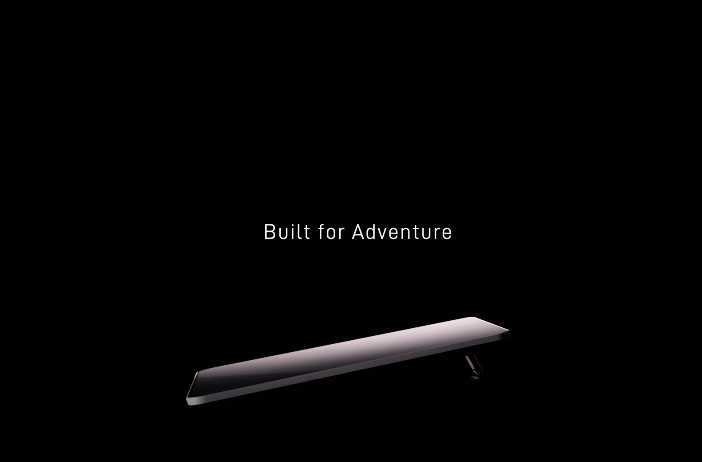
SpaceX Unveils Starlink Mini 2 Terminal With Swappable Battery For Off-grid Internet Connectivity

SpaceX has unveiled the Starlink Mini 2, marking the first time the portable satellite terminal includes an integrated, swappable battery for true off-grid use. The device features a 71 Wh removable battery that provides up to 4.5 hours of connectivity on a single charge and attaches via a tool-free quick-release mechanism; users can hot-swap depleted batteries or power the dish continuously via 60W USB-C.

The terminal weighs 1.6 kg with the battery and kickstand attached, connects to the internet in approximately 60 seconds, and includes a physical power button and LED status indicators.

Key hardware upgrades over the original Mini include a slimmer design, Wi-Fi 6 support extending coverage to 167 square meters, and an IP67 durability rating for dust and water resistance. While the original Mini required external power banks, the Mini 2 eliminates this dependency, though spare batteries are expected to be sold separately for about $50.

Availability is currently limited to an invitation-only preorder in the United States at $999, which bundles the hardware with 12 months of Roam Unlimited service (valued at $2,100). 

Read full Article
post photo preview
Iran War Latest: Trump, Netanyhu Get Into 'Shouting Match From Hell' Over Military Strikes

Reports from Israeli media outlets describe a heated telephone conversation between President Donald Trump and Prime Minister (PM) Benjamin Netanyahu over the weekend of which sources characterized as a "shouting match from hell." The dispute centered on a sharp strategic divergence: the PM is persistently urging the immediate resumption of military strikes against Iran to achieve regime change, while Trump is prioritizing ongoing diplomatic negotiations and economic pressure.

The tension follows reports of of daily lobbying by Netanyahu, who argues that dismantling Iran’s nuclear capability requires toppling the current regime, whereas Trump has stated he sees no reason to restart military operations.

Netanyahu’s office strongly denied the confrontational characterization, dismissing the reports as "fake news" and "complete nonsense," while a senior Israeli official acknowledged the call occurred but insisted it was not difficult. 

The reported clash coincides with renewed diplomatic efforts, including reports that Vice President JD Vance is considering talks with secretary of Iran's Supreme National Security Council, Mohsen Rezaei. Trump also recently indicated that a new offensive is "quite unlikely," a stance supported by Gulf allies like Saudi Arabia and Qatar, who have urged the U.S. to prioritize diplomacy over further escalation in the region.

Read full Article
November 10, 2026
post photo preview
SpaceX Signs Deal With SINGULUS For Starmind Satellite Solar Cell Production At Texas Gigasat Facility

SpaceX has signed a major supply contract with German equipment manufacturer SINGULUS TECHNOLOGIES to build heterojunction (HJT) solar cell production lines at its Bastrop, Texas facility. The initial turnkey production line, valued at over $69 million, is scheduled for delivery in the first half of 2027.

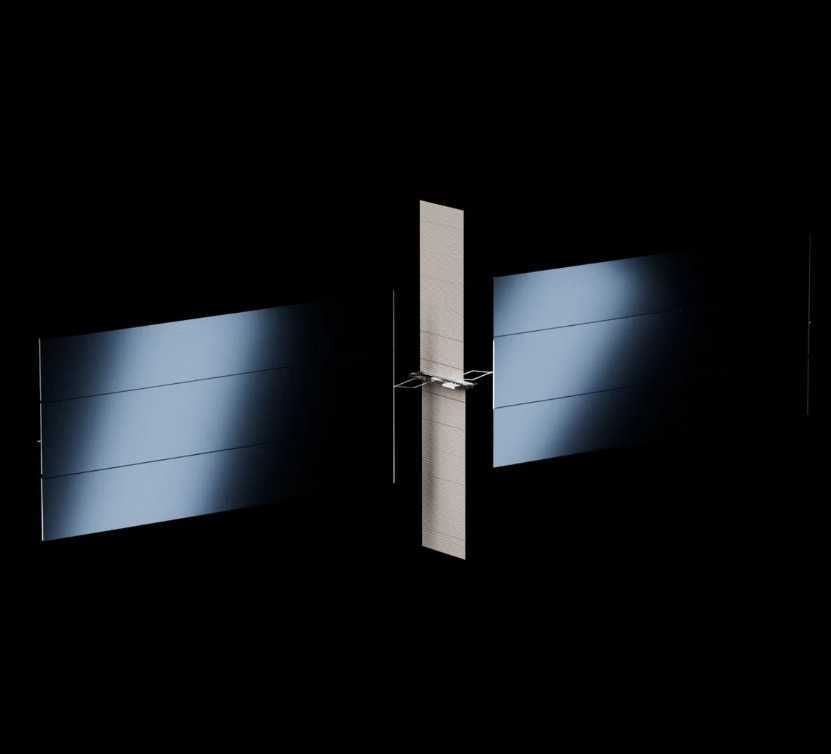
This agreement is part of a broader strategic partnership aimed at scaling manufacturing capacity to support more than 100 GW of production equipment annually for SpaceX’s Starmind satellite constellation, which CEO Elon Musk has described as a plan to create a "sentient sun" for orbital AI computing.

"SpaceX has ordered 100 GW/year of HJT solar manufacturing equipment from Singulus in Germany," Musk wrote on X. "This is for Starmind to create a sentient sun."

SINGULUS will provide a complete turnkey production line for high-efficiency HJT solar cells, which combine crystalline and amorphous silicon layers.

All solar cell production will take place at SpaceX’s Gigasat facility in Bastrop, Texas, establishing a vertically integrated manufacturing path for the Starmind satellites.

The partnership began in March 2026, with SpaceX providing significant financial funding to SINGULUS in both March and October 2026, including through a subordinated secured loan.

While the first line is confirmed for first half of 2027, SINGULUS plans to supply multiple additional lines to meet the 100 GW annual equipment target as satellite production accelerates.

The Starmind program involves a constellation of satellites designed to carry heavy computing payloads that run AI workloads in orbit, powered by solar energy generated directly in space.

Musk clarified on X that the 100 GW/year figure refers to the capacity of the manufacturing equipment rather than the electricity generated, signaling an ambition to produce hundreds of thousands of satellites.

The solar arrays are a critical component, as they reportedly constitute most of the mass of each Starmind satellite, making domestic cell production essential for supply chain durability.

Read full Article
See More
Available on mobile and TV devices
google store google store app store app store
google store google store app tv store app tv store amazon store amazon store roku store roku store
Powered by Locals