keneci Network
News • Science & Tech • Comedy
Israeli Airstrikes Target Iranian Navy Chief, As Trump Again Backs Down From Threat To Bomb 'Energy Plants'
post photo preview

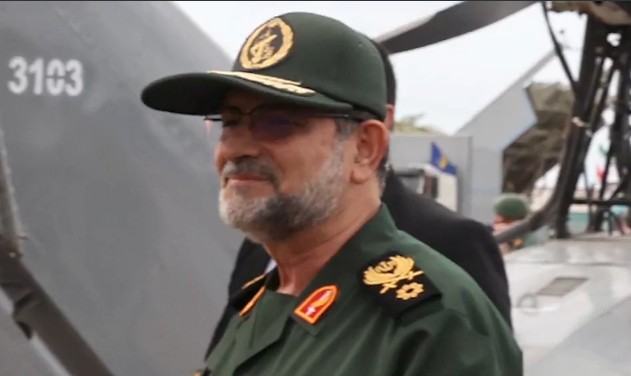
Israel claims to have killed Rear Admiral Alireza Tangsiri, the commander of the Islamic Revolutionary Guard Corps (IRGC) Navy, in a precise airstrike in Bandar Abbas, Wednesday night, with the US Central Command confirming the death and Israeli Defense Minister Israel Katz saying that senior naval aides were also eliminated.

Tangsiri is identified as the official directly responsible for mining and blocking the Strait of Hormuz, a critical global oil artery, and his removal is hailed by Israeli Prime Minister Benjamin Netanyahu as a significant blow to Iran's command-and-control capabilities.

Iran has not yet officially confirmed or denied the killing, though reports indicate Tehran was charging safe passage fees for a trickle of ships allowed through the strait.

Tangsiri served as the IRGC Navy commander since August 2018, appointed by Supreme Leader Ali Khamenei. He oversaw a major buildup of naval capabilities, including thousands of weapons and missiles, and directed attacks on oil tankers and commercial vessels using drones and mines. He led the effort to close the Strait of Hormuz to almost all shipping, causing serious economic disruption and raising the cost of the war for the US and its allies.

Navy commander had survived previous assassination waves in 2025 and early 2026, including a reported blast in Bandar Abbas in January 2026 which the IRGC later denied.

The strike occurred amid escalating hostilities where Hezbollah reportedly attacked Israel, with reports indicating the group used drones to destroy armored vehicles and target military bases, although specific details on the extent of damage in Israel were not fully detailed in the provided context.

The US and Israel have been conducting a month-long campaign since February 28, 2026, which has already resulted in the deaths of over 1,900 people in Iran and the assassination of several other top Iranian officials, including Supreme Leader Ayatollah Ali Khamenei.

President Donald Trump has paused attacks on energy infrastructure until April 6, 2026, citing  "request from Iran," and ongoing diplomatic talks, while US Secretary of State Marco Rubio stated that concrete progress has been made in negotiations.

"As per Iranian Government request, please let this statement serve to represent that I am pausing the period of Energy Plant destruction by 10 Days to Monday, April 6, 2026, at 8 P.M., Eastern Time," the president writes on Truth Social. "Talks are ongoing and, despite erroneous statements to the contrary by the Fake News Media, and others, they are going very well. Thank you for your attention to this matter! President DONALD J. TRUMP."

However Iranian officials say they did not make such request of the Trump administration, and believe his remarks about negotiations may be a diversion tactic to buy time as more U.S. troops are deployed in the region before a possible ground invasion of Iran.

"The Iranian negotiators are very different and 'strange.' They are 'begging' us to make a deal, which they should be doing since they have been militarily obliterated, with zero chance of a comeback, and yet they publicly state that they are only 'looking at our proposal.' WRONG!!! They better get serious soon, before it is too late, because once that happens, there is NO TURNING BACK, and it won’t be pretty!" Trump wrote on Truth Social Thursday.

On his first wartime cabinet meeting nearly one month into the US-Israeli military offensive against Iran, Trump asserted that the Iranian regime is "begging to make a deal" despite Tehran's public rebuff of negotiations, claiming the enemy is "decisively defeated" and has been "beat to s--t." He revealed a diplomatic "present" where Iranian officials allowed 10 oil tankers (with two more added later) to pass through the Strait of Hormuz to demonstrate their legitimacy, while simultaneously criticizing NATO allies, particularly the UK, for failing to send naval assets to secure the chokepoint.

Trump also mocked media reports about potential ground troops, stating he would not answer questions on specific military tactics.

Vice President JD Vance emphasized that the operation's primary goal is ensuring Iran never obtains a nuclear weapon, noting the timing coincides with Holy Week and Easter.

Secretary of State Marco Rubio characterized the conflict as a response to 47 years of Iranian aggression, confirming the destruction of Iran's navy, missile capabilities, and production factories, and praised the Pentagon's success in hitting military targets.

Secretary of War Pete Hegseth reported that over 10,000 enemy targets have been destroyed, including 150+ naval vessels and the death of Iran's navy commander, while stating the Department of War would continue "negotiating with bombs."

Special Envoy Steve Witkoff confirmed the US presented a 15-point "action list" via Pakistan as a framework for peace, noting that while pre-war diplomacy failed because Iran refused to surrender enrichment capabilities, there are now "strong signs" Tehran is ready to negotiate an off-ramp.

The meeting highlighted a dual-track strategy where the administration pushes for a diplomatic resolution while simultaneously escalating military pressure, with Hegseth describing the campaign as "Operation Epic Fury" and a "decisive campaign."

Despite claims of success, Iranian state media has reportedly rejected the peace offer, and key elements of the nuclear program remain intact underground, complicating the administration's narrative of a quick end to the conflict. The administration has redefined the conflict as a "military operation" rather than a war to bypass potential congressional approval requirements, while facing low approval ratings and criticism from the media and Democrats.


community logo
Join the keneci Network Community
To read more articles like this, sign up and join my community today
0
What else you may like…
Videos
Posts
Articles
SpaceX Starlink Internet Satellites

With Starlink internet, data is continuously being sent between a ground dish and a Starlink satellite orbiting 550km above. Furthermore, the Starlink satellite zooms across the sky at 27,000 km/hr! MORE VIDEOS ON KENECI NETWORK RUMBLE CHANNEL: https://rumble.com/c/Keneci

00:28:08
Elon Musk, DOGE Speak On Waste And Fraud

US Department of Government Efficiency Services (USDS) led by Elon Musk speak on the "mind-boggling" fraud and waste in UInited States federal government

00:00:45
January 17, 2025
SpaceX Launches Starship 7th Test Flight

SpaceX successfully executed its second-ever “chopsticks” catch of a Super Heavy booster (or Booster 14) using the “Mechazilla” launch tower on Thursday(Jan. 16), during the seventh uncrewed test flight of the company's 123-meter Starship rocket. However, the megarocket's upper stage(or Ship 33) was lost approximately 8.5 minutes into the flight in a “rapid unscheduled disassembly(RUD)” or explosion

00:10:30
Welcome to Keneci Network!

Join the conversations!

December 09, 2025
Bitcoin White Paper By Satoshi Nakamoto

Bitcoin white paper

Bitcoin_White_Paper.pdf
September 17, 2024
Charges Against Sean 'Diddy' Combs In Grand Jury Indictment

The rapper was charged with racketeering conspiracy, sex trafficking by force, fraud or coercion, and transportation to engage in prostitution in the indictment unsealed Tuesday(Sept. 17)

Combs-Indictment-24-Cr.-542.pdf
post photo preview
OpenAI Shuts Down AI Video Generation App Sora, As Elon Musk Doubles Down On Grok Imagine

OpenAI has abruptly shut down its Sora video generation app and API, a decision that immediately nullified a planned $1 billion equity investment from Disney. The move, announced Tuesday, comes less than four months after the two companies signed a three-year licensing deal in December 2025 that would have granted OpenAI access to over 200 Disney characters (including Mickey Mouse, Yoda, and Iron Man) in exchange for the capital.

OpenAI CEO Sam Altman informed staff that the company is consolidating its consumer offerings into a single "superapp" (combining ChatGPT, Codex, and the browser) and is eyeing a potential IPO as early as Q4 2026. The Sora model itself is not entirely dead but will be repurposed for internal research.

The shutdown was driven by a strategic pivot within OpenAI to focus resources on enterprise tools, coding products, and AGI deployment rather than consumer video applications.

The decision also likely stemmed from declining app traction (downloads dropped from 3.3 million in November to 1.1 million in February), high compute costs, and intense competition from Chinese video models and Google's Veo.

While the standalone app and API are being discontinued, the underlying Sora research team will continue work on long-term "world model" research to advance robotics. No money from the Disney deal ever changed hands, as the transaction was never finalized and remains DOA (dead on arrival).

Disney was reportedly blindsided, learning of the shutdown just 30 minutes after a collaborative meeting on Monday evening; insiders described the move as a "big rug-pull." The entertainment company is now seeking a new AI video partner, with Google emerging as the dominant alternative.

xAI and SpaceX CEO Elon Musk said the company will double down on its AI video generation tool Grok Imagine.

"The next @Grok Imagine release will be epic," Musk wrote Wednesday on X. "We are doubling down."

Responding to an X user who asked why it's important, he said: "it is a more important tool than people realize."

Read full Article
post photo preview
Iran Reportedly Prefers Vance In Ceasefire Talks, As U.S. Deploy Troops For Possible Ground Operation

Iran and the U.S.-Israel alliance continue exchanging missile and drone strikes, with Iran launching fresh waves of missiles at Israel as the war enters its 24th day, targeting areas including Tel Aviv and Dimona—home to a nuclear facility. The Israeli military reported intercepting most projectiles, though debris damaged homes in northern Israel, with no casualties confirmed.

President Donald Trump has postponed a threat to bomb Iran’s power grid for five days, citing progress in backchannel talks, which briefly calmed global markets. However, skeptics believe this is a tactical pause. The Pentagon is expected to deploy about 3,000 paratroopers from the 82nd Airborne Division to the Middle East within hours—forces capable of rapid action, possibly to seize Kharg Island, Iran’s main oil export hub.

Iran denies any negotiations with the U.S., directly rejecting Trump’s claim of “very good and productive” talks aimed at ending hostilities. Mohammad Bagher Ghalibaf, Iran’s parliament speaker, dismissed Trump’s statements as “fake news” designed to manipulate financial and oil markets.

Iranian officials assert no formal diplomacy has occurred, despite Trump’s announcement that envoys Steve Witkoff and Jared Kushner had held discussions with a senior Iranian figure—speculated to be Ghalibaf.

Trump on Tuesday in the Oval Office, told reporters the U.S. has won the war and claimed "They gave us a present… a very big present… worth a tremendous amount of money… a very significant prize.” He indicated the “gift” is tied to oil and gas, linked to developments around the Strait of Hormuz, and said talks are ongoing with senior U.S. officials involved.

Iran has set a condition for talks: it will only negotiate if Vice President JD Vance leads the U.S. delegation. Multiple sources, including Gulf and European officials, confirm Tehran refuses to engage with Witkoff and Kushner, whom Iranian leaders accuse of “stabbing them in the back” by participating in negotiations while the U.S. allegedly planned military action. Vance, seen as skeptical of military escalation, is viewed in Iran as a more credible interlocutor.

Pakistan is emerging as a potential mediator, with plans for possible talks in Islamabad involving U.S. and Iranian officials.

Meanwhile, Iran maintains its blockade of the Strait of Hormuz, demanding an end to U.S. and Israeli attacks before reopening the critical waterway. Over 2,000 people have been killed since the conflict began on February 28, 2026, with both sides intensifying military operations amid fragile and conflicting signals about diplomacy.

Read full Article
post photo preview
Trump Backs Down From 48-hour Ultimatum, Claims 'Productive Conversations' To End Iran War

President Trump claimed on Truth Social that the U.S. and Iran had held “very good and productive conversations” over the past two days regarding a “complete and total resolution” of hostilities in the Middle East. Based on these discussions, he said he instructed the Department of War to postpone military strikes on Iranian power plants and energy infrastructure for five days, pending the outcome of ongoing talks.

"I AM PLEASE TO REPORT THAT THE UNITED STATES OF AMERICA, AND THE COUNTRY OF IRAN, HAVE HAD, OVER THE LAST TWO DAYS, VERY GOOD AND PRODUCTIVE CONVERSATIONS REGARDING A COMPLETE AND TOTAL RESOLUTION OF OUR HOSTILITIES IN THE MIDDLE EAST. BASED ON THE TENOR AND TONE OF THESE IN DEPTH, DETAILED, AND CONSTRUCTIVE CONVERSATIONS, WITCH WILL CONTINUE THROUGHOUT THE WEEK, I HAVE INSTRUCTED THE DEPARTMENT OF WAR TO POSTPONE ANY AND ALL MILITARY STRIKES AGAINST IRANIAN POWER PLANTS AND ENERGY INFRASTRUCTURE FOR A FIVE DAY PERIOD, SUBJECT TO THE SUCCESS OF THE ONGOING MEETINGS AND DISCUSSIONS. THANK YOU FOR YOUR ATTENTION TO THIS MATTER! PRESIDENT DONALD J. TRUMP" the president wrote Monday.

Over the weekend, Trump issued a 48-hour ultimatum demanding Iran reopen the Strait of Hormuz or face obliteration of its power grid. Iran responded with counter-threats, escalating global energy tensions.

Backing down Monday, Trump told reporters that special envoy Steve Witkoff and Jared Kushner had engaged in intense discussions with a senior Iranian official, possibly linked to parliament speaker Mohammad-Bagher Ghalibaf. He said there were “major points of agreement,” including Iran committing not to pursue nuclear weapons and to reopen the Strait of Hormuz.

Also U.S. officials had reportedly asked Pakistani and Turkish officials for help in arranging a meeting between Vice President JD Vance and Ghalibaf. Iranian officials no longer trust Witkoff and Kushner.

Iran’s foreign ministry called Trump's remarks “part of efforts to reduce energy prices and buy time” for military plans. Officials stated there were no direct or indirect communications with the U.S., labeling Trump’s claims as “psychological warfare” and “fake news.”

State television broadcasting claimed “the US president backs down following Iran's firm warning.” An unnamed security official said Trump retreated after Iran threatened to target all power, IT, and desalination infrastructure in the Gulf region, and even **shut down the Strait of Hormuz if attacked.

Parliament Speaker Mohammad Bagher Ghalibaf, a key figure in Iran’s war effort, echoed the denial on X, calling the reports of talks "fake news."

"Iranian people demand complete and remorseful punishment of the aggressors," Ghalibaf wrote. "All Irainan officials stand firmly behind their supreme leader and people until this goal is achieved. No negotiations have been held with the US, and fakenews is used to manipulate the financial and oil markets and escape the quagmire in which the US and Israel are trapped."

Despite the denials, regional backchannel efforts are underway, with countries like Egypt and Pakistan attempting to mediate. Trump’s announcement caused oil prices to drop over 13% and financial markets to rally, reflecting investor response to the prospect of de-escalation. However, Iranian state media and officials maintain that no talks are occurring, and that Trump’s statements are a tactical maneuver rather than evidence of diplomacy.

Benjamin Netanyahu confirmed he spoke with Trump and Vance about the diplomatic efforts. Netanyahu said Trump believed the military gains from the war could be leveraged into a deal that would safeguard Israel’s vital interests. However, Netanyahu emphasized that Israeli strikes on Iran and Lebanon would continue, targeting missile and nuclear programs and Hezbollah.

Oil prices plunged over 13%, with Brent crude falling below $100, and U.S. stock indices surged after Trump’s announcement—only to pull back sharply when Iran denied talks, creating volatility.

The ongoing war began with U.S.-Israeli strikes on Iran on February 28, 2026**, which killed Supreme Leader Ayatollah Ali Khamenei and top military leaders.

Read full Article
See More
Available on mobile and TV devices
google store google store app store app store
google store google store app tv store app tv store amazon store amazon store roku store roku store
Powered by Locals