President Trump claimed on Truth Social that the U.S. and Iran had held “very good and productive conversations” over the past two days regarding a “complete and total resolution” of hostilities in the Middle East. Based on these discussions, he said he instructed the Department of War to postpone military strikes on Iranian power plants and energy infrastructure for five days, pending the outcome of ongoing talks.
"I AM PLEASE TO REPORT THAT THE UNITED STATES OF AMERICA, AND THE COUNTRY OF IRAN, HAVE HAD, OVER THE LAST TWO DAYS, VERY GOOD AND PRODUCTIVE CONVERSATIONS REGARDING A COMPLETE AND TOTAL RESOLUTION OF OUR HOSTILITIES IN THE MIDDLE EAST. BASED ON THE TENOR AND TONE OF THESE IN DEPTH, DETAILED, AND CONSTRUCTIVE CONVERSATIONS, WITCH WILL CONTINUE THROUGHOUT THE WEEK, I HAVE INSTRUCTED THE DEPARTMENT OF WAR TO POSTPONE ANY AND ALL MILITARY STRIKES AGAINST IRANIAN POWER PLANTS AND ENERGY INFRASTRUCTURE FOR A FIVE DAY PERIOD, SUBJECT TO THE SUCCESS OF THE ONGOING MEETINGS AND DISCUSSIONS. THANK YOU FOR YOUR ATTENTION TO THIS MATTER! PRESIDENT DONALD J. TRUMP" the president wrote Monday.
Over the weekend, Trump issued a 48-hour ultimatum demanding Iran reopen the Strait of Hormuz or face obliteration of its power grid. Iran responded with counter-threats, escalating global energy tensions.
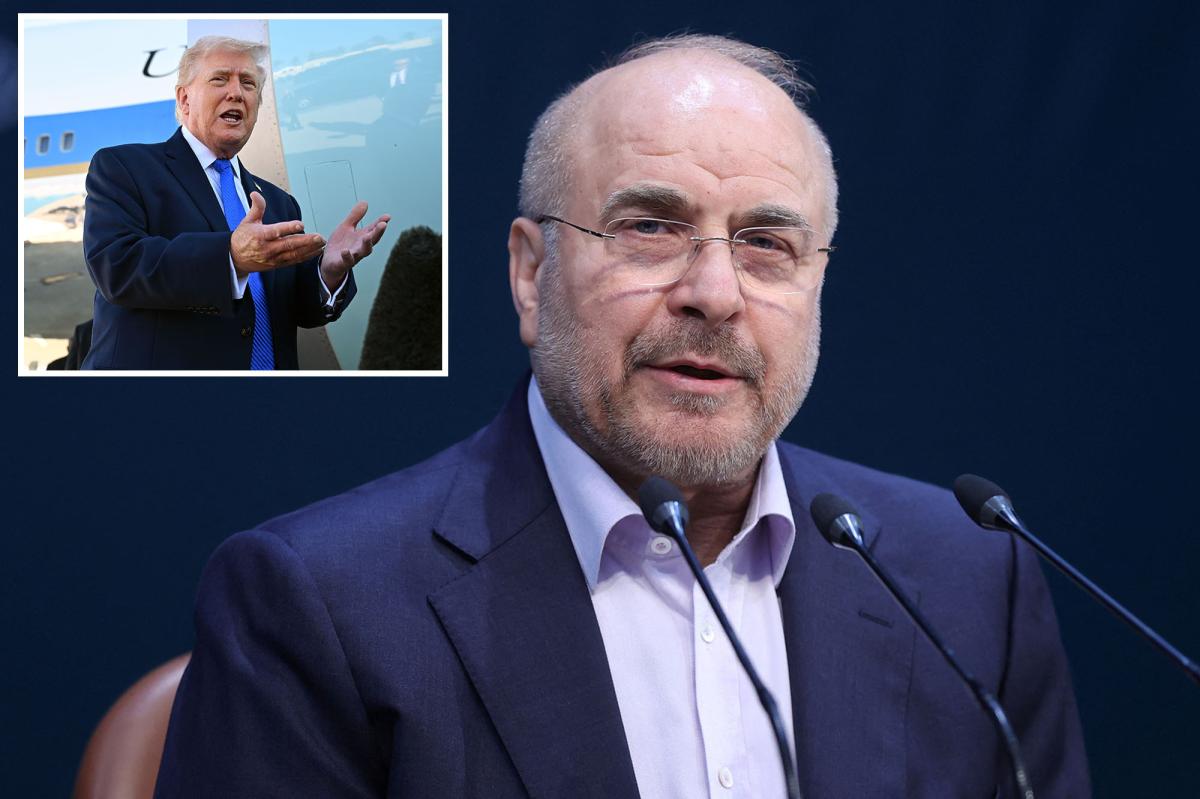
Backing down Monday, Trump told reporters that special envoy Steve Witkoff and Jared Kushner had engaged in intense discussions with a senior Iranian official, possibly linked to parliament speaker Mohammad-Bagher Ghalibaf. He said there were “major points of agreement,” including Iran committing not to pursue nuclear weapons and to reopen the Strait of Hormuz.
Also U.S. officials had reportedly asked Pakistani and Turkish officials for help in arranging a meeting between Vice President JD Vance and Ghalibaf. Iranian officials no longer trust Witkoff and Kushner.
Iran’s foreign ministry called Trump's remarks “part of efforts to reduce energy prices and buy time” for military plans. Officials stated there were no direct or indirect communications with the U.S., labeling Trump’s claims as “psychological warfare” and “fake news.”
State television broadcasting claimed “the US president backs down following Iran's firm warning.” An unnamed security official said Trump retreated after Iran threatened to target all power, IT, and desalination infrastructure in the Gulf region, and even **shut down the Strait of Hormuz if attacked.
Parliament Speaker Mohammad Bagher Ghalibaf, a key figure in Iran’s war effort, echoed the denial on X, calling the reports of talks "fake news."
"Iranian people demand complete and remorseful punishment of the aggressors," Ghalibaf wrote. "All Irainan officials stand firmly behind their supreme leader and people until this goal is achieved. No negotiations have been held with the US, and fakenews is used to manipulate the financial and oil markets and escape the quagmire in which the US and Israel are trapped."
Despite the denials, regional backchannel efforts are underway, with countries like Egypt and Pakistan attempting to mediate. Trump’s announcement caused oil prices to drop over 13% and financial markets to rally, reflecting investor response to the prospect of de-escalation. However, Iranian state media and officials maintain that no talks are occurring, and that Trump’s statements are a tactical maneuver rather than evidence of diplomacy.
Benjamin Netanyahu confirmed he spoke with Trump and Vance about the diplomatic efforts. Netanyahu said Trump believed the military gains from the war could be leveraged into a deal that would safeguard Israel’s vital interests. However, Netanyahu emphasized that Israeli strikes on Iran and Lebanon would continue, targeting missile and nuclear programs and Hezbollah.
Oil prices plunged over 13%, with Brent crude falling below $100, and U.S. stock indices surged after Trump’s announcement—only to pull back sharply when Iran denied talks, creating volatility.
The ongoing war began with U.S.-Israeli strikes on Iran on February 28, 2026**, which killed Supreme Leader Ayatollah Ali Khamenei and top military leaders.