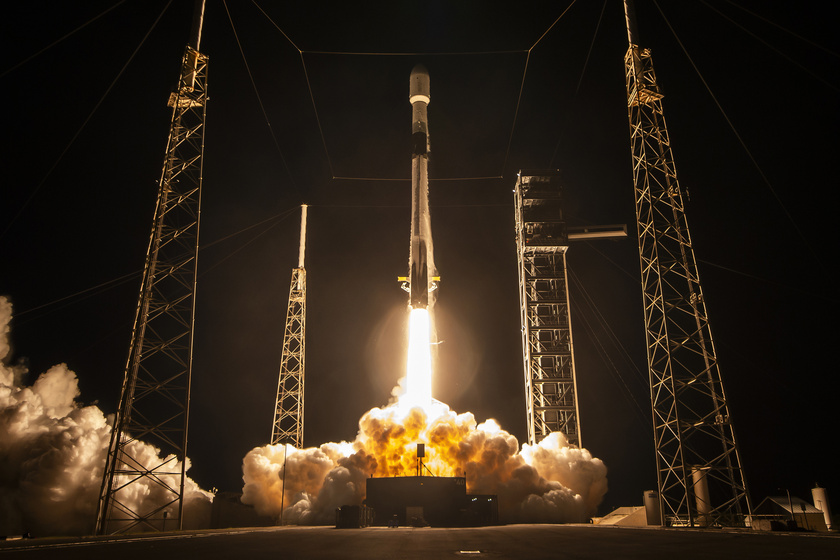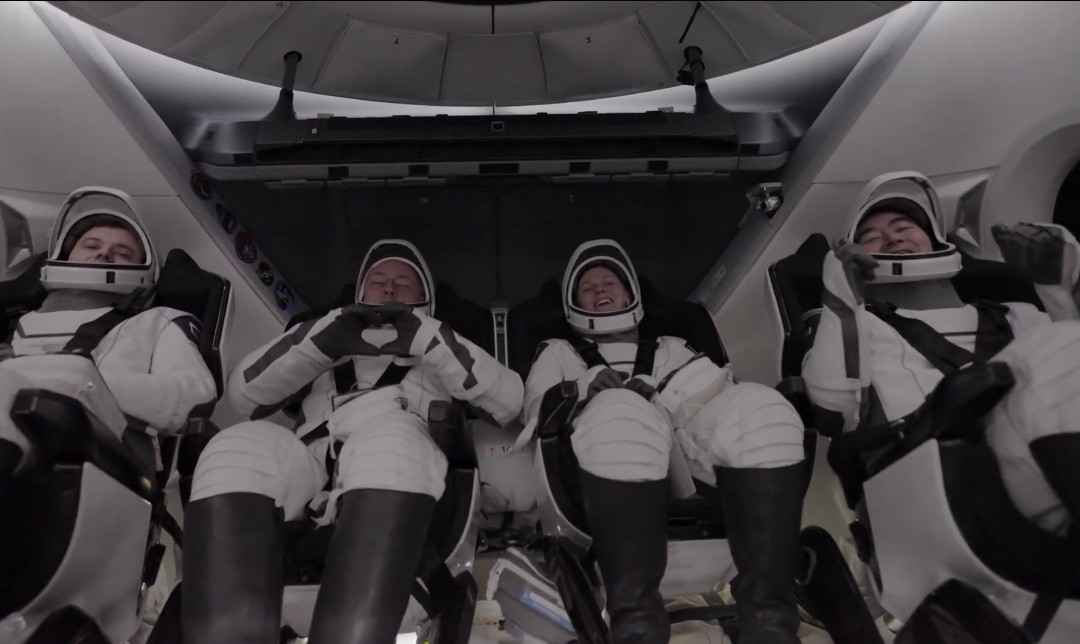
SpaceX Dragon Endeavor splashed down in the Pacific Ocean off the coast of San Diego at 0841 UTC on Thursday (Jan. 15), carrying NASA’s Zena Cardman and Mike Fincke, Japan’s Kimiya Yui, and Russian cosmonaut Oleg Platonov, following first-ever medical evacuation from the International Space Station(ISS) eleven hours earlier.
Endeavour undocked from the ISS on January 14, 2026, and completed a 10-hour descent, re-entering Earth’s atmosphere at over 22 times the speed of sound. The capsule endured extreme heat—exceeding 1,926°C—before deploying four main parachutes and landing in calm waters near San Diego. Dolphins were spotted swimming near the capsule post-splashdown, a rare and symbolic moment captured live.
"It's so good to be home!" Cardman, Crew-11's commander, said shortly after splashdown. "With deep gratitude to the teams that got us there and back."
The crew was transported by helicopter to a San Diego-area hospital for overnight medical evaluation before flying to Houston’s Johnson Space Center on Friday.
The early return was prompted by a serious medical condition affecting one crew member, which NASA confirmed was not related to spacewalk operations. The agency cited the lack of advanced diagnostic and treatment capabilities on the ISS, necessitating a ground-based medical evaluation.
While the identity and specific condition of the affected astronaut remain confidential for privacy, NASA confirmed the crew member is in stable condition.
The Crew-11 mission lasted 167 days, with 165 spent aboard the ISS. It was the first flight for Cardman and Platonov, the second for Yui, and the fourth for Fincke, who now has 549 days of cumulative spaceflight time.
The reduced crew on the ISS now consists of three members: NASA’s Chris Williams and Russian cosmonauts Sergey Kud-Sverchkov and Sergei Mikaev. NASA has stated that the current crew is capable of managing operations, though future spacewalks will be delayed until the arrival of the next crew, SpaceX’s Crew-12, currently scheduled for February 15, 2026.
NASA officials say they aren't worried about the orbital staffing shortage, which will leave Williams to operate the station's American segment by himself.
"Chris is trained to do every task that we would ask him to do on the vehicle," NASA Associate Administrator Amit Kshatriya said during the Jan. 8 press conference.
"Of course, we also do a lot of the operations of the vehicle from our various control centers all over the world, including commercial control centers that operate a lot of our research payloads," Kshatriya added. "So, he will have thousands of people looking over his shoulder, like our crews do all the time to help ensure that they continue the groundbreaking science."
Crew-11 wasn't the first space mission of any kind to end early due to an astronaut health issue. In November 1985, for example, the Soviet Union brought three cosmonauts down from the Salyut-7 space station ahead of schedule because one of them, 33-year-old Vladimir Vasyutin, had fallen ill.
Vasyutin, the Salyut-7 commander, was hospitalized after his return to Earth. Some researchers speculate that he suffered from a prostate infection, which he may have concealed from mission planners in the leadup to launch.
The successful emergency evacuation from the ISS, Wednesday, underscores NASA’s preparedness via SpaceX for rare in-flight medical emergencies, even as such events are statistically expected every three years.
"It is not an emergency de-orbit, even though we always retain that capability, and NASA and our partners train for that routinely," NASA Administrator Jared Isaacman told reporters during a press conference on Jan. 8. Rather, he added, the mission team decided to bring Crew-11 home early because "the capability to diagnose and treat this properly does not live on the International Space Station."
=================
SpaceX Crew-11 Dragon Endeavour -- carrying NASA astronauts Zena Cardman and Mike Fincke, Japan's Kimiya Yui and Russian cosmonaut Oleg Platonov -- undocked from the space-facing port of the International Space Station (ISS)'s Harmony module at 2220 UTC on Jan. 14, marking the first-ever medical evacuation from the ISS. The departure was prompted by an undisclosed medical issue involving one of the four crew members, which led NASA to cut the mission short.
A crew member experienced a medical situation that led to the cancellation of USA EVA 94, a critical spacewalk to install solar arrays. NASA announced the early return on January 8, 2026, stating the astronaut was in stable condition but required medical care. The crew which launched to the ISS on Aug. 1, 2025, was scheduled to spend a six-month stint on the orbital laboratory and return in late February, but had to depart earlier.
On January 12, 2026, Mike Fincke handed command of the ISS to Roscosmos cosmonaut Sergey Kud-Sverchkov, preparing for the crew’s departure. NASA Administrator Jared Isaacman announced the mission's end during a press conference the same day as the canceled EVA, and crews aboard the ISS began their preparations to leave — including the change of command ceremony.
The Crew-11 astronauts aboard Endeavour now face a roughly 11-hour deorbit trajectory, with an expected parachute-assisted splashdown in the Pacific Ocean, Thursday morning.
Currently aboard the ISS are Sergey Kud-Sverchkov (Roscosmos), Chris Williams (NASA), and Sergey Mikaev (Roscosmos). The skeleton crew will remain until the arrival of SpaceX Crew-12, scheduled for mid-February 2026.