A 28-point peace plan drafted by U.S. Special Envoy Steve Witkoff and Secretary of State/National Security Adviser Marco Rubio, and presented to Ukrainian President Volodymyr Zelenskyy on Thursday, has been formally delivered, calling for significant territorial concessions from Ukraine and the establishment of long-term security and economic arrangements with Russia.
The plan, which includes a NATO-style security guarantee for Ukraine, requires Kyiv to cede Crimea, Luhansk, and Donetsk to Russia, freeze control of Kherson and Zaporizhzhia along current lines, reduce its military to 600,000 personnel, and permanently renounce NATO membership. Despite these demands, the U.S. has offered security guarantees modeled on Article 5 of the NATO treaty, stating that a future Russian attack on Ukraine would be viewed as threatening the "transatlantic community" and could trigger a coordinated military response.
Zelenskyy acknowledged the proposal in a public address, stating he had a "very serious conversation" with U.S. officials and that teams would work on the proposals to ensure a real and lasting peace.
According to the document, the plan states:
1. Ukraine’s sovereignty will be confirmed.
2. A comprehensive and comprehensive non-aggression agreement will be concluded between Russia, Ukraine and Europe. All ambiguities of the last 30 years will be considered settled.
3. It’s expected that Russia won’t invade neighboring countries and NATO won’t expand further.
4. A dialogue will be held between Russia and NATO, mediated by the USA, to resolve all security issues and create conditions for de-escalation in order to ensure global security and increase opportunities for cooperation and future economic development.
5. Ukraine will receive reliable security guarantees.
6. The size of the Ukrainian Armed Forces will be limited to 600,000 personnel.
7. Ukraine agrees to enshrine in its constitution that it will not join NATO, and NATO agrees to include in its statutes a provision that Ukraine will not be admitted in the future.
8. NATO agrees not to station troops in Ukraine.
9. European fighter jets will be stationed in Poland.
10. US guarantee:
a) The US will receive compensation for the guarantee.
b) If Ukraine invades Russia, it will lose the guarantee.
c) If Russia invades Ukraine, in addition to a decisive coordinated military response, all global sanctions will be reinstated, recognition of the new territory and all other benefits of this deal will be revoked.
d) If Ukraine launches a missile at Moscow or St. Petersburg without cause, the security guarantee will be deemed invalid.
11. Ukraine is eligible for EU membership and will receive short-term preferential access to the European market while this issue is being considered.
12. A powerful global package of measures to rebuild Ukraine, including but not limited to:
a) The creation of an Ukraine Development Fund to invest in fast-growing industries, including technology, data centers and artificial intelligence.
b) The USA will cooperate with Ukraine to jointly rebuild, develop, modernize, and operate Ukraine’s gas infrastructure, including pipelines and storage facilities.
c) Joint efforts to rehabilitate war-affected areas for the restoration, reconstruction and modernization of cities and residential areas.
d.) Infrastructure development.
e) Extraction of minerals and natural resources.
f) The World Bank will develop a special financing package to accelerate these efforts.
13. Russia will be reintegrated into the global economy:
a) The lifting of sanctions will be discussed and agreed upon in stages and on a case-by-case basis.
b) The United States will enter into a long-term economic cooperation agreement for mutual development in the areas of energy, natural resources, infrastructure, artificial intelligence, data centers, rare earth metal extraction projects in the Arctic, and other mutually beneficial corporate opportunities.
c) Russia will be invited to rejoin the G8.
14. Frozen funds will be used as follows: $100 billion in frozen Russian assets will be invested in US-led efforts to rebuild and invest in Ukraine. The US will receive 50% of the profits from this venture. Europe will add $100 billion to increase the amount of investment available for Ukraine’s reconstruction. The remainder of the frozen Russian funds will be invested in a separate US-Russian investment vehicle that will implement joint projects in specific areas. This fund will be aimed at strengthening relations and increasing common interests to create a strong incentive not to return to conflict.
15. A joint American-Russian working group on security issues will be established to promote and ensure compliance with all provisions of this agreement.
16. Russia will enshrine in law its policy of non-aggression towards Europe & Ukraine.
17. The United States and Russia will agree to extend the validity of treaties on the non-proliferation and control of nuclear weapons, including the START I Treaty.
18. Ukraine agrees to be a non-nuclear state in accordance with the Treaty on the Non-Proliferation of Nuclear Weapons.
19. The Zaporizhzhya [sic] Nuclear Power Plant will be launched under the supervision of the IAEA, and the electricity produced will be distributed equally between Russia and Ukraine — 50:50.
20. Both countries undertake to implement educational programmes in schools and society aimed at promoting understanding and tolerance of different cultures and eliminating racism and prejudice:
a) Ukraine will adopt EU rules on religious tolerance and the protection of linguistic minorities.
b) Both countries will agree to abolish all discriminatory measures and guarantee the rights of Ukrainian and Russian media and education.
c) All Nazi ideology and activities must be rejected and prohibited.
21. Territories:
a) Crimea, Luhansk and Donetsk will be recognised as de facto Russian, including by the United States.
b) Kherson and Zaporizhzhia will be frozen along the line of contact, which will mean de facto recognition along the line of contact.
c) Russia will relinquish other agreed territories it controls outside the five regions.
d) Ukrainian forces will withdraw from the part of Donetsk Oblast that they currently control, and this withdrawal zone will be considered a neutral demilitarized buffer zone, internationally recognized as territory belonging to the Russian Federation. Russian forces will not enter this demilitarized zone.
22. After agreeing on future territorial arrangements, both the Russian Federation and Ukraine undertake not to change these arrangements by force. Any security guarantees will not apply in the event of a breach of this commitment.
23. Russia will not prevent Ukraine from using the Dnieper River for commercial activities, and agreements will be reached on the free transport of grain across the Black Sea.
24. A humanitarian committee will be established to resolve outstanding issues:
a) All remaining prisoners and bodies will be exchanged on an ‘all for all’ basis.
b) All civilian detainees and hostages will be returned, including children.
c) A family reunification programme will be implemented.
d) Measures will be taken to alleviate the suffering of the victims of the conflict.
25. Ukraine will hold elections in 100 days.
26. All parties involved in this conflict will receive full amnesty for their actions during the war and agree not to make any claims or consider any complaints in the future.
27. This agreement will be legally binding. Its implementation will be monitored and guaranteed by the Peace Council, headed by President Donald J. Trump. Sanctions will be imposed for violations.
28. Once all parties agree to this memorandum, the ceasefire will take effect immediately after both sides retreat to agreed points to begin implementation of the agreement.
A senior U.S. official reportedly said that Ukraine significantly changed one of the 28 points in the version that appeared online. In an apparent move to expose alleged corruption, the draft had called for an audit of all international aid Ukraine had received. The language was changed to say all parties will receive "full amnesty for their actions during the war." Ukrainian officials denied the claims in the report.
The draft of the U.S. proposal for a Ukraine security guarantee states:
This Framework establishes the conditions for an armistice between Ukraine and the Russian Federation and provides a security assurance modeled on the principles of Article 5 of the North Atlantic Treaty, adapted to the circumstances of this conflict and the interests of the United States and its European partners.
The United States affirms that a significant, deliberate, and sustained armed attack by the Russian Federation across the agreed armistice line into Ukrainian territory shall be regarded as an attack threatening the peace and security of the transatlantic community. In such an event, the President of the United States shall, in exercise of constitutional authority and after immediate consultations with Ukraine, NATO, and European partners, determine the measures necessary to restore security. These measures may include armed force, intelligence and logistical assistance, economic and diplomatic actions, and other steps judged appropriate. A joint assessment mechanism with NATO and Ukraine will evaluate any claimed breach.
NATO members, including France, the United Kingdom, Germany, Poland, and Finland, affirm that Ukraine's security is integral to European stability and commit to act in concert with the United States in responding to any qualifying violation, ensuring a unified and credible deterrent posture.
This Framework enters into force upon signature and shall remain valid for ten years, renewable by mutual agreement. A Joint Monitoring Commission led by European partners with U.S. participation will oversee compliance.
Signed:
Ukraine
The Russian Federation
The United States of America
European Union
NATO.
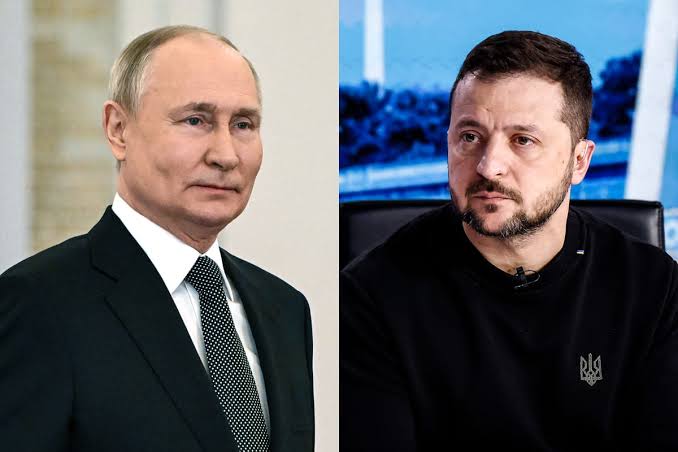
Zelenskyy addressed the nation in a somber 10-minute video on Friday, warning of an unprecedented crisis as Ukraine faces immense pressure amid the U.S.-proposed 28-point peace plan. He described the moment as one of the most difficult in Ukraine’s history, stating the country now faces a stark choice: either accept the plan’s harsh terms and risk losing its dignity, or risk losing vital U.S. support and endure a very difficult winter.
The president emphasized the need for national unity during what he called a “very difficult, eventful” week. “This is one of the most difficult moments in our history,” he said and noted that “the pressure on Ukraine is one of the hardest.”
Zelenskyy confirmed he was working with U.S. officials, including Vice President JD Vance and Army Secretary Dan Driscoll, to ensure Ukraine’s “principled stances are taken into account.” He also held an urgent call with the leaders of Britain, Germany, and France to coordinate a response to the proposal.
On his part, Putin said Friday, "President Trump's peace plan for resolving the situation in Ukraine was discussed prior to the meeting in Alaska. During these preliminary discussions, the US asked us to show flexibility. The meeting in Alaska was intended to confirm these preliminary arrangements; despite certain difficult issues, we had agreed to these proposals.
"Following the talks in Alaska, we have observed a pause from the American side. We understand this is due to Ukraine's de facto rejection of the peace plan proposed by President Trump. I believe this is the reason behind the appearance of the modernized 28-point plan.
"We have this text and consider that it could also serve as a basis for a final peace settlement. However, this text is not being discussed with us in any substantive manner, and I can surmise why. The reason remains the same: the US has so far been unable to secure Ukraine's consent. Ukraine is against it.
"Ukraine and its European partners are still under the illusion that Russia can be defeated on the battlefield. I attribute this to a lack of competence and objective information about the actual situation on the front lines. Neither Ukraine nor Europe comprehends where this path may ultimately lead.
"If Ukraine does not wish to discuss President Trump's peace proposal, that is acceptable to us; it allows for the achievement of the Special Military Operation's objectives through military means. However, as I have stated many times before, we are prepared to negotiate in order to resolve problems peacefully. This, however, requires a substantive discussion of all the details of the proposed plan. We are ready for this."
Responding to reporters at the White House while welcoming the new New York City Mayor-elect Zohran Mamdani, Trump said: Zelensky "will have to like" the American plan. "If he doesn't like it, they’ll just have to keep fighting, I guess... At some point, he’s going to have to accept something.”
European leaders on their part, have expressed strong reservations about the U.S.-proposed peace plan, emphasizing that any agreement must respect Ukraine’s sovereignty and involve its full consent.
German Chancellor Friedrich Merz, French President Emmanuel Macron, and British Prime Minister Keir Starmer assured Zelensky of their "unchanged and full support" for a lasting and just peace, while stressing that Ukraine’s armed forces must remain capable of defending its sovereignty effectively.
European officials, including EU Commission President Ursula von der Leyen and EU foreign policy chief Kaja Kallas, have reiterated the principle that "nothing about Ukraine without Ukraine," criticizing the plan for being developed without European consultation and warning that it could embolden Russia and undermine European security.
Merz, Macron, and Starmer held a phone call with Zelensky, reaffirming their support for Ukraine’s sovereignty and the need for any agreement to protect vital European and Ukrainian interests, with the current front lines serving as the basis for negotiations.
Kallas claimed that the plan would fail without Ukrainian and European buy-in, calling it a "very dangerous moment for all" and emphasizing that peace cannot mean capitulation
European leaders are convening on the sidelines of the G20 summit in Johannesburg to discuss the U.S. proposal, with German officials working to coordinate a European response.
Some European officials, like Estonia’s Marko Mihkelson, have warned that accepting the plan could lead to direct conflict with Russia, while others, such as the Dutch foreign minister, stressed that any settlement must be based on Ukrainian territory and sovereignty.
However critics slammed European leaders for endless meetings, posturing and virtue-signaling while Russians and Ukrainians slaughter themselves on the frontlines. Trump, critics argue, is at least trying to end the bloodshed short of starting a third world war with Russia. Voters elected the U.S. president hoping he can end the war as he promised, save taxpayers billions of dollars, and focus on domestic priorities.