keneci
News • Science & Tech • Comedy
HTV-X1: Japan's JAXA Launches New Cargo Spacecraft On Debut Mission To ISS
October 25, 2025
post photo preview

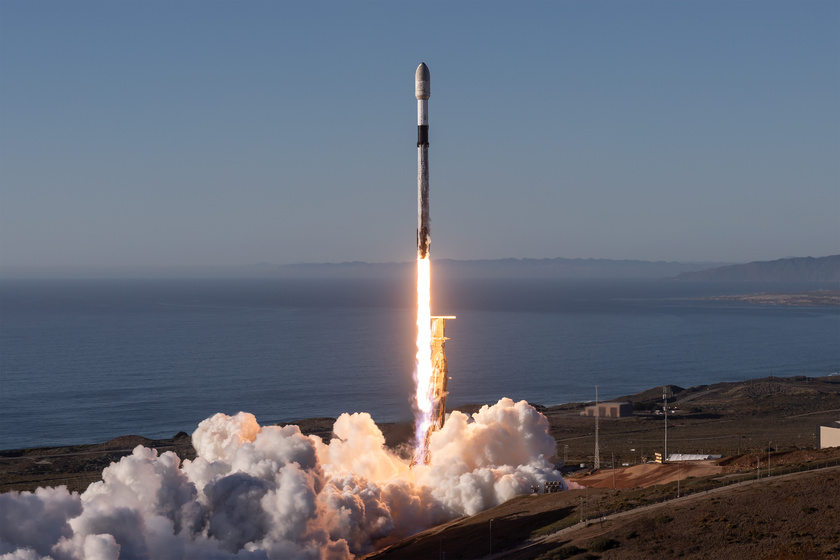
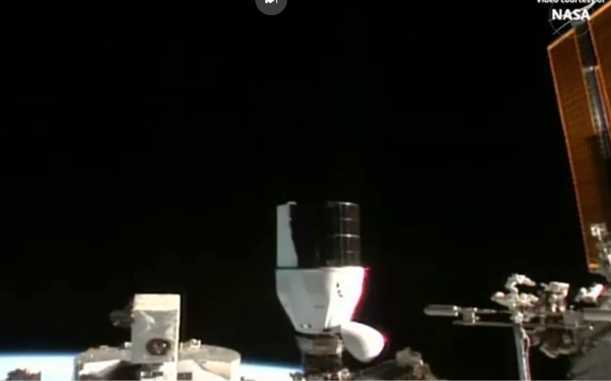
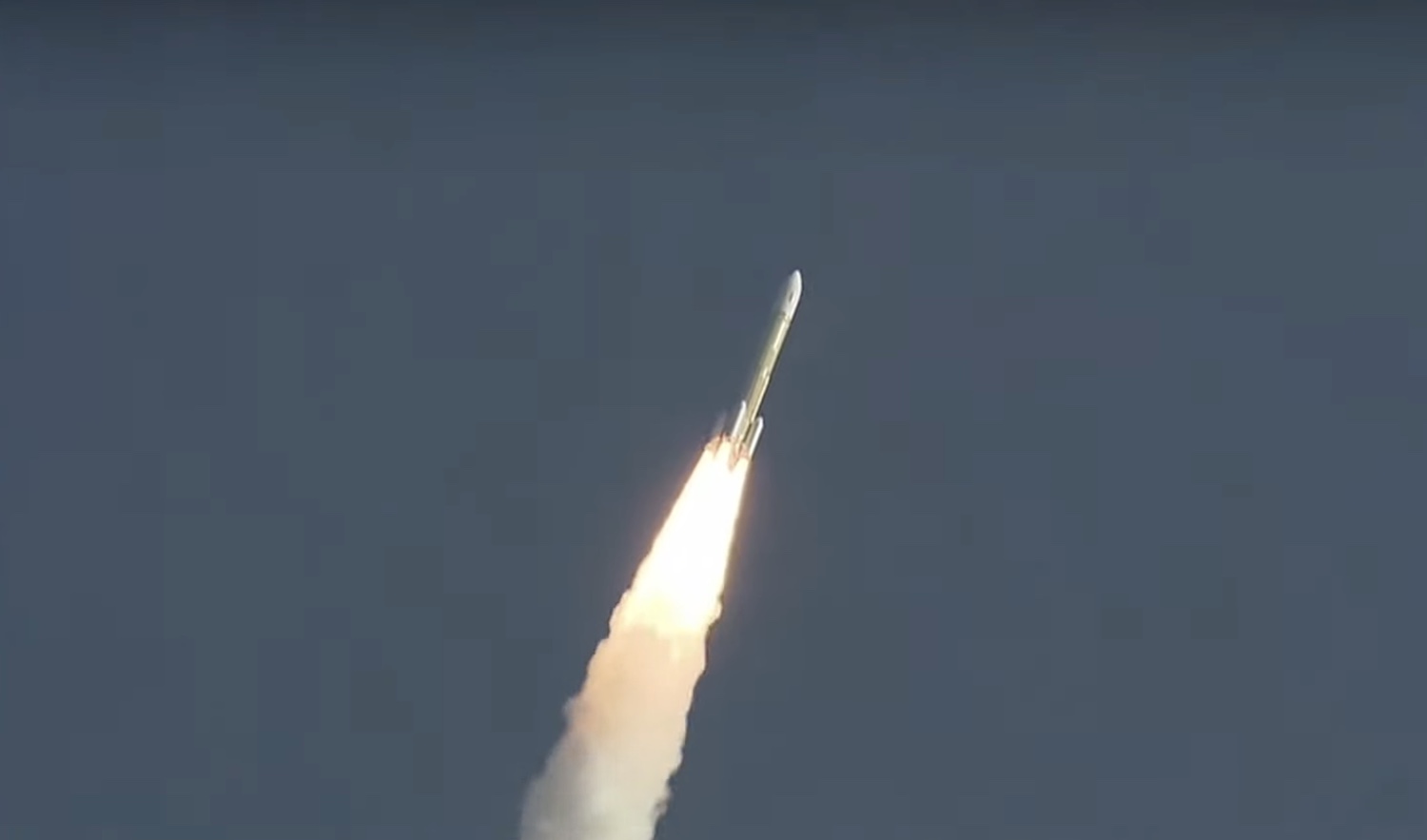
Japan Aerospace Exploration Agency (JAXA) successfully launched the first HTV-X1 cargo spacecraft, atop an H3 rocket from the Tanegashima Space Center at 0000 UTC, on Sunday (Oct. 26). It is expected to arrive at the International Space Station (ISS) for docking on Wednesday (Oct. 29) at about 1550 UTC.

The launch marked the maiden flight of the new generation of Japanese cargo ships and the debut of the H3 rocket’s configuration with four solid rocket boosters (SRBs). This H3 Flight 7 (H3 F7) mission represents a significant milestone in JAXA’s efforts to modernize its ISS resupply capabilities.

The HTV-X is the successor to the H-II Transfer Vehicle (HTV), also known as Kounotori ("White Stork"), which completed its nine missions to the ISS between 2009 and 2020. The new spacecraft was conceived in 2015 to develop a cost-reduced, improved version of the HTV, with a focus on enhanced efficiency and flexibility. It features a modular design, reusing the Pressurized Logistics Carrier (PLC) from the HTV but incorporating a new Service Module that replaces the Unpressurized Logistics Carrier, Avionics Module, and Propulsion Module.

A key design change was the removal of the side hatch for late access cargo, which was initially planned but later abandoned. Instead, unpressurized cargo is now carried on top of the Service Module, allowing for greater payload capacity and improved mission flexibility.

The HTV-X1 spacecraft is 8 meters(m) long (1.2 m shorter than its predecessor) and has a launch mass of 16,000 kg. It can carry a total of 5,820 kg of cargo, consisting of 4,069 kg of pressurized cargo and 1,750 kg of unpressurized cargo, representing a significant increase over the previous HTV's capabilities.

The spacecraft is powered by deployable solar cells, generating up to 1 kW of power, and is designed to remain berthed to the ISS for up to six months. After departure, it can conduct extended free-flight missions for up to 1.5 years, serving as a testbed for autonomous navigation and long-duration system reliability.

The primary mission of HTV-X1 includes delivering a mix of consumables, maintenance gear, and experimental equipment to the ISS. A key payload is the i-SEEP-3B, the latest version of Japan’s exposed experiment platform, which will be robotically installed on the Kibo laboratory module to host small scientific and commercial payloads.

This first flight is not only a resupply mission but also a full-scale demonstration of JAXA’s upgraded power, avionics, and modular service systems under real ISS conditions 

The H3 rocket, developed by Mitsubishi Heavy Industries (MHI), is designed to be a cost-effective and reliable launch vehicle, incorporating 3D-printed components and simplified structures. Its maiden flight in March 2023 ended in failure due to a second-stage engine issue, but subsequent missions have been successful, including a February 2025 launch that deployed the QZS-6 navigation satellite. The H3’s ability to deliver precise orbital insertion into the ISS’s narrow orbital plane makes it an ideal partner for the HTV-X.

"HTV-X enhances transportation capabilities and adds the capability to provide various users with on-orbit demonstration opportunities for up to 1.5 years after leaving ISS until reentry," Mitsubishi Heavy Industries, which builds the HTV-X for JAXA, wrote in a description of the vehicle.

Looking ahead, JAXA plans to extend the HTV-X design for future missions beyond low Earth orbit, including potential logistics support for the Lunar Gateway the space station NASA may build in lunar orbit as part of its Artemis program, and future lunar surface operations. The agency envisions it aiding "post-ISS human space activities in low Earth orbit."

HTV-X joins the stable of ISS cargo vehicles which currently include Russia's Progress vehicle and Northrop Grumman's Cygnus and SpaceX's Dragon, the only reusable craft of the four. The others are designed to burn up in Earth's atmosphere when their missions are over.

The successful launch of HTV-X1 signifies a new era in Japanese space logistics, enhancing international cooperation on the ISS and paving the way for Japan’s continued role in future space exploration.


community logo
Join the keneci Community
To read more articles like this, sign up and join my community today
0
What else you may like…
Videos
Posts
Articles
SpaceX Starlink Internet Satellites

With Starlink internet, data is continuously being sent between a ground dish and a Starlink satellite orbiting 550km above. Furthermore, the Starlink satellite zooms across the sky at 27,000 km/hr! MORE VIDEOS ON KENECI NETWORK RUMBLE CHANNEL: https://rumble.com/c/Keneci

00:28:08
Elon Musk, DOGE Speak On Waste And Fraud

US Department of Government Efficiency Services (USDS) led by Elon Musk speak on the "mind-boggling" fraud and waste in UInited States federal government

00:00:45
January 17, 2025
SpaceX Launches Starship 7th Test Flight

SpaceX successfully executed its second-ever “chopsticks” catch of a Super Heavy booster (or Booster 14) using the “Mechazilla” launch tower on Thursday(Jan. 16), during the seventh uncrewed test flight of the company's 123-meter Starship rocket. However, the megarocket's upper stage(or Ship 33) was lost approximately 8.5 minutes into the flight in a “rapid unscheduled disassembly(RUD)” or explosion

00:10:30
Welcome to Keneci Network!

Join the conversations!

September 17, 2024
Charges Against Sean 'Diddy' Combs In Grand Jury Indictment

The rapper was charged with racketeering conspiracy, sex trafficking by force, fraud or coercion, and transportation to engage in prostitution in the indictment unsealed Tuesday(Sept. 17)

Combs-Indictment-24-Cr.-542.pdf
"Dear husband"

A Dubai princess took to social media to announce she's divorcing her husband who's worth $40B.

She claims the billionaire is busy with his "other [female] companions"

post photo preview
post photo preview
Trump's National Security Strategy Slams Europe's Migration, Ukraine Policies, Asserts 'America First' Foreign Policy

President Donald Trump's newly released 2025 National Security Strategy (NSS) outlines a sweeping realignment of U.S. foreign policy centered on "America First," asserting dominance in the Western Hemisphere, confronting Europe over migration and democratic backsliding, and prioritizing strategic competition with China while avoiding direct conflict.

The document, released on Friday, introduces a "Trump Corollary" to the Monroe Doctrine, calls for a reorientation of military presence toward the Americas, and frames immigration as a primary threat to national security and Western civilization.

The strategy asserts that mass migration into Europe is "changing the culture and economies of the world's traditional powers, undermining their dominance" and warns that "should present trends continue, the continent will be unrecognizable in 20 years or less" due to "activities of the European Union and other transnational bodies that undermine political liberty and sovereignty, migration policies that are transforming the continent and creating strife, censorship of free speech and suppression of political opposition, cratering birthrates, and loss of national identities and self-confidence."

The document further warns that "over the long term, it is more than plausible that within a few decades at the latest, certain NATO members will become majority non-European," raising concerns about alliance reliability.

The NSS criticizes left-wing European governments for undermining peace in Ukraine, accusing them of "subverting democracy at home" and blocking U.S.-backed efforts to end the war. It states that "a large European majority wants peace, yet that desire is not translated into policy, in large measure because of those governments’ subversion of democratic processes" and calls for an "expeditious cessation of hostilities" to stabilize European economies and reestablish strategic stability with Russia.

The strategy explicitly supports "cultivating resistance to Europe’s current trajectory within European nations," suggesting U.S. efforts to influence domestic politics in allied countries in a more patriotic and democratic direction.

The NSS declares a "Trump Corollary" to the Monroe Doctrine, asserting U.S. dominance in the Western Hemisphere as a "condition of our security and prosperity" and calling for "targeted deployments to secure the border and defeat cartels, including where necessary the use of lethal force." This includes a military campaign against alleged drug-smuggling boats in the Caribbean, which has already resulted in the destruction of at least 23 boats and the deaths of 87 people, with the administration framing the effort as an "armed conflict" with cartels.

The document accuses China of using U.S. engagement to "get rich and powerful" while "hollowing out the very middle class and industrial base on which American economic and military preeminence depend." It calls for "maintaining a genuinely mutually advantageous economic relationship" with China based on "reciprocity and fairness" and reducing U.S. dependence on the country to sustain economic growth from a $30 trillion economy in 2025 to $40 trillion by the 2030s.

On Taiwan, the strategy reaffirms that "deterring a conflict over Taiwan, ideally by preserving military overmatch, is a priority" and that "a favorable conventional military balance" is key to U.S. interests in the region.

The 33-page document marks the first official NSS since Trump’s return to the presidency in January 2025. It represents a sharp departure from the Biden administration’s emphasis on alliance-building and multilateralism, instead framing alliances as "a broad network of alliances, with treaty allies and partners in the world’s most strategically important regions," deployed as tools within a broader framework grounded in Trump’s affinity to break with neoconservative interventionist tradition.

The strategy also signals a reduced U.S. role in the Middle East, stating that "the days in which the Middle East dominated American foreign policy... are thankfully over," though it acknowledges that conflict remains a troubling dynamic.

Read the full 2025 National Security Strategy:

 
Read full Article
post photo preview
Meta Signs AI Deals With News Publishers

Meta has announced new multiyear AI content licensing deals with major news publishers, including USA Today, Fox News, CNN, Le Monde Group, The Daily Caller, The Washington Examiner, and People Inc., to provide real-time news responses within its AI chatbot, Meta AI.

These partnerships, which allow the chatbot to pull information and link directly to original articles on Facebook, Instagram, WhatsApp, and Messenger, mark a significant strategic pivot for Meta after it previously ceased paying publishers and shut down its Facebook News tab in 2024.

The move comes amid growing industry tensions, as The New York Times and the Chicago Tribune have recently sued AI startup Perplexity for unauthorized content use, highlighting the shift from unlicensed scraping to formal licensing agreements.

The agreements are multiyear and include unspecified compensation for publishers, with Meta stating the goal is to improve the accuracy, responsiveness, and balance of its AI by incorporating diverse viewpoints.

Meta AI will now surface information and links from partner outlets when users ask news-related questions, aiming to deliver timely and relevant content across global, entertainment, and lifestyle topics 

The inclusion of both left-wing (CNN, USA Today) and conservative (The Daily Caller, The Washington Examiner) outlets suggests a deliberate effort to address past criticisms of political bias in Meta’s platforms.

This development follows Meta’s earlier deal with Reuters in October 2024 and reflects a broader industry trend, with competitors like OpenAI, Google (Gemini), and Perplexity also securing content partnerships.

While the deals offer publishers a new revenue stream, they raise concerns about potential declines in direct website traffic as users may rely on AI chatbot summaries instead of visiting original articles

Read full Article
December 06, 2025
post photo preview
EU Imposes $140M Fines On X Over 'Deceptive' Blue Checkmarks: Elon Musk Calls 'Bullshit'

The European Union on Friday, imposed a $140 million ($120 million euro) fine on Elon Musk’s social media platform X for allegedly violating the bloc’s Digital Services Act (DSA), marking the first enforcement action under the landmark legislation.

The penalty stems from three alleged violations: the deceptive design of its paid blue checkmark system, lack of transparency in its advertizing repository, and failure to provide researchers with adequate access to public data.

The EU’s European Commission claims that X’s blue checkmark system, which allows anyone to pay $8 per month for verification, misleads users by implying authenticity without meaningful verification, violating the DSA’s prohibition on deceptive design.

X was fined 45 million euros ($52.4 million) for the blue checkmark issue, 35 million euros ($40.7 million) for failing to maintain a transparent advertising database, and 40 million euros ($46.6 million) for blocking researchers from accessing public data.

The decision, announced on Friday, has triggered strong reactions from U.S. officials, including Vice President JD Vance and Secretary of State Marco Rubio, who accused the EU of targeting American tech companies, with Rubio claiming it was “an attack on all American tech platforms and the American people by foreign governments.”

"Rumors swirling that the EU commission will fine X hundreds of millions of dollars for not engaging in censorship" Vance wrote on X. "The EU should be supporting free speech not attacking American companies over garbage."

Musk initially responded with dismissive remarks, calling the ruling “Bullshit.”

The Commission denied that the fine is censorship, and claimed it's a necessary step to protect users’ rights and restore trust in the digital environment, with EU tech chief Henna Virkkunen saying, “Deceiving users with blue checkmarks, obscuring information on ads and shutting out researchers have no place online in the EU.”

Virkkunen added: “The DSA protects users. The DSA gives researchers the way to uncover potential threats. The DSA restores trust in the online environment. With the DSA’s first non-compliance decision, we are holding X responsible for undermining users’ rights and evading accountability.”

The investigation into X began in December 2023 and focused on the platform’s design, advertising practices, and handling of illegal content and information manipulation, with the latter probes still ongoing 

The EU can charge companies up to 6 percent of their global revenue for DSA violations. As X is a private company — purchased by Musk for $44 billion in October 2022 and again by his artificial intelligence company, X AI, in March 2025 for $33 billion — it’s unclear what its potential maximum penalty could have been.

X can appeal the fine, but now has 60 working days to inform the EU of the measures it will take to change the “deceptive” use of blue checkmarks, and 90 days for its planned fixes for the other violations. Failure to meet those deadlines could result in more penalty payments.

European lawmakers had reportedly deliberated how large a fine to issue as regulators sought to make an example of X as a warning to other companies while weighing the risks of sparking retaliation from President Donald Trump amid ongoing trade disputes. Musk, alongside the leadership of other US tech giants, has encouraged the president to stop the EU from taking advantage of US companies.

In contrast, TikTok avoided a penalty by pledging to improve its advertising transparency, highlighting the EU’s approach of encouraging compliance through negotiation.

"The 'EU' imposed this crazy fine not just on @X, but also on me personally, which is even more insane!," Musk wrote on X. "Therefore, it would seem appropriate to apply our response not just to the EU, but also to the individuals who took this action against me."

Chris Pavlovski, the CEO of popular YouTube rival Rumble, called for U.S. sanctions on the EU.

"The USA should sanction the EU immediately. Any country that violates our human right to free speech or imposes penalties to US companies exercising this right should feel the immediate wrath by the full power of the US government. Without free speech, we have nothing," Pavlovski wrote on X.

Telegram CEO Pavel Durov, who has had his own dispute with European authorities, wrote on X: "The EU imposes impossible rules so it can punish tech firms that refuse to silently censor free speech. We saw the same in France: a baseless “criminal investigation”, then intelligence services offering to help with it if @telegram quietly censored speech in Romania and Moldova."

Read full Article
See More
Available on mobile and TV devices
google store google store app store app store
google store google store app tv store app tv store amazon store amazon store roku store roku store
Powered by Locals