keneci Network
News • Comedy • Science & Tech
Board Of Peace: Trump's Gaza-Israel Plan; Netanyahu Apologizes To Qatar
September 29, 2025
post photo preview

President Donald Trump and Israeli Prime Minister Benjamin Netanyahu announced a new 20-point peace proposal for Gaza during a joint press conference at the White House on Monday, with Trump unveiling a plan to end the war, secure the release of hostages, and establish a transitional Palestinian administration under a new "Board of Peace" chaired by Trump himself.

Netanyahu endorsed the plan, which calls for Hamas disarmament, a ceasefire, and a temporary Palestinian technocratic committee to govern Gaza, while also confirming Israel’s retention of a security perimeter and its opposition to both Hamas and the Palestinian Authority governing the territory.

AICyYdYtbNM3iGsSef-ZVIdU7zoLn-HHWSf_SvBkRtvV25SO2sV9GmVLlRuW1mQsleW2mC-Wf5PQoQcmklDNNvIADig9LSMojuTbLhXTGzcLa1Ct-pmRoaU4zwAEjBUZ6BN5fwoqESBkv3PFSrpxbL34ePXqxo8UepOeX8kRpUR7G8AFeyenhKMC9oAZTZ-15pXyHYG2xEmxSQsoDwhIfFrZF_0jE6kUtF4DY6lwQa8=w1280

As part of the announcement, Trump stated that Israel would have "full backing" to continue military action if Hamas rejects the deal, and he emphasized that the plan was shaped through consultations with Saudi Arabia, Qatar, the UAE, Jordan, Indonesia, Turkey, and Pakistan.

The White House 20-point framework calls for an immediate ceasefire, the release of all Israeli hostages within 72 hours, and a phased Israeli troop withdrawal to agreed lines. In return, Israel would release 250 Palestinian prisoners serving life sentences and 1,700 Gazans detained since October 7, 2023.

The plan proposes that Hamas fighters who disarm would be granted amnesty, while those wishing to leave Gaza would be given safe passage. Gaza would be governed by a temporary, technocratic Palestinian committee, overseen by the newly created "Board of Peace." This Board will be chaired by President Trump and include other notable figures, with former UK Prime Minister Tony Blair mentioned as a potential member.

The plan also includes provisions for large-scale humanitarian aid, UN and Red Crescent supervision of aid distribution, and the eventual institution of a Palestinian state following the establishment of a demilitarized Gaza and the reform of the Palestinian Authority.

At the press conference, Trump hailed the agreement as "potentially one of the great days ever in civilization" and a "historic day for peace," stating that the plan achieves Israel's war aims. He challenged Palestinians to "take responsibility for their destiny" and condemned terrorism, framing the plan as a chance for self-determination.

Trump expressed optimism that Hamas wants to accept the deal, stating he was "hearing that Hamas wants to get this done too," but warned that rejection would lead to Israel receiving "full backing" to "finish the job."

Netanyahu confirmed his support, stating the plan "achieves our war aims" and that Gaza would have a peaceful, civilian administration run neither by Hamas nor the Palestinian Authority, with Hamas being "disarmed" and Gaza "demilitarized."

In a separate development, the White House confirmed that Netanyahu had expressed "deep regret" to Qatari Prime Minister Mohammed bin Abdulrahman bin Jassim Al Thani for the Israeli air strike on Hamas leadership in Doha on September 9, 2025. This apology, reportedly made in a phone call, is seen as crucial to facilitating Qatar's role as a key intermediary in negotiations with Hamas.

"Israel apologizes for its attack on Qatar during a call between the US President, the Prime Minister and Minister of Foreign Affairs, and the Israeli Prime Minister," Qatar's Foreign Ministry wrote on X.

AICyYdZHfeUBh-xOweJAVCi09IxHTuK-mmdUsZE8EkWGqukSGXbEvJBkutKMqMMbWPT16ysD2NwpB_vlNrMHHcsGkEvli1UVgpxJTpRAdsPCt3ouKTIE_u4a5V6OHtqcM0aORrKCFw5olizaNQZhdzyJ3eQg7400r9WpH9GFA5Y6AuZwsbf5aZCBA2aVHyg=w1280

Qatari and Egyptian officials have reportedly delivered the White House's 20-point peace proposal to Hamas officials in Doha, though Hamas had not yet formally responded. The US, Israel, and Qatar are expected to launch a "trilateral mechanism" to begin dialogue on the plan.

The plan represents a significant shift from previous US policy, particularly in its explicit pathway to a future Palestinian state, which is contingent upon the successful implementation of the transitional governance and the reform of the Palestinian Authority.

The creation of the "Board of Peace" chaired by Trump is a central and novel feature of the proposal, aiming to oversee the redevelopment and governance of Gaza until a stable Palestinian administration can take over. The plan also includes the return of the remains of deceased hostages and the remains of 15 Gazans for each Israeli captive’s remains. The families of the Israeli hostages have expressed profound gratitude to Trump for his commitment to securing their release.

“The Foreign Ministers of the State of Qatar, the Hashemite Kingdom of Jordan, the United Arab Emirates, the Republic of Indonesia, the Islamic Republic of Pakistan, the Republic of Turkey, the Kingdom of Saudi Arabia, the Arab Republic of Egypt welcome President Donald J Trump's leadership and his sincere efforts to end the war in Gaza, and assert their confidence in his ability to find a path to peace," the group wrote in a joint statement.

"They emphasize the importance of the partnership with the United States in securing peace in the region. Along these lines, the ministers welcome the announcement by President Trump regarding his proposal to end the war, rebuild Gaza, prevent the displacement of the Palestinian people and advance a comprehensive peace, as well as his announcement that he will not allow the annexation of the West Bank."

Here is the U.S.' 20-point peace proposal:

1. Gaza will be a deradicalized terror-free zone that does not pose a threat to its neighbors.

2. Gaza will be redeveloped for the benefit of the people of Gaza, who have suffered more than enough.

3. If both sides agree to this proposal, the war will immediately end. Israeli forces will withdraw to the agreed upon line to prepare for a hostage release. During this time, all military operations, including aerial and artillery bombardment, will be suspended, and battle lines will remain frozen until conditions are met for the complete staged withdrawal.

4. Within 72 hours of Israel publicly accepting this agreement, all hostages, alive and deceased, will be returned.

5. Once all hostages are released, Israel will release 250 life sentence prisoners plus 1700 Gazans who were detained after October 7th 2023, including all women and children detained in that context. For every Israeli hostage whose remains are released, Israel will release the remains of 15 deceased Gazans.

6. Once all hostages are returned, Hamas members who commit to peaceful co-existence and to decommission their weapons will be given amnesty. Members of Hamas who wish to leave Gaza will be provided safe passage to receiving countries.

7. Upon acceptance of this agreement, full aid will be immediately sent into the Gaza Strip. At a minimum, aid quantities will be consistent with what was included in the January 19, 2025, agreement regarding humanitarian aid, including rehabilitation of infrastructure (water, electricity, sewage), rehabilitation of hospitals and bakeries, and entry of necessary equipment to remove rubble and open roads.

8. Entry of distribution and aid in the Gaza Strip will proceed without interference from the two parties through the United Nations and its agencies, and the Red Crescent, in addition to other international institutions not associated in any manner with either party. Opening the Rafah crossing in both directions will be subject to the same mechanism implemented under the January 19, 2025 agreement.

9. Gaza will be governed under the temporary transitional governance of a technocratic, apolitical Palestinian committee, responsible for delivering the day-to-day running of public services and municipalities for the people in Gaza. This committee will be made up of qualified Palestinians and international experts, with oversight and supervision by a new international transitional body, the “Board of Peace,” which will be headed and chaired by President Donald J. Trump, with other members and heads of State to be announced, including Former Prime Minister Tony Blair. This body will set the framework and handle the funding for the redevelopment of Gaza until such time as the Palestinian Authority has completed its reform program, as outlined in various proposals, including President Trump’s peace plan in 2020 and the Saudi-French proposal, and can securely and effectively take back control of Gaza. This body will call on best international standards to create modern and efficient governance that serves the people of Gaza and is conducive to attracting investment.

10. A Trump economic development plan to rebuild and energize Gaza will be created by convening a panel of experts who have helped birth some of the thriving modern miracle cities in the Middle East. Many thoughtful investment proposals and exciting development ideas have been crafted by well-meaning international groups, and will be considered to synthesize the security and governance frameworks to attract and facilitate these investments that will create jobs, opportunity, and hope for future Gaza.

11. A special economic zone will be established with preferred tariff and access rates to be negotiated with participating countries.

12. No one will be forced to leave Gaza, and those who wish to leave will be free to do so and free to return. We will encourage people to stay and offer them the opportunity to build a better Gaza.

13. Hamas and other factions agree to not have any role in the governance of Gaza, directly, indirectly, or in any form. All military, terror, and offensive infrastructure, including tunnels and weapon production facilities, will be destroyed and not rebuilt. There will be a process of demilitarization of Gaza under the supervision of independent monitors, which will include placing weapons permanently beyond use through an agreed process of decommissioning, and supported by an internationally funded buy back and reintegration program all verified by the independent monitors. New Gaza will be fully committed to building a prosperous economy and to peaceful coexistence with their neighbors.

14. A guarantee will be provided by regional partners to ensure that Hamas, and the factions, comply with their obligations and that New Gaza poses no threat to its neighbors or its people.

15. The United States will work with Arab and international partners to develop a temporary International Stabilization Force (ISF) to immediately deploy in Gaza. The ISF will train and provide support to vetted Palestinian police forces in Gaza, and will consult with Jordan and Egypt who have extensive experience in this field. This force will be the long-term internal security solution. The ISF will work with Israel and Egypt to help secure border areas, along with newly trained Palestinian police forces. It is critical to prevent munitions from entering Gaza and to facilitate the rapid and secure flow of goods to rebuild and revitalize Gaza. A deconfliction mechanism will be agreed upon by the parties.

16. Israel will not occupy or annex Gaza. As the ISF establishes control and stability, the Israel Defense Forces (IDF) will withdraw based on standards, milestones, and timeframes linked to demilitarization that will be agreed upon between the IDF, ISF, the guarantors, and the Unites States, with the objective of a secure Gaza that no longer poses a threat to Israel, Egypt, or its citizens. Practically, the IDF will progressively hand over the Gaza territory it occupies to the ISF according to an agreement they will make with the transitional authority until they are withdrawn completely from Gaza, save for a security perimeter presence that will remain until Gaza is properly secure from any resurgent terror threat.

17. In the event Hamas delays or rejects this proposal, the above, including the scaled-up aid operation, will proceed in the terror-free areas handed over from the IDF to the ISF.

18. An interfaith dialogue process will be established based on the values of tolerance and peaceful co-existence to try and change mindsets and narratives of Palestinians and Israelis by emphasizing the benefits that can be derived from peace.

19. While Gaza re-development advances and when the PA reform program is faithfully carried out, the conditions may finally be in place for a credible pathway to Palestinian self-determination and statehood, which we recognize as the aspiration of the Palestinian people.

20. The United States will establish a dialogue between Israel and the Palestinians to agree on a political horizon for peaceful and prosperous co-existence.


community logo
Join the keneci Network Community
To read more articles like this, sign up and join my community today
0
What else you may like…
Videos
Posts
Articles
SpaceX Starlink Internet Satellites

With Starlink internet, data is continuously being sent between a ground dish and a Starlink satellite orbiting 550km above. Furthermore, the Starlink satellite zooms across the sky at 27,000 km/hr! MORE VIDEOS ON KENECI NETWORK RUMBLE CHANNEL: https://rumble.com/c/Keneci

00:28:08
Elon Musk, DOGE Speak On Waste And Fraud

US Department of Government Efficiency Services (USDS) led by Elon Musk speak on the "mind-boggling" fraud and waste in UInited States federal government

00:00:45
January 17, 2025
SpaceX Launches Starship 7th Test Flight

SpaceX successfully executed its second-ever “chopsticks” catch of a Super Heavy booster (or Booster 14) using the “Mechazilla” launch tower on Thursday(Jan. 16), during the seventh uncrewed test flight of the company's 123-meter Starship rocket. However, the megarocket's upper stage(or Ship 33) was lost approximately 8.5 minutes into the flight in a “rapid unscheduled disassembly(RUD)” or explosion

00:10:30
Welcome to Keneci Network!

Join the conversations!

December 09, 2025
Bitcoin White Paper By Satoshi Nakamoto

Bitcoin white paper

Bitcoin_White_Paper.pdf
September 17, 2024
Charges Against Sean 'Diddy' Combs In Grand Jury Indictment

The rapper was charged with racketeering conspiracy, sex trafficking by force, fraud or coercion, and transportation to engage in prostitution in the indictment unsealed Tuesday(Sept. 17)

Combs-Indictment-24-Cr.-542.pdf
October 31, 2026
post photo preview
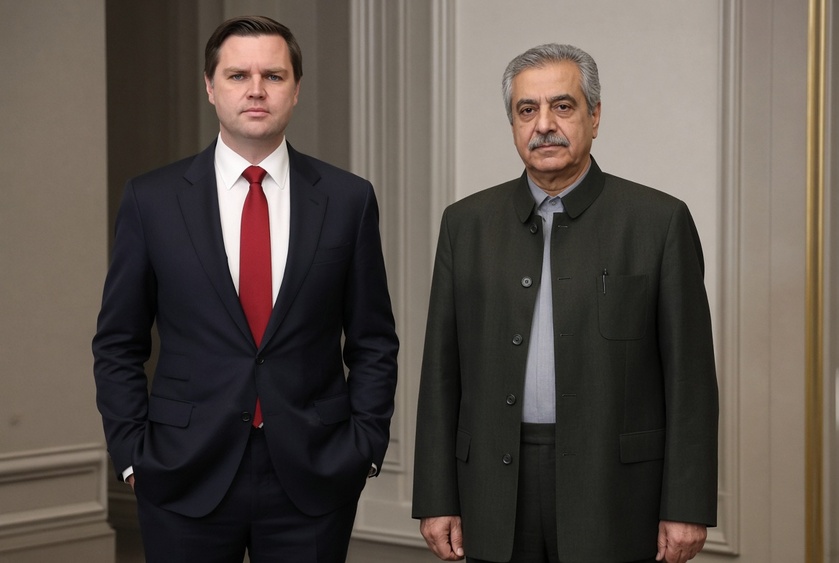
Vance Proposes Restart Of Negotiations In Letter To Top Iranian Official

U.S. Vice President JD Vance reportedly sent a letter to secretary of Iran’s Supreme National Security Council and former Islamic Revolutionary Guard Corps commander, Mohsen Rezaei, recently, to assess whether Washington and Tehran could agree on a framework for negotiations. The move was reportedly made at the direction of President Donald Trump, who later publicly denied instructing Vance to initiate peace talks, characterizing the contact as an effort to deliver medical supplies.

Rezaei said last week that Tehran would not negotiate until its core demands—immediate economic relief, lifting of oil sanctions, and unfreezing of assets—are met.

The outreach occurs as Trump reportedly threatens a “short, intense” military campaign against Iran following the November 3, 2026, U.S. midterm elections. Vance aims to determine if diplomacy can avert this escalation, though no detailed peace proposal has yet been produced.

The cost of the U.S. military engagement with Iran has topped $47 billion. Rising domestic gas prices and economic costs associated with the conflict have become major points of political debate ahead of the U.S. midterm elections.

Qatar reprtedly presented a draft agreement in Tehran on Sunday, outlining a seven-day timeline for daily confidence-building steps by Washington and Tehran. Iran is reportedly considering the proposal, with a response expected by the end of the week.

Rezaei met on Monday, with security chiefs from Saudi Arabia, Pakistan, and Turkey in Tehran. This was described as a rare, high-level engagement aimed at de-escalating tensions in the region.

Engaging Rezaei, a hardliner and close ally of Supreme Leader Mojtaba Khamenei, risks sidelining traditional negotiators like Foreign Minister Abbas Araghchi and Parliament Speaker Mohammad Bagher Ghalibaf.

"While our Brave Armed Forces are fully prepared to defend the Homeland, Iran continues to give diplomacy a chance to succeed," Araghchi wrote Wednesday, on X. "We remain in close and ongoing contact with intermediaries to review ideas that can ensure implementation of our 7-Day Plan in even less than a week."

Regional mediators, including Qatar, are urging Iran to demonstrate “good faith” by reopening the Strait of Hormuz and stopping threats to neighboring countries, as part of a broader effort to establish a new regional security framework.

Read full Article
October 31, 2026
post photo preview
US Spacewalk 100: Astronauts Deploy New Solar Array On 100th EVA

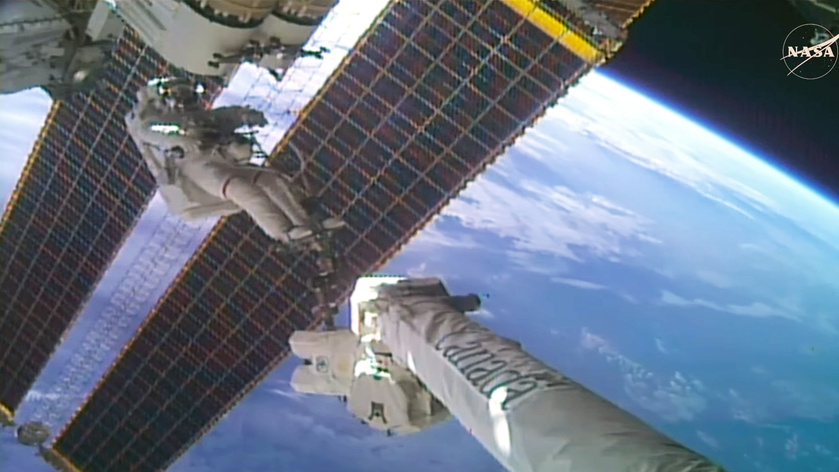
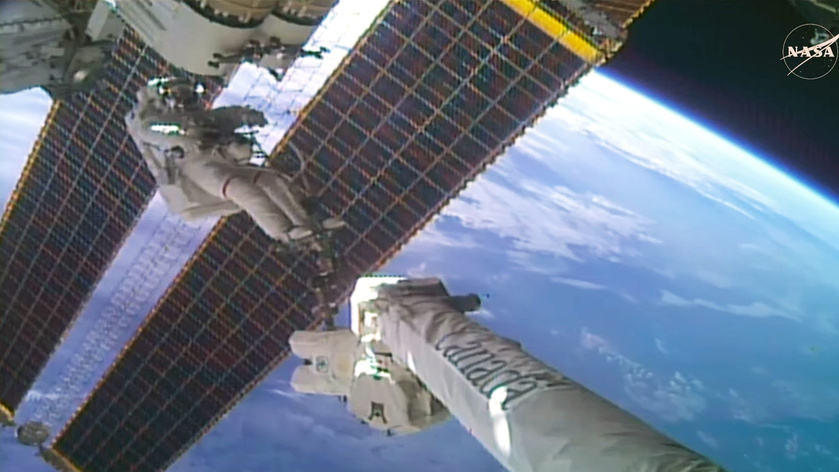
NASA astronaut Anil Menon and Canadian Space Agency astronaut Joshua Kutryk, wearing NASA's extravehicular mobility unit (EMU) spacesuits, completed the 100th U.S. spacewalk (or extravehicular activity, EVA) from the International Space Station (ISS) on Thursday, beginning at about 1200 UTC, and ending 7 hours and 11 minutes later at 1908 UTC. The Expedition 75 crewmates installed and deployed the seventh International Space Station Roll-Out Solar Array (IROSA) on the station’s 2A electrical power channel.

Once outside the ISS, Menon and Kutryk worked on unbolting the iROSA from a temporary stowage platform. The 3-by-0.6-by-1.2-meter rolled-up assembly was delivered to the space station inside the unpressurized trunk of SpaceX's Dragon cargo capsule earlier this month, on the company's 35th ISS resupply mission for NASA.

Menon then secured himself at the end of the Canadarm2 robotic arm and carried the 340-kilogram iROSA to the space station's port side, where he and Kutryk next installed it on the 2A electrical power channel. Kutryk made his way to the worksite along the station's backbone truss.

Using bolts to mount the IROSA in place and connecting its electrical cables to tie it into the station's power system (during a night pass, out of safety concerns), the array was ready to be extended. No motor was needed to deploy the iROSA to its 19-meter length. The potential energy held by the assembly's rolled-up carbon composite booms was enough to fully unroll the panel.

"And we see the iROSA deploying now," reported Mission Control four hours and 23 minutes into the spacewalk.

About 12 minutes later, the array had fully extended, draping over about half of the larger but less capable legacy panel on the P4 truss. The station's eight original arrays are showing degraded power output as they have exceeded their 15-year design life. The iROSAs, when used in tandem with their older counterparts, have increased the station's power supply by 20% to 30%.

Having worked ahead of their schedule, Menon and Kutryk removed some of the beams holding the final iROSA in place on its temporary platform and rotated two launch locks that were used in its delivery on Dragon. The crew completed preparatory tasks for the final IROSA installation, which is scheduled for November 5, 2026, on the 3B power channel.

"Being outside, I can say it is always sunny in space," said Menon at the conclusion of Thursday's EVA. "I find it incredible what we have been able to do to provide new solar arrays to the space station. In fact, we have been ... doing complex operations like this for over 26 years."

"This is USOS [United States Operating Segment] EVA 100, which is an incredible milestone. I think it really signifies how much we have done," he said.

This installation is part of a multi-year upgrade to increase the ISS power-generating capacity by up to 30%, raising output from 160 kilowatts to roughly 215 kilowatts to support operations through the station's planned retirement in 2030.

This was Menon’s fourth spacewalk, adding to his total of 26 hours and 31 minutes in space, while it was Kutryk’s first, making him the fifth Canadian to perform a spacewalk and the first since 2019.

Thursday's EVA was the 100th U.S. outing from the space station without a now-retired space shuttle docked to the complex. Overall, it was the 285th spacewalk in support of ISS assembly, maintenance and upgrades, including 66 EVAs out of the Russian segment of the station and 119 by visiting shuttle crews.

The first U.S. spacewalk outside of the Quest airlock was made by Expedition 4 crewmates Carl Walz and Daniel Bursch on Feb. 20, 2002. The 5-hour-and-47-minute EVA mostly tested Quest's systems and completed "housekeeping chores."

Read full Article
See More
Available on mobile and TV devices
google store google store app store app store
google store google store app tv store app tv store amazon store amazon store roku store roku store
Powered by Locals