keneci Network
News • Science & Tech • Comedy
Ukrainian Arrested In Italy Over Nord Stream Gas Pipelines Sabotage
August 21, 2025
post photo preview

A Ukrainian citizen identified as Serhii K. was arrested in Italy on Thursday in connection with the 2022 sabotage of the Nord Stream gas pipelines between Russia and Germany. German prosecutors allege he was one of the coordinators of the operation, which involved planting explosives on the Nord Stream 1 and Nord Stream 2 pipelines near the Danish island of Bornholm in September 2022.

Serhii K, 49, was apprehended without resistance, during a police raid, in a rented bungalow in San Clemente, a town in the Rimini province on Italy's Adriatic coast, while on holiday with his family. He is currently in Rimini jail awaiting a ruling on his extradition by the appeal court in Bologna. The arrest was carried out by Italian police based on a European arrest warrant issued by German authorities on Monday.

German prosecutors allege that Serhii K. is suspected of being one of the coordinators of the attack that damaged the Nord Stream 1 and Nord Stream 2 pipelines in the Baltic Sea. He faces charges including collusion to cause an explosion, anti-constitutional sabotage, and the destruction of structures. Investigators believe he played a key role in organizing the operation, rather than being one of the divers who placed the explosives.

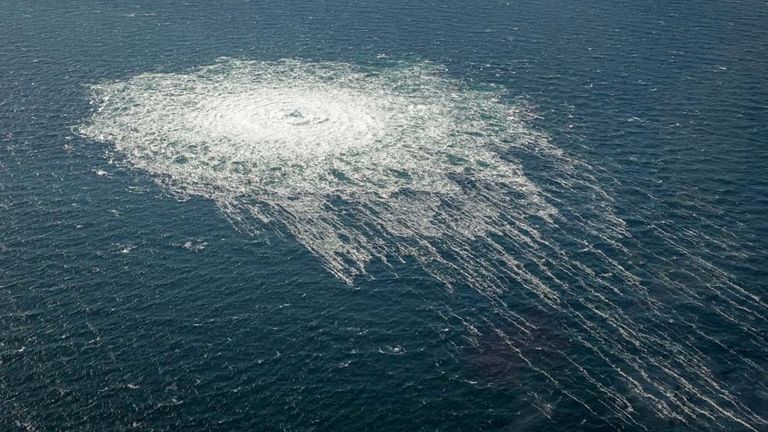
The explosions occurred on September 26, 2022, rupturing the Nord Stream 1 pipeline and damaging the Nord Stream 2 pipeline, which was never operational. The damage significantly impacted Europe's energy security during the ongoing war in Ukraine.

The investigation, which has been primarily led by German prosecutors since Denmark and Sweden closed their probes in February 2024, has found traces of the military-grade explosive octogen on a yacht used in the attack. This yacht, named Andromeda, was reportedly chartered from the German port of Rostock using forged identities and intermediaries.

The attack has been viewed by both Russia and the West as an act of sabotage, with no group claiming responsibility.

Russia has accused the United States of orchestrating the blasts, a claim Washington has denied. German media reports in 2023 suggested a pro-Ukraine group of divers was involved, with a yacht rental linked to the attack. In August 2024, German prosecutors issued an arrest warrant for another suspect, a diver named Volodymyr Z, indicating a broader investigation into the sabotage team.

Ukraine has denied any state involvement.

The arrest of Serhii K. marks a significant development in the long-standing investigation, with German Justice Minister Stefanie Hubig calling it an "impressive investigative success."

Nord Stream 1 had been a reliable conduit for Russian gas, stretching 1,200 kilometers(km) under the Baltic Sea, while Nord Stream 2, fully owned by Russia’s Gazprom, was halted by Germany before it could operate, shortly before Russia’s invasion of Ukraine. Russia later shut down Nord Stream 1, and the subsequent explosions deepened the mystery surrounding the sabotage, with no party officially claiming responsibility.


community logo
Join the keneci Network Community
To read more articles like this, sign up and join my community today
0
What else you may like…
Videos
Posts
Articles
SpaceX Starlink Internet Satellites

With Starlink internet, data is continuously being sent between a ground dish and a Starlink satellite orbiting 550km above. Furthermore, the Starlink satellite zooms across the sky at 27,000 km/hr! MORE VIDEOS ON KENECI NETWORK RUMBLE CHANNEL: https://rumble.com/c/Keneci

00:28:08
Elon Musk, DOGE Speak On Waste And Fraud

US Department of Government Efficiency Services (USDS) led by Elon Musk speak on the "mind-boggling" fraud and waste in UInited States federal government

00:00:45
January 17, 2025
SpaceX Launches Starship 7th Test Flight

SpaceX successfully executed its second-ever “chopsticks” catch of a Super Heavy booster (or Booster 14) using the “Mechazilla” launch tower on Thursday(Jan. 16), during the seventh uncrewed test flight of the company's 123-meter Starship rocket. However, the megarocket's upper stage(or Ship 33) was lost approximately 8.5 minutes into the flight in a “rapid unscheduled disassembly(RUD)” or explosion

00:10:30
Welcome to Keneci Network!

Join the conversations!

December 09, 2025
Bitcoin White Paper By Satoshi Nakamoto

Bitcoin white paper

Bitcoin_White_Paper.pdf
September 17, 2024
Charges Against Sean 'Diddy' Combs In Grand Jury Indictment

The rapper was charged with racketeering conspiracy, sex trafficking by force, fraud or coercion, and transportation to engage in prostitution in the indictment unsealed Tuesday(Sept. 17)

Combs-Indictment-24-Cr.-542.pdf
post photo preview
ViaSat-3 F3: SpaceX Falcon Heavy Launches Huge Communication Satellite In 12th Mission

SpaceX launched its Falcon Heavy rocket at 1413 UTC on Wednesday (April 29) from Launch Complex 39A(LC-39A) at NASA’s Kennedy Space Center, Florida, carrying the huge ViaSat-3 F3 satellite into orbit. This mission marked the 12th flight for the Falcon Heavy and its first launch in 18 months, following the October 2024 Europa Clipper mission.

The Falcon Heavy’s two side boosters, B1072 and B1075, returned to Cape Canaveral Space Force Station about eight minutes after launch, with B1072 landing at Landing Zone 2 and B1075 touching down at the newer Landing Zone 40 at Space Launch Complex 40. As is standard for Falcon Heavy missions, the central core booster (B1098) was not recovered and was jettisoned into the Atlantic Ocean.

B1075 previously supported 21 missions: SDA Tranche 0 (SDA-0A), SARah-2/3, Transporter-11 and 18 Starlink missions. The second side booster (B1072) previously supported the launch of the GOES-U mission.

Falcon Heavy employs three modified, strapped-together first stages of SpaceX's workhorse Falcon 9 rocket. The central booster hosts an upper stage, which is integrated with the payload.

Together, these three boosters generate about 5.1 million pounds of thrust at liftoff, making Falcon Heavy the second-most-powerful launcher in operation today. The leader is NASA's Space Launch System (SLS) moon rocket, which generates 8.8 million pounds. (SpaceX's Starship creates a whopping 16.7 million pounds of thrust at liftoff, but it's currently in flight testing phase).

About 4 hours 57 minutes after liftoff Wednesday, the second stage deployed the 6.6-ton (6 metric tons) ViaSat-3 F3 satellite into a geosynchronous transfer orbit. It will use onboard propulsion to reach its final operational position at 155.58 degrees East along the equator.

As its name suggests, ViaSat-3 F3 is the third ViaSat-3 satellite to reach space. ViaSat-3 F1 did so atop a Falcon Heavy in April 2023, and ViaSat-3 F2 followed suit in November 2025 aboard a United Launch Alliance Atlas V.

The 6.6-ton satellite is the third and final component of Viasat’s high-throughput broadband constellation, adding over 1 terabit per second of capacity to the network. It's designed to provide internet services to the Asia-Pacific region.

The satellites operate in geostationary orbit which lies 22,236 miles (35,786 kilometers) above Earth. At that altitude, orbital velocity matches our planet's rotational speed, allowing spacecraft to "hover" over the same patch of real estate continuously.

ViaSat-3 F1 currently provides service to customers aboard airliners, and ViaSat-3 F2 will serve people in the Americas when it comes online next month. ViaSat-3 F3 rounds out the ViaSat-3 mini-constellation.

"This launch marks a pivotal moment in our journey to bring fast, secure and reliable high capacity, highly flexible broadband to our commercial, defense and consumer customers," Dave Abrahamian, ViaSat's vice president of space systems, said in a company statement earlier this month.

Falcon Heavy debuted in February 2018 with a test flight that launched SpaceX founder Elon Musk's cherry-red Tesla Roadster into orbit around the sun. The rocket has since flown 10 more successful missions.

Read full Article
post photo preview
UAE Exits OPEC Amid Iran War Fallout

The United Arab Emirates (UAE) has announced it will leave OPEC and OPEC+ effective May 1, 2026, citing its "long-term strategic and economic vision" and frustration over regional inaction during the ongoing Iran war. The decision marks a significant blow to the oil cartels, particularly Saudi Arabia, OPEC’s de facto leader, as the UAE is the third-largest oil producer in the group and a major, sophisticated exporter.

Geopolitical tensions and regional rifts drove the UAE’s exit. The country faced repeated Iranian missile and drone attacks, with over 500 ballistic missiles and 2,250 drones intercepted since early April, yet received limited military or political support from Gulf allies.

Anwar Gargash, UAE diplomatic adviser, criticized the Gulf Cooperation Council (GCC) and Arab League for their “weakest historical” response. The UAE also clashed with Saudi Arabia over regional influence, oil production quotas, and Saudi Arabia’s defense pact with Pakistan, which the UAE viewed as undermining its security interests amid the conflict.

Gulf and Arab critics view with suspicion the UAE's cozy relationship with Israel. And many believe the U.S. and Israel may have nudged UAE to leave OPEC. President Donald Trump has been a frequent critic of OPEC over its impact on oil prices.

The Iran war, initiated by the U.S. and Israel in February 2026, has severely disrupted energy markets by blocking the Strait of Hormuz—through which about 20% of global oil passes—causing Brent crude to rise above $105 per barrel.

Trump has linked U.S. military support for Gulf states to oil pricing, accusing OPEC of “ripping off the rest of the world.” The UAE’s move is seen as a strategic win for Trump, who recently backed a dollar swap line with the UAE.

Iran is expected to submit a revised peace proposal in the coming days after Trump rejected an earlier version.

Read full Article
post photo preview
Amazon Leo 6: ULA Atlas V Launches 29 Internet Satellites, Ties Record For The Rocket's Heaviest Payload

United Launch Alliance (ULA) launched an Atlas V 551 rocket carrying 29 Amazon Leo broadband satellites from Space Launch Complex 41(SLC-41) at Cape Canaveral Space Force Station, Florida, on Tuesday (April 28), at 0053 UTC.

The Atlas V 551 variant utilized five solid rocket boosters and a 5.4-meter payload fairing to deliver the 29 satellites into an initial Low Earth Orbit (LEO) at 450 km. Following deployment, the satellites will use their Hall-effect thrusters to raise themselves to their operational altitude of 630 km in an orbit with a 51.9-degree inclination.

Amazon Leo 6 (LA-06) mission marked the tenth launch for the Amazon Leo constellation and represented the heaviest payload ever flown by the Atlas V rocket, with a combined satellite mass of approximately 18 tons.

The first four Atlas V Amazon Leo missions sent 27 of the broadband satellites skyward. Amazon Leo 5, which launched on April 4, boosted that number to 29 and set a new record for the heaviest payload ever flown by an Atlas V in the process - 18 tons. Tuesday's launch was part of a rapid "continuous roll-and-launch" campaign.

A rival to SpaceX's StarlinkAmazon Leo, formerly known as Project Kuiper, is managed by Kuiper Systems LLC, a subsidiary of Amazon, with the goal of providing global high-speed internet to underserved communities. The constellation is planned to consist of 3,276 satellites distributed across 98 orbital planes at altitudes of 590 km, 610 km, and 630 km.

As of Tuesday's launch, ULA has deployed 139 satellites for the program, while other missions have utilized SpaceX Falcon and Arianespace Ariane rockets. More than 80 launches are required to complete the full constellation.

Read full Article
See More
Available on mobile and TV devices
google store google store app store app store
google store google store app tv store app tv store amazon store amazon store roku store roku store
Powered by Locals