keneci Network
News • Science & Tech • Comedy
Israeli-American Hostage Edan Alexander Released By Hamas, As Trump Envoy Blames Israel For War's Continuation
May 12, 2025
post photo preview

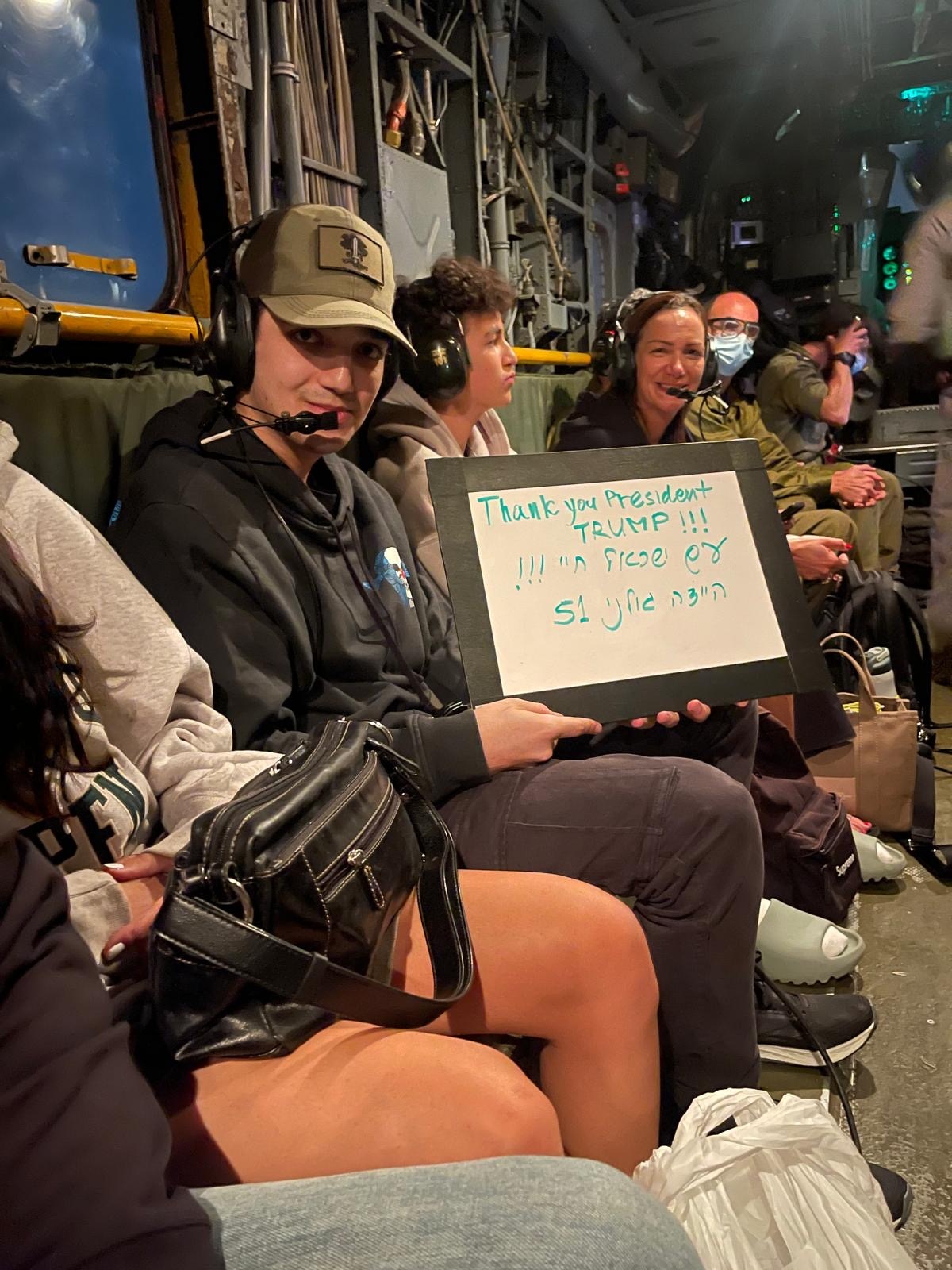
Edan Alexander, an Israeli-American hostage (or prisoner of war because he's an Israeli soldier) held by Hamas since October 7, 2023, has been released and handed over to the International Committee of the Red Cross (ICRC). He was transferred to the Israel Defense Forces (IDF) and reunited with his jubilant family shortly after.

The release comes amid a severe humanitarian crisis in Gaza, where food and medical supplies have been blocked by Israel for over 10 weeks, leading to widespread hunger and suffering.

Hamas announced the release of Alexander as part of ongoing mediation efforts to establish a ceasefire, reopen border crossings, and resume aid delivery to Gaza.

Alexander was released by Hamas and handed over to Red Cross representatives in Khan Younis, Gaza. He was then transferred to Israeli special forces and brought to Israeli territory. His family, including his parents Yael and Adi, who traveled to Israel to await his return, expressed deep gratitude to President Donald Trump and the U.S. administration for their efforts. They also urged the Israeli government and negotiating teams to continue working towards the release of all remaining hostages.

Alexander, a 21-year-old Israeli-American IDF soldier from New Jersey, was abducted during the Hamas-led attack on October 7, 2023, which ignited the war in Gaza.

The release Monday, comes after negotiations involving U.S. special envoy Steve Witkoff and U.S. hostage envoy Adam Boehler, with the support of President Trump.

Trump, in his remarks at the White House Monday during the signing of the executive order on drug pricing, credited Witkoff for his role in securing Alexander's release.

Hamas has previously released other hostages in exchange for Palestinian prisoners held by Israel. The conflict has resulted in the deaths of over 52,800 Palestinians, mostly women and children, and the displacement of 90% of Gaza's population

Qatar and Egypt, along with the U.S., have played key roles in negotiation efforts between Israel and Hamas. The release of Alexander is seen as a positive step towards a broader ceasefire and humanitarian relief

While the release of Alexander is a significant development, Israel has not agreed to a ceasefire or the release of Palestinian fighters and has not given Hamas any concessions.

The release is expected to inject momentum into ongoing ceasefire talks, with hopes that it will lead to the release of all remaining hostages and an end to the conflict.

However, the release of Alexander has raised concerns about Israel's exclusion from regional talks. The U.S. is engaging in talks with Iran and the Houthis without Israel's direct involvement, which has caused tension between the U.S. and Israel.

Trump is reportedly not happy with Netanyahu's intransigence. And Witkoff told reporters over the weekend that Israel has refused to negotiate the release of all hostages and an end to the war.

The situation in Gaza remains dire, with warnings of a critical risk of famine if the Israeli blockade is not lifted. The Integrated Food Security Phase Classification (IPC) has reported a major deterioration in food security, with half a million people facing starvation.

According to Israel’s Channel 12, Witkoff told the families of the hostages, during a closed-door meeting that “Israel is prolonging the war, even though we do not see where further progress can be made,” adding that while the U.S. seeks to return the hostages, “Israel is not ready to end the war.”

Witkoff’s remarks, described as unusually blunt, come amid a stalled negotiation process and increasing international pressure for a deal. He was quoted as saying there is currently “a window of opportunity” that the U.S. hopes Israel and mediators “will take advantage of,” noting that Washington is “putting pressure on all the mediators and doing everything to return the hostages.”

The reported comments drew sharp contrast to Israel’s current stance. Senior Israeli officials, speaking anonymously to Channel 12, said that if no agreement is reached by the end of President Donald Trump’s upcoming visit to the region, Israel will launch a new ground operation in Gaza that “will not end quickly.”

“We won’t agree to quickly halt once we begin the intensified operation,” one Israeli official said. “Hamas will not determine the timeline.”

President Trump has expressed hope that Alexander's release will lead to the release of other hostages and a broader ceasefire.

However, the Israeli government remains committed to its military operations, with officials saying that negotiations will continue under fire.

Prime Netanyahu reportedly spoke to Trump Monday, to express his gratitude, and has instructed the sending of a negotiation delegation to Doha, Qatar, to discuss the release of additional hostages and potential ceasefire terms.

Monday's development is a significant step in the ongoing conflict, but the broader issues of regional stability and humanitarian concerns remain unresolved.


Trump Envoy Blames Netanyahu's Intransigence For the Continuation Of The War In Gaza As Americans Sour On Israel

Israel and especially Netanyahu have faced growing criticisms in the U.S. and across the west, from many traditional supporters of the Jewish nation.

Over the weekend, Witkoff blamed Israel for the lack of progress on talks to end the war in Gaza. And Trump has reportedly soured on Netanyahu over his attempts to manipulate administration officials and push the U.S. into bombing Iran's nuclear facilities.

Until now, Israel has enjoyed overwhelming support among the American right. But that has changed recently, as wariness over wars in the middle east grows. Many Americans blame the Jewish nation and its powerful lobby the American Israel Public Affairs Committee(AIPAC) for dragging America into unnecessary wars in that region which have caused Muslim resentment towards the U.S.

Criticisms of Israel and Jewish control of American institutions of power, had only been prevalent among the dissident right and the far-left in western countries.

But such criticisms have now become mainstream, with the viral meme, 'The Great Noticing,' which references growing number of people becoming aware of the corruption and blackmail tactics against American politicians used by pro-Israel operatives in the U.S.

As the death toll rises in Gaza and Israel refuses to stop bombing the strip, Netanyahu has faced accusations of committing genocide against Palestinians, with many former pro-Israel conservatives condemning the Israeli leader.

Viral pro-Palestinian content on TikTok, X, Instagram and other platforms, popular personalities like social media stars and podcasters Candace Owens, Joe Rogan, Dave Smith, Andrew Tate, Myron Gaines, Nick Fuentes and fashion and Hip Hop mogul Ye among others, have all contributed to mainstreaming what are known online as 'The Great Noticing,' and JQ (or Jewish question).

Ye's recent viral and controversial song 'Heil Hitler,' has been shared hundreds of thousands of times on X, Instagram, TikTok and others, and racked up tens of millions of views.

Recent polls in the U.S. show that for the first time in recent history, more people have negative views of Israel, especially among under 40-year-olds.


community logo
Join the keneci Network Community
To read more articles like this, sign up and join my community today
0
What else you may like…
Videos
Posts
Articles
SpaceX Starlink Internet Satellites

With Starlink internet, data is continuously being sent between a ground dish and a Starlink satellite orbiting 550km above. Furthermore, the Starlink satellite zooms across the sky at 27,000 km/hr! MORE VIDEOS ON KENECI NETWORK RUMBLE CHANNEL: https://rumble.com/c/Keneci

00:28:08
Elon Musk, DOGE Speak On Waste And Fraud

US Department of Government Efficiency Services (USDS) led by Elon Musk speak on the "mind-boggling" fraud and waste in UInited States federal government

00:00:45
January 17, 2025
SpaceX Launches Starship 7th Test Flight

SpaceX successfully executed its second-ever “chopsticks” catch of a Super Heavy booster (or Booster 14) using the “Mechazilla” launch tower on Thursday(Jan. 16), during the seventh uncrewed test flight of the company's 123-meter Starship rocket. However, the megarocket's upper stage(or Ship 33) was lost approximately 8.5 minutes into the flight in a “rapid unscheduled disassembly(RUD)” or explosion

00:10:30
Welcome to Keneci Network!

Join the conversations!

December 09, 2025
Bitcoin White Paper By Satoshi Nakamoto

Bitcoin white paper

Bitcoin_White_Paper.pdf
September 17, 2024
Charges Against Sean 'Diddy' Combs In Grand Jury Indictment

The rapper was charged with racketeering conspiracy, sex trafficking by force, fraud or coercion, and transportation to engage in prostitution in the indictment unsealed Tuesday(Sept. 17)

Combs-Indictment-24-Cr.-542.pdf
post photo preview
Iran-US Ceasefire Falters , As Israel Pummels Lebanon, Killing 254+ Civilians

The U.S. and Iran agreed to a two-week ceasefire announced by President Donald Trump on Truth Social, contingent on Iran reopening the Strait of Hormuz. Trump wrote the ceasefire was a "double sided CEASEFIRE" because the U.S. had "already met and exceeded all Military objectives," and called Iran’s 10-point peace proposal a "workable basis on which to negotiate." The deal, mediated by Pakistan, was announced late Tuesday, just hours before Trump’s deadline for Iran to reopen the strait or face devastating strikes.

Iranian Foreign Minister Seyed Abbas Araghchi confirmed the agreement, stating: _"If attacks against Iran are halted, our Powerful Armed Forces will cease their defensive operations. For a period of two weeks, safe passage through the Strait of Hormuz will be possible via coordination with Iran's Armed Forces." The country is reportedly charging a toll before each vessel can sail through the strait, paid in bitcoin to bypass US-imposed sanctions.

Iran pointed out the ceasefire included Lebanon, but Israel and the U.S. rejected this, with Trump calling Lebanon a "separate skirmish." Israeli Prime Minister Benjamin Netanyahu claimed the ceasefire did not cover Lebanon, where as part of its 'Operation Eternal Darkness,' Israel launched over 160 strikes in 10 minutes, killing at least 254 people and injuring 1,165, according to Lebanon’s Civil Defense.

Iranian Parliament Speaker Mohammad Bagher Ghalibaf accused the U.S. and Israel of violating the ceasefire, citing three breaches: continued Israeli attacks on Lebanon, an alleged drone incursion into Iranian airspace (a Hermes-900 drone shot down in Fars province), and U.S. refusal to accept Iran’s right to uranium enrichment.

Iran temporarily closed the Strait of Hormuz again in response to the Lebanon strikes, threatening the deal’s stability. Pakistan’s Prime Minister Shehbaz Sharif initially claimed the ceasefire applied "everywhere including Lebanon," but the U.S. and Israel contradicted this, with Vice President JD Vance stating Iran had "misunderstood" the terms.

Peace talks are scheduled to begin in Islamabad on Saturday.

Meanwhile early Thurday, Trump wrote on Truth Social: "All U.S. Ships, Aircraft, and Military Personnel, with additional Ammunition, Weaponry, and anything else that is appropriate and necessary for the lethal prosecution and destruction of an already substantially degraded Enemy, will remain in place in, and around, Iran, until such time as the REAL AGREEMENT reached is fully complied with. If for any reason it is not, which is highly unlikely, then the "Shootin' Starts," bigger, and better, and stronger than anyone has ever seen before. It was agreed, a long time ago, and despite all of the fake rhetoric to the contrary - NO NUCLEAR WEAPONS and, the Strait of Hormuz WILL BE OPEN & SAFE. In the meantime our great Military is Loading Up and Resting, looking forward, actually, to its next Conquest. AMERICA IS BACK!"

Read full Article
post photo preview
Artemis II Earthset Photos: Astronauts Heading Home After Historic Loop Around Far Side Of The Moon

The Artemis II crew—NASA astronauts Reid Wiseman, Victor Glover, and Christina Koch, along with Canadian Space Agency astronaut Jeremy Hansen aboard Orion spacecraft, Integrity—are heading home after completing a historic loop around the far side of the Moon on April 6, 2026.

During this flyby, the crew set a new record by traveling 252,756 miles from Earth, surpassing the Apollo 13 distance, and captured the first-ever "Earthset" images from the lunar far side at 22:41 UTC, alongside a total solar eclipse viewed from space.


The astronauts described the experience as "overwhelming" and "extraordinary," with Wiseman noting that seeing the Moon fully eclipse the Sun created nearly 54 minutes of totality and revealed details of the Sun's corona typically hidden from Earth.

Glover remarked that "humans probably have not evolved to see what we're seeing," while Koch emphasized the emotional weight of the mission, stating, "We will explore, we will build ships... but ultimately, we will always choose Earth." The crew also shared a group hug and celebrated with maple cream cookies during the communication blackout, and Wiseman dedicated the mission to his late wife, Carroll.

NASA Administrator Jared Isaacman led a 20-minute Q&A with the crew, thanking them for their courage and representing the "best of us." He expressed gratitude to the two billion people on Earth eagerly awaiting the imagery, saying, "Thank you for taking us with you to the moon... Godspeed and go Artemis II."

Isaacman also acknowledged the crew's lessons for the upcoming Artemis III mission, specifically addressing the need to fix the onboard space toilet plumbing and improve packing strategies for food and hygiene.

For about seven hours, the crew observed the Moon's far side, capturing images of 30 lunar targets (including the Orientale basin) and testing Orion's manual piloting and radiation protection capabilities.

The mission featured the first moonship-to-spaceship radio linkup with the International Space Station, connecting Wiseman and Koch (who performed the first all-female spacewalk in 2019) despite being 230,000 miles apart.

President Donald Trump congratulated the Artemis II crew during a live phone call on April 6, hailing them as "modern-day pioneers" after their Orion spacecraft completed the record-breaking lunar flyby.

Trump praised the astronauts individually, calling out Wiseman, Glover, Koch, and Hansen, and emphasized that "America is back" in space exploration, saying, "At long last, America is back, and America is back in many ways stronger than ever before. We're the hottest country anywhere in the world." He credited his administration for reviving NASA, saying he had chosen to "revive" rather than close it down, and highlighted the creation of the U.S. Space Force as one of his most important decisions.

Trump asked about the crew’s experience during 40–45 minutes of lost communication while behind the moon; Glover replied,"I said a little prayer, but then I had to keep rolling," as he recorded scientific observations.

Hansen described the far side of the moon as visually distinct, with fewer dark "mares" due to Earth’s gravitational influence on the near side, and thanked Trump on behalf of Canada for U.S. leadership in space.

An awkward silence occurred mid-call, with no one speaking for about a minute, prompting Wiseman to request a "quick comm check;" Trump confirmed he was still on the line, calling the reception "great."

Trump invited the crew to the Oval Office, saying, "I look forward to having you in the Oval Office at the White House," and jokingly requested their autographs, adding, "I don’t really ask for autographs much, but you deserve that." The crew accepted immediately, with Glover calling the mission "the thrill and honor of a lifetime," and thanking the American and Canadian people.

The crew launched from Kennedy Space Center on Wednesday, spent ~25 hours circling Earth, and entered the lunar sphere of influence on Thursday evening before the April 6 flyby.

The 10-day mission is scheduled to conclude on Friday, April 10, 2026, with a splashdown in the Pacific Ocean off San Diego, recovered by the USS John P. Murtha.

The crew is currently on their way back to Earth, having exited the lunar sphere of influence on Tuesday afternoon, and will undergo medical checks and family conferences before re-entry.

=================

 
UPDATE | Artemis II Crew's Orion Capsule Completes Translunar Injection Burn On Path To The Moon

The translunar injection (TLI) burn for the Artemis II mission was successfully completed on Thursday, (April 2), at 2349 p.m. UTC, sending the crew and the Orion spacecraft, Integrity on a path toward the Moon for the first time since 1972. The engine fired for about five minutes and 50 seconds (some reports cite 5:49 to 5:55), adding 867 mph to Integrity's velocity and accelerating it to 24,500 mph to escape Earth's gravitational clasp

This critical maneuver placed Integrity into a free-return trajectory that will carry the four astronauts around the far side of the Moon and back toward Earth without requiring further major engine firings. The burn utilized the Orbital Maneuvering System engine on the European Service Module, generating up to 6,000 pounds of thrust, and was preceded by a "Go" poll from NASA's Mission Management Team after confirming the spacecraft's systems were healthy.

The engine fired at an altitude of just 115 miles above Earth. Mission controllers in Houston described the burn as "flawless," with the crew reporting they are "glued to the window" observing Earth. Integrity is now on track to reach a distance of 252,455 miles from Earth, surpassing the record set by Apollo 13, with a planned splashdown on Day 10 of the mission.

Following liftoff Wednesday, NASA astronauts Reid Wiseman, Victor Glover, Christina Koch, and Canadian Space Agency(CSA) astronaut Jeremy Hansen aboard Integrity stayed in Earth orbit for more than 24 hours, checking out the capsule's various systems ahead of its planned plunge into deep space.

"With that successful TLI, the crew is feeling pretty good up here on our way to the moon, and we just wanted to communicate to everyone around the planet who's worked to make Artemis possible that we firmly felt the power of your perseverance during every second of that burn," Hansen, said just after the maneuver.

"Humanity has once again shown what we are capable of, and it's your hopes for the future that carry us now on this journey around the moon," he added.

Artemis 2 launched Wednesday evening (April 1) from NASA's Kennedy Space Center in Florida, sending four astronauts aloft on the first-ever crewed flight of Orion and its Space Launch System (SLS) rocket. The duo had flown together just once before, on the uncrewed Artemis 1 mission to lunar orbit in 2022.

"Our TLI burn, the burn that gets us going to the moon, is also our deorbit burn," Koch said in a NASA interview before launch. "As soon as we take that burn, we have bought off on basically the rest of the mission."

The TLI burn used Orion's main orbital maneuvering engine, which was salvaged from NASA's space shuttle program and upgraded for an Artemis trip to the moon. The engine has flown in space 19 times before on three different space shuttles. If you strapped it to a car, it would accelerate you from zero to 60 mph (97 kph) in 2.7 seconds.

=================

NASA successfully launched the Artemis II mission on Wednesday, (April 1), at 2235 UTC from Kennedy Space Center's Launch Complex 39B, marking the first crewed flight beyond low Earth orbit since the Apollo 17 mission in 1972.

The Space Launch System (SLS) rocket, standing 32 stories tall, ignited its twin solid rocket boosters and four RS-25 engines to generate 8.8 million pounds of thrust, lifting the Orion spacecraft named "Integrity" into space.

The four-person crew consists of NASA astronauts Reid Wiseman (Commander), Victor Glover (Pilot), and Christina Koch (Mission Specialist), alongside Canadian Space Agency astronaut Jeremy Hansen (Mission Specialist), who became the first Canadian and non-U.S. citizen to travel to the Moon's vicinity.

Close to three and a half hours into the Artemis 2 mission, pilot Victor Glover took control of Orion after the capsule separated from the Space Launch System rocket's Interim Cryogenic Propulsion Stage, or ICPS. Glover will now manually pilot Orion around ICPS, carrying out a series of maneuvers designed to test the spacecraft's propulsion systems and ability to operate in close proximity to another object in space.

"I see it. Look at that, woohoo! I see the ICPS and the moon in the field of view," Glover said during NASA's live broadcast of the mission.

These tests, known as proximity operations or "prox ops," are a key part of this test flight and will evaluate Orion's ability to fly near and interface with future Artemis program hardware such as the lunar lander that will eventually be chosen for NASA's planned moon landings.

"It's quite nice and very responsive," Glover said, referencing the spacecraft's Digital Autopilot (DAP) system.

The 10-day mission is a lunar flyby that will not involve a landing but will travel approximately 250,000 miles from Earth, surpassing the previous record set by Apollo 13 in 1970 by reaching 4,600 miles beyond the Moon's far side.

Key mission objectives include testing Orion's life support and navigation systems, performing an in-space rendezvous with the spent Interim Cryogenic Propulsion Stage, and validating emergency procedures for future lunar landings.

The crew is expected to perform a translunar injection burn to commit to the Moon, fly around the lunar far side, and return to Earth for a planned **splashdown in the Pacific Ocean** around April 11, 2026. This flight serves as the critical second step in NASA's Artemis program, paving the way for **Artemis III (lunar landing in 2027)** and the eventual establishment of a sustainable human presence on the Moon.

Read full Article
post photo preview
Iran's 10-point Proposal Demands Permanent Ceasefire, Strait Of Hormuz Toll, As Israeli Airstrikes Target South Pars Natural Gas Field

Iran has reportedly rejected a proposed 45-day ceasefire, instead presenting its own 10-point plan demanding a permanent end to the war. The proposal, conveyed through Pakistani mediators, includes conditions such as reparations and guarantees against future attacks, which U.S. officials have deemed unacceptable.

Key elements of Iran’s 10-point response reportedly include:

- A permanent cessation of hostilities in Iran, Lebanon, Gaza, and Iraq.

- Recognition of Iran’s authority over the Strait of Hormuz, including the right to regulate traffic and collect tolls.

- Full removal of U.S. military bases from the Middle East.

- Compensation for war damages inflicted during the conflict.

- Lifting of all economic sanctions on Iran.

- Formal recognition of Iran’s right to enrich uranium under the Nuclear Non-Proliferation Treaty (NPT).

- A regional framework for security ensuring no resumption of aggression.

- Safe passage protocols** for international shipping through the Strait.

- Reconstruction support for war-affected areas.

- Guarantees that negotiations will not be used as cover for future attacks.

This comes amid escalating hostilities, as Israel launched strikes on Iran’s South Pars natural gas field, targeting its largest petrochemical plant—responsible for about 50% of Iran’s petrochemical output—and killing key Iranian military figures, including IRGC intelligence chief Majid Khademi.

The Israeli Defense Forces (IDF) and the United States also conducted large-scale strikes on Tehran's Mehrabad International Airport, targeting dozens of Iranian aircraft and helicopters to degrade the air force capabilities of both the Iranian Air Force and the Islamic Revolutionary Guard Corps (IRGC).

Satellite imagery and military reports confirm the destruction of at least 12 to 17 aircraft, including fighter jets, transport planes, and potentially the world's last in-service Boeing 747-100 converted as a KC-747 tanker, which were used by the IRGC Quds Force to supply proxies.

The operation, part of a broader assault on six military airfields across Iran, specifically targeted hangars, maintenance facilities, and runways in the western sector of the capital, effectively paralyzing the regime's ability to move high-level personnel and military equipment from the capital.

Over 80 Israeli fighter jets participated in the coordinated wave of attacks, which also included strikes on smaller airstrips like Azmayesh Airport and facilities linked to the Quds Force, such as a drone manufacturing factory.

Israeli officials said the strikes were designed to cripple the IRGC's logistics network, which has historically used commercial and military aircraft at Mehrabad to ferry weapons and advisors to proxies like Hezbollah across the Middle East.

The strikes on Mehrabad contributed to a broader campaign that also hit Shahid Beheshti University, the Pasteur Institute, and various military academies, leading to severe disruptions in regional air travel and raising international concerns over attacks on civilian and research infrastructure.

Airstrikes has also hit Sharif University of Technology in Tehran, a sanctioned institution tied to Iran’s military programs, drawing domestic and international condemnation.

Civilian infrastructure across Iran, including power plants and airports, has come under sustained attack, prompting fears of humanitarian crisis and warnings from the UN that targeting such sites may constitute war crimes under international law.

Iran fired missiles at Israel and neighboring countries, with strikes in Haifa killing four; Israel claims to have intercepted most incoming projectiles.

President Trump has intensified threats, vowing to "decimate every bridge and power plant in Iran" by Tuesday night if the Strait of Hormuz remains closed, calling for "free traffic of oil" as a non-negotiable condition. He dismissed Iran’s 10-point plan as “not good enough,” while still suggesting a deal is possible.

At a White House press conference Monday with Trump, Defense Secretary Pete Hegseth and Joint Chiefs Chair Gen. Dan Caine detailed the high-risk rescue of two U.S. airmen from an F-15E shot down by a shoulder-fired missile.

The operation, involving 155 aircraft, CIA "exquisite technologies," and extensive deception tactics, retrieved the pilot within hours and the weapons officer two days later from a mountainous cave. Hegseth likened the Easter-weekend rescue to the resurrection of Jesus Christ, underscoring the administration’s fusion of religious rhetoric with military messaging.

Despite Trump’s repeated deadlines, analysts note a pattern of postponements, raising doubts about the credibility of his ultimatums.

Read full Article
See More
Available on mobile and TV devices
google store google store app store app store
google store google store app tv store app tv store amazon store amazon store roku store roku store
Powered by Locals