


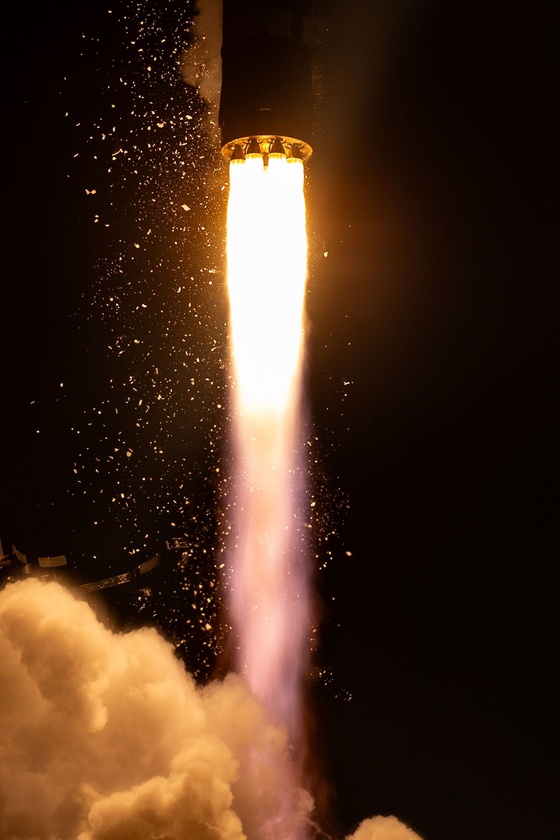
Rocket Lab Electron launched its 98th Electron mission on Friday(Oct. 23) at 0711 UTC, from Launch Complex 1 in New Zealand, deploying three HAWK satellites for HawkEye 360 into a 520-kilometer low Earth orbit. The "We're Not Hawking Around" mission marks Rocket Lab’s 19th launch of the year.
The rocket carried three HAWK satellites designed for HawkEye 360, a Virginia-based signals intelligence company. They operate in clusters of three to scan the globe for radio frequency (RF) emissions, utilizing Time Difference of Arrival (TDOA) and Frequency Difference of Arrival (FDOA) processing.
The collected data supports maritime tracking, GNSS jamming detection, radar monitoring, communications mapping, and space defense for the U.S. government and its allies.
"Operating in clusters of three, HawkEye 360's satellites collect signal data from across the RF spectrum for maritime tracking, GNSS jamming detection, radar monitoring, communications mapping and space defense," Rocket Lab wrote in a mission description.
HawkEye 360 provides this data to the U.S. government and its allies "to enable faster, better decision-making," according to the company. "Our space-based collection, proprietary signal processing and AI-powered analytics transform knowledge of the RF spectrum into a strategic advantage."
This deployment is the third dedicated Electron launch for HawkEye 360 since 2023, adding to the company’s nearly 50 satellites in orbit since its first launch in 2018.
Friday's flight represents Rocket Lab’s 98th launch to date, bringing the company closer to the milestone of 100 Electron launches. The company has executed 16 Electron missions and three suborbital HASTE flights this year, demonstrating high turnaround speed and production rates.
The mission underscores Rocket Lab’s trusted role in scaling commercial constellations for defense and commercial customers, following a previous HawkEye 360 launch on SpaceX’s Bandwagon-5 mission just two days prior.