keneci Network
News • Science & Tech • Comedy
Google & Samsung Launches Android XR: Extended Reality Operating System For VR, AR And MR Devices
December 13, 2024
post photo preview

Following the Gemini 2.0 announcement, Google on Thursday, introduced Android XR, a new operating system for extended reality(XR), in collaboration with Samsung. The is set to expand Android's ecosystem into spatial computing, with a focus on both headsets and smart glasses.

Android XR will feature Gemini AI, with capabilities for spatial computing where users can interact with apps and the environment in three-dimensional space. It will also support other Play Store apps and offer enhanced multitasking capabilities.

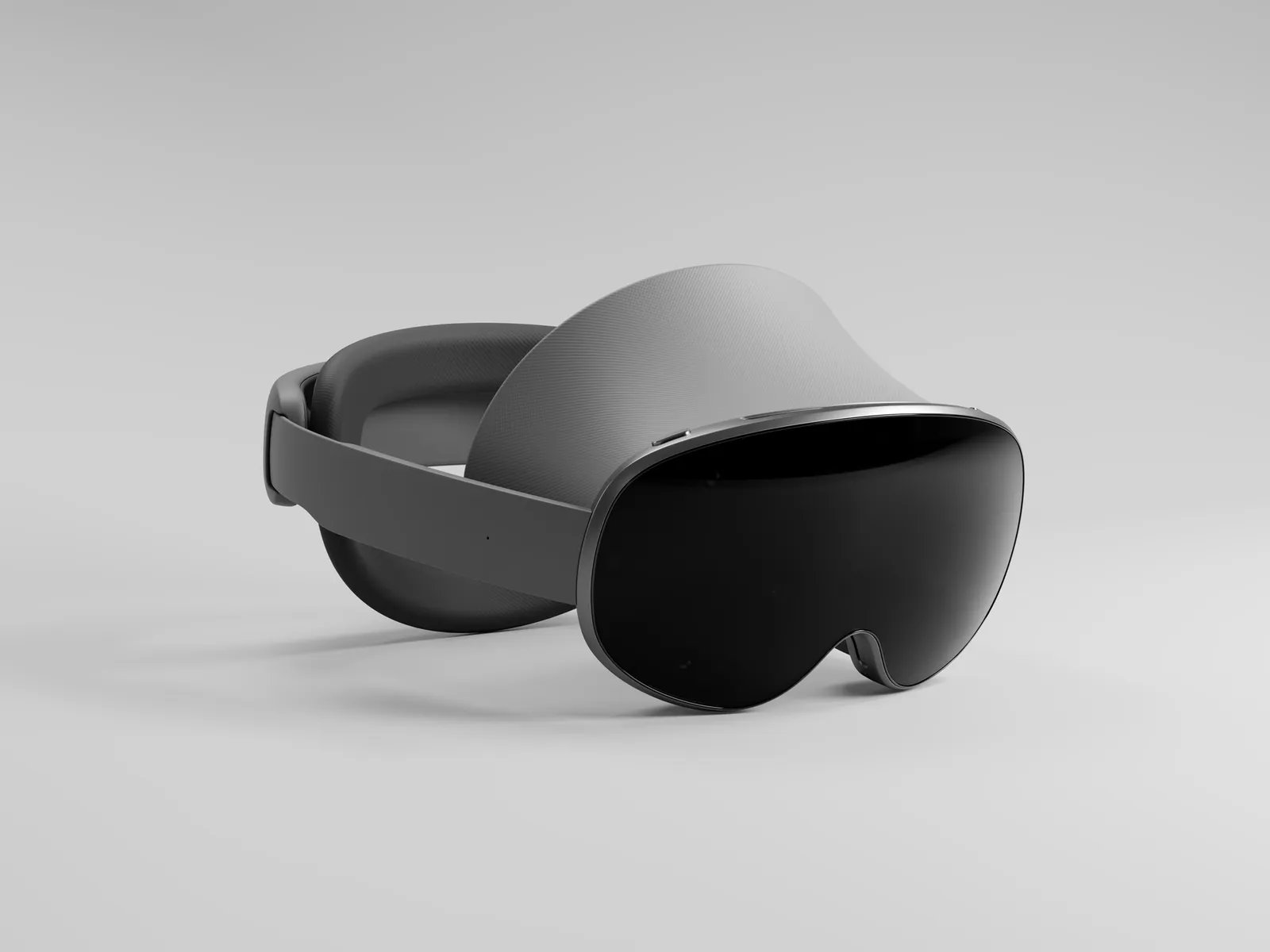
The new operating system which is seen as a direct competition to Apple's Vision Pro and Meta Quest's Horizon OS, is designed to support a range of devices, including virtual reality (VR), augmented reality (AR), and mixed reality (MR) headsets. It will bring many of Google’s apps, such as Maps, YouTube, Chrome, and Photos, to the platform.

"We started Android over a decade ago with a simple idea: transform computing for everyone," Shahram Izadi VP & GM, XR, wrote in a blog post announcing Android XR. "Android powers more than just phones -- it’s on tablets, watches, TVs, cars and more. Now, we're taking the next step into the future. Advancements in AI are making interacting with computers more natural and conversational. This inflection point enables new extended reality (XR) devices, like headsets and glasses, to understand your intent and the world around you, helping you get things done in entirely new ways."

The collaboration with Samsung internally codenamed Project Moohan is the first device to be powered by Android XR, with Qualcomm chipset.

The Project Moohan headset is expected to resemble high-end devices like Apple's Vision Pro, suggesting it will offer immersive experiences with potential features like high-resolution displays, natural multi-modal input, and ergonomic design for comfort.

Samsung promised that its headset would offer "state-of-the-art displays, Passthrough capabilities and natural multi-modal input," according to a statement released as Google announced its new XR platform.

The electronics giant which notes that "Moohan" means "infinity" in Korean, hopes to take advantage of the infinite space that virtual reality affords to offer immersive experiences. Those could include using a spatial computing version of Google Maps to explore the world, watch sporting events on YouTube and interact with Gemini AI assistant.

Qualcomm also confirmed that the Samsung headset will run on Snapdragon XR Plus Gen 2 silicon, which offers support for up to 4.3K resolution in each eye, running at 90 frames per second. This chip is also supposed to boost CPU and GPU frequency by 20% and 15%, respectively, when compared to the Snapdragon XR Gen 2 chip that powers the Meta Quest 3.


community logo
Join the keneci Network Community
To read more articles like this, sign up and join my community today
0
What else you may like…
Videos
Posts
Articles
SpaceX Starlink Internet Satellites

With Starlink internet, data is continuously being sent between a ground dish and a Starlink satellite orbiting 550km above. Furthermore, the Starlink satellite zooms across the sky at 27,000 km/hr! MORE VIDEOS ON KENECI NETWORK RUMBLE CHANNEL: https://rumble.com/c/Keneci

00:28:08
Elon Musk, DOGE Speak On Waste And Fraud

US Department of Government Efficiency Services (USDS) led by Elon Musk speak on the "mind-boggling" fraud and waste in UInited States federal government

00:00:45
January 17, 2025
SpaceX Launches Starship 7th Test Flight

SpaceX successfully executed its second-ever “chopsticks” catch of a Super Heavy booster (or Booster 14) using the “Mechazilla” launch tower on Thursday(Jan. 16), during the seventh uncrewed test flight of the company's 123-meter Starship rocket. However, the megarocket's upper stage(or Ship 33) was lost approximately 8.5 minutes into the flight in a “rapid unscheduled disassembly(RUD)” or explosion

00:10:30
Welcome to Keneci Network!

Join the conversations!

December 09, 2025
Bitcoin White Paper By Satoshi Nakamoto

Bitcoin white paper

Bitcoin_White_Paper.pdf
September 17, 2024
Charges Against Sean 'Diddy' Combs In Grand Jury Indictment

The rapper was charged with racketeering conspiracy, sex trafficking by force, fraud or coercion, and transportation to engage in prostitution in the indictment unsealed Tuesday(Sept. 17)

Combs-Indictment-24-Cr.-542.pdf
post photo preview
Iran Issues Sweeping Demands Before It Opens Strait Of Hormuz: US Must 'Correct Its Behavior'

Iran’s Supreme National Security Council (SNSC), led by Secretary Mohammad Bagher Zolghadr, on Saturday, issued a sweeping list of demands declaring that the Strait of Hormuz will not reopen until the United States "corrects its behavior."

These demands, published by Iranian state media, include permanently ending threats and hostilities against Iran and its regional allies, withdrawing all U.S. military forces from the region, lifting the naval blockade and sanctions, paying full war reparations, and unconditionally releasing frozen Iranian assets.

Iran effectively closed the Strait in retaliation for attacks by the U.S. and Israel, halting critical maritime trade and causing global energy prices to spike, with U.S. gas prices averaging $4.02. A temporary ceasefire memorandum signed in June collapsed over U.S. military interference. Tehran claims that after shipping restored to roughly 60% of pre-war capacity, the U.S. sought to establish unauthorized alternative routes and challenge Iranian management of the channel.

Iranian military continue to 'violating' vessels—including a Saturday Iranian missile strike on an Emirati-flagged tanker—underscoring the volatile environment surrounding the Strait of Hormuz through which roughly 20% of the world’s petroleum and natural gas normally flows.

SNSC's stated conditions include,

  1. A permanent cessation of U.S. threats and military actions directed at Iran probably directed at President Donald Trump who regularly threatens the Iranian government in apocalyptic terms.

  2. An immediate end to strikes and offensive military operations targeting Iran's allies across Lebanon, Palestine, Yemen, and Iraq.

  3. Complete termination of the U.S. naval blockade restricting Iranian ports.

  4. Full pullout of U.S. naval and air forces deployed in the immediate vicinity of Iran.

  5. Financial compensation paid by Washington for damages inflicted during the war.

  6. Complete lifting of economic sanctions and the immediate release of frozen Iranian assets abroad.

"Until America corrects its behavior, the Strait of Hormuz will not open," Zolghadr declared, emphasizing that Tehran views control over the waterway not merely as an economic mechanism, but as a core pillar of its geographic and strategic power.

Meanwhile, Iranian Foreign Minister Abbas Araghchi said Saturday, that negotiations with Oman are in the "final stages" and close to an agreement on managing shipping traffic, specifically regarding the determination of new transit routes.

Araghchi noted that the historical Traffic Separation Scheme (TSS) in the strait is no longer acceptable to Tehran. Iranian and Omani naval delegations have drafted maps for a temporary route along Oman's coast to serve as a bridge toward a permanent framework.

However, Araghchi cautioned that this bilateral deal alone is insufficient; the full reopening of the waterway remains contingent on the U.S. meeting Tehran’s conditions, which he attributed to Washington's alleged violation of the interim ceasefire memorandum signed in June.

Oman described talks as "positive and constructive" but warned that ongoing attacks on commercial vessels, such as the recent missile strike on UAE-owned ship, could derail progress.

The Trump administration has insisted on the complete, unhindered reopening of the Strait and rejected Iran’s attempts to charge transit fees or exercise unilateral control, viewing the Iranian demands as unlikely to be agreed upon.

While U.S. officials expressed optimism over a potential 30- to 60-day maritime truce, they warned that sanctions relief and unfreezing assets remain strictly tied to a broader peace agreement and nuclear compliance.

Zolghadr’s public hardline stance Saturday, follows unconfirmed reports of internal debates within Tehran. Reformist President Masoud Pezeshkian had supported the Omani diplomatic track to resolve the crisis and end economic isolation. However, hardline factions led by Zolghadr and Islamic Revolutionary Guard Corps (IRGC) commanders insist that the strait remain closed as leverage against U.S. pressure.

U.S. Vice President JD Vance told Fox News on Saturday: "We're talking to the Iranians, of course. We're trying to maximize the amount of oil and gas that is coming out of the Strait of Hormuz. We're just trying to make sure that we get what we need out of this particular conflict.

"We've destroyed their nuclear program, we've destroyed their conventional military, we've radically reduced their asymmetric military abilities, and right now, we're trying to see if they're willing to make the kind of long-term changes that would be necessary to have a better relationship with the United States—and if not, that's fine too. We're just going to keep on applying the pressure that we can apply and getting as much oil and gas out of the Middle East so that Americans can enjoy lower gas and energy prices."

Read full Article
post photo preview
Top US General Urges Trump To Seek Off-ramp From Iran War, Warns Escalation Risks Backfiring

General Dan Caine, Chairman of the Joint Chiefs of Staff, is reportedly privately seeking an "off-ramp" from the war with Iran, arguing that U.S. airpower alone cannot achieve President Donald Trump's objectives and that further escalation risks backfiring due to depleted munitions stockpiles, and the high probability of Iranian retaliation against U.S. forces and regional allies.

Caine reportedly coordinated with Vice President JD Vance, Secretary of State Marco Rubio, and CIA Director John Ratcliffe to present a unified view to Trump in a recent meeting, that the military conflict has reached a crossroads, prompting the administration to focus on a diplomatic solution that offers the president a "symbolic" win.

In a statement to CNN, a spokesperson for Caine said, “General Caine is an incredible asset to President Trump’s national security team, and the overwhelming success of Operations Epic Fury, Midnight Hammer, and Absolute Resolve speaks for itself.”

Caine and other administration officials were skeptical of a series of U.S. strikes on Iran late last month, where the U.S. bombed the country for at least 12 straight days.

“The only ones in favor of the operation were elements of CENTCOM,” a U.S. official reportedly said, noting that Israel also supported the effort to escalate hostilities. Eventually, the U.S. eased up on the strikes after Middle East allies told Trump the bombings were endangering the region.

In meetings with the president, Caine has made clear the potential downsides of continued U.S. actions in Iran, but he also reassured Trump that “we could absolutely wreck” the Iranians if he would like to proceed.

This push for disengagement comes as Iran and Oman finalize a deal to reopen the Strait of Hormuz, a strategic waterway Iran has restricted since the war began in February 2026. The Trump administration aims to transition from a military stalemate to a diplomatic breakthrough, using the reopening of the Strait as a tangible victory to justify ending the conflict to the American public.

The proposed Iran-Oman agreement establishes temporary inbound and outbound shipping lanes and sets a 60-day period for further negotiations, with the U.S. pledging to lift its blockade on Iranian ports once the deal is implemented. Under the plan, commercial vessels would enter the Persian Gulf via an Iranian-controlled route and exit through an Omani-controlled route.

The negotiations have resulted in broad agreement on a new transit framework, which Trump said on Friday,, could be announced "soon" as a pathway to ending hostilities.

The conflict, launched via Operation Epic Fury in February 28, has dragged on for nearly six months with no clear military resolution; ground invasion is rejected by Trump, while airstrikes have failed to force a favorable deal.

Read full Article
post photo preview
Spacewalk 96: Astronauts Prep ISS Power Infrastructure For Solar Array Upgrade

Anil Menon and Jessica Meir completed a 6 hours 27 minutes U.S. Spacewalk 96 or extravehicular activity (EVA) on Thursday (Aug. 6). The NASA astronauts exited the International Space Station (ISS)’s Quest airlock to modify the 3B power channel on the Starboard 6 truss, preparing the station for the installation of a seventh ISS Roll-Out Solar Array (IROSA) later in the year.

Since 2021, astronauts on prior spacewalks have deployed six of the iROSA assemblies, leaving now just two awaiting delivery to the station later this year. The ISS relies on eight individual power channels fed by primary solar array wings deployed between 2000 and 2009. Over decades in low Earth orbit, radiation and thermal cycling gradually reduced the efficiency of these original arrays.

Thursday's spacewalk began at 1233 UTC when the astronauts switched their spacesuits to internal battery power. A veteran astronaut, Meir served as EV-1 and wore a spacesuit with red stripes; this is her sixth spacewalk since her first ISS mission between 2019 and 2020. Menon, a U.S. Space Force colonel and physician, is on his first mission to space and wore an unmarked spacesuit as EV-2.

Meir and Menon assembled the modification kit for one of the space station's eight power channels, which will allow for the future addition of a new iROSA. They worked to assemble and bolt together the triangular brackets on the 3B power channel, located on the far right, or starboard (S6) segment of the station's backbone truss.

Menon was positioned on an articulating portable foot restraint (APFR) atop a worksite interface (WIFEX), providing a stable angle to work from the truss.

Once the modification kit structure was built and secured to the 3B mast canister, the two spacewalkers routed cabling that will carry the electricity from the future iROSA into the 3B power channel and then covered the struts with multi-layer insulation to protect them from micrometeoroid strikes.

The iROSA wings sit forward of the legacy solar arrays, augmenting their electricity generation rather than replacing it. The station's eight original arrays began showing degraded power output as they exceeded their 15-year design life. When used in tandem with the new iROSA wings, the upgraded system will increase the station's electricity supply by 20% to 30%.

The other power channel currently without an iROSA deployed is 2A on the left, or port side, of the station.

"Anil, you can see the moon to the — well, I am not sure what way you're facing, but…," said Meir, taking a short break during the spacewalk to notice NASA's next destination for astronauts under its Artemis program.

"To my right. Yeah, I see it — thanks for the heads-up," said Menon. "I can see a future moon base there."

"I can see it, too!" Meir said.

Meir later turned her attention to Mars with her closing words of the day.

"On this day in 2012, NASA's robotic rover Curiosity successfully landed on the surface of Mars with the goal of understanding if the planet could have fostered life. Curiosity achieved that goal within a year," she said. "One day, humans will visit Curiosity, propelled by the groundbreaking science, technology demonstrations and operations conducted here on the International Space Station for almost 26 years now."

"Today, we made one more step toward expanding the ISS power system, further sustaining our human presence in low Earth orbit, as we prepare to take those next steps," said Meir.

Meir and Menon upgraded the ISS power infrastructure to support critical operations, including life support and scientific experiments, as the station ages. This upgrade is critical for sustaining the station’s power margin through its planned controlled deorbit in late 2030, requiring additional energy for attitude control and avionics during reentry.

After collecting their tools and reentering the Quest airlock, the spacewalk concluded at 1900 UTC.

This was the first spacewalk for the space station's Expedition 75 crew; the 96th U.S. EVA and 281st spacewalk overall in support of the space station's assembly, maintenance and enhancement.

There are two more U.S. spacewalks scheduled for this month: EVA 97 will work to replace a space-to-ground antenna on Aug. 13, and EVA 98 will connect power channel cables and data relay systems as part of ongoing maintenance, including preparations for the station's future deorbit, as well as replace a navigational aid used for spacecraft docking on Aug. 25.

Read full Article
See More
Available on mobile and TV devices
google store google store app store app store
google store google store app tv store app tv store amazon store amazon store roku store roku store
Powered by Locals