

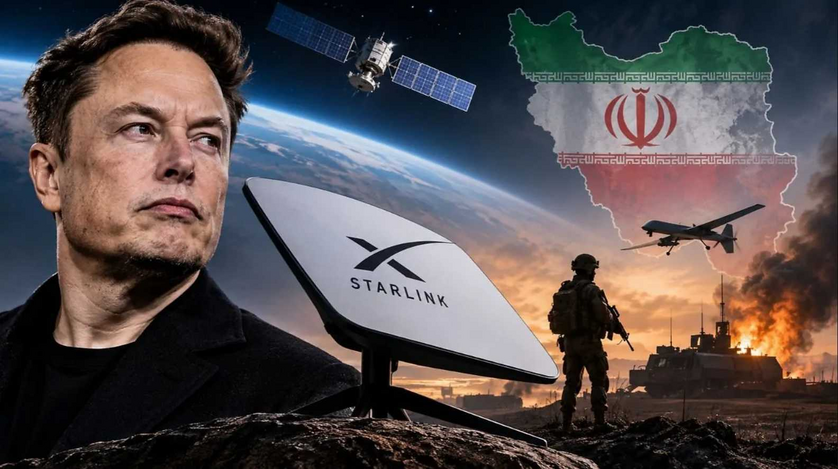
Iran reportedly used Starlink satellite internet for command-and-control and drone operations against U.S. forces in the opening days of the war, while the U.S. military operated LUCAS drones on a cheaper Starshield plan meant only for stationary or slow-moving ground operations, enraging SpaceX CEO Elon Musk, who fired at least two SpaceX executives.
The war began February 28, 2026, when the U.S. and Israel launched strikes on Iran; Tehran retaliated with ballistic missiles and drones targeting U.S. bases across the Middle East. In the first week of March, SpaceX detected two unauthorized uses of Starlink tied to Iran’s campaign.
A classified U.S. Central Command(CENTCOM) update delivered to Defense Secretary Pete Hegseth over the summer confirmed Iran used Starlink as an alternative communications channel after U.S. forces degraded traditional networks, and to oversee one-way attack drone operations.
The timing of the CENTCOM update coincided with the March 1 drone strike on a U.S. tactical operations center in Port Shuaiba, Kuwait, which killed six servicemen. Iranian use of Starlink in that specific attack was not confimed. SpaceX reportedly began imposing emergency network restrictions within hours of the attack.
Musk was reportedly enraged and "fuming" upon learning of the exploitation, particularly because two months earlier he had already restricted Starlink/Starshield use after Russia was caught powering long-range drones with it. He fired at least two executives over the unauthorized access.
Starlink is not licensed to operate in Iran, yet Musk had previously said the service was active there; the U.S. government reportedly had about six thousand terminals smuggled into Iran after January protests. Shutting down Starlink would also cut off dissidents and ordinary Iranians using it to bypass state internet controls.
Once commercial terminals enter gray-market circulation, preventing hostile actors from acquiring or seizing them is difficult. Musk, in an X post then, said that using commercial Starlink terminals for weapon systems violates SpaceX’s terms of service and would be shut down.
Separately, the U.S. military was flying LUCAS (Low-cost Uncrewed Combat Attack System) drones on Starshield while paying for a ~$5,000/terminal ground plan instead of the ~$25,000/terminal aerial plan—a fivefold difference. SpaceX executives argued this violated commercial terms, and the issue fueled public clashes in May 2026, over Starshield pricing. The company reportedly demanded the Pentagon pay the higher aerial rate, which the Donald Trump administration ultimately agreed to.
Within hours of the March 1 Port Shuaiba strike, SpaceX introduced strict identity-verification requirements for terminals moving faster than 100 mph, mirroring a 70 km/h speed cap implemented in Ukraine earlier in 2026 after Russian forces mounted Starlink dishes onto attack drones. The company paused its Indirect Reselling Program—which had allowed third-party sub-resellers to distribute dishes with limited oversight—and mandated strict know-your-customer (KYC) identity verification for every terminal buyer and activation.
The Pentagon declined to confirm the classified report’s existence, with Press Secretary Kingsley Wilson stating the department was "not aware" of the specific CENTCOM update to the Office of the Secretary of Defense, and declined to comment on either Iran's alleged use of Starlink or the Starshield pricing arrangement.