keneci Network
News • Comedy • Science & Tech
Splashdown: SpaceX Polaris Dawn Crew Returns To Earth
September 15, 2024
post photo preview

SpaceX Crew Dragon(or Resilience) carrying the Polaris Dawn crewmembers, splashed down safely in the Gulf of Mexico off the coast of Florida at 0736 UTC on Sunday(Sept. 15) concluding the 5-day mission during which the astronauts performed the first-ever commercial spacewalk.

b65vm_C6khzlklClvQDOjWKckK2cwfRalnBXOm6tSmTosOjb6SA4X_PsPeP6Ypan3-HTpMnM2vslqj2dxWsuXGEVtvJhu8-izYS8i03EJpRjdOPRUjiO6x7007oczT0YxQ=w1280

"Polaris Dawn we are mission complete. Thanks for all the big help pulling this mission together," said mission commander and funder Jared Isaacman after the crew splashed down in the ocean. His crewmates were Scott "Kidd" Poteet, a former U.S. Air Force lieutenant colonel who served as pilot, and mission specialists Sarah Gillis and Anna Menon, both of whom are engineers at SpaceX.

"It is with great relief that I welcome you home! This mission was even more extraordinary than I anticipated. Sarah -- that global orchestral performance made me tear up! Thank you all for taking this journey," SpaceX COO and President Gwynne Shotwell wrote on X.

SpaceX founder and CEO Elon Musk wrote "Polaris crew is home safe & sound!"

Resilience reentry was reportedly observed by astronauts aboard the International Space Station(ISS). "We actually had a pretty neat view of Polaris Dawn entering," said NASA astronaut Mike Barratt. "All of us were more or less crowded in the cupola watching it. That was pretty spectacular for us."

Recovery teams deployed nearby, approached Crew Dragon after splashdown Sunday, and the spacecraft was hoisted onto the deck of the recovery ship, where support personnel assisted the crew in exiting the spacecraft.

After the crew's exit, procedures were followed to shut down the Dragon, including installing plugs in the thruster throats to prevent any toxic propellant fumes from escaping.

Following the crew's egress from the spacecraft, they were transported by helicopter back to shore.

During the 5-day mission, the Polaris Dawn crewmembers performed a variety of tasks, including 36 science experiments for 31 different institutions. Much of the orbital work will benefit NASA's Human Research Program. In addition to the historic spacewalk, Crew Dragon also reached a maximum altitude of 1,400.7 kilometers -- the furthest from our planet than any astronauts had traveled since the Apollo program ended in 1972.

Gillis, on Friday(Sept 13), released a very inspiring masterpiece, recorded in space and sent to Earth via Starlink internet satellite. The music video which immediately went viral on social media, is dedicated to charity.

Polaris Dawn was the first of three planned missions in the Polaris Program which "seeks to demonstrate important operational capabilities that will serve as building blocks to help further human exploration to the moon, Mars and beyond," according to its website.

The next mission has not been announced, but 'Flight 3' will be the first crewed mission of SpaceX's megarocket Starship, according to the Polaris Program.

community logo
Join the keneci Network Community
To read more articles like this, sign up and join my community today
0
What else you may like…
Videos
Posts
Articles
SpaceX Starlink Internet Satellites

With Starlink internet, data is continuously being sent between a ground dish and a Starlink satellite orbiting 550km above. Furthermore, the Starlink satellite zooms across the sky at 27,000 km/hr! MORE VIDEOS ON KENECI NETWORK RUMBLE CHANNEL: https://rumble.com/c/Keneci

00:28:08
Elon Musk, DOGE Speak On Waste And Fraud

US Department of Government Efficiency Services (USDS) led by Elon Musk speak on the "mind-boggling" fraud and waste in UInited States federal government

00:00:45
January 17, 2025
SpaceX Launches Starship 7th Test Flight

SpaceX successfully executed its second-ever “chopsticks” catch of a Super Heavy booster (or Booster 14) using the “Mechazilla” launch tower on Thursday(Jan. 16), during the seventh uncrewed test flight of the company's 123-meter Starship rocket. However, the megarocket's upper stage(or Ship 33) was lost approximately 8.5 minutes into the flight in a “rapid unscheduled disassembly(RUD)” or explosion

00:10:30
Welcome to Keneci Network!

Join the conversations!

December 09, 2025
Bitcoin White Paper By Satoshi Nakamoto

Bitcoin white paper

Bitcoin_White_Paper.pdf
September 17, 2024
Charges Against Sean 'Diddy' Combs In Grand Jury Indictment

The rapper was charged with racketeering conspiracy, sex trafficking by force, fraud or coercion, and transportation to engage in prostitution in the indictment unsealed Tuesday(Sept. 17)

Combs-Indictment-24-Cr.-542.pdf
post photo preview
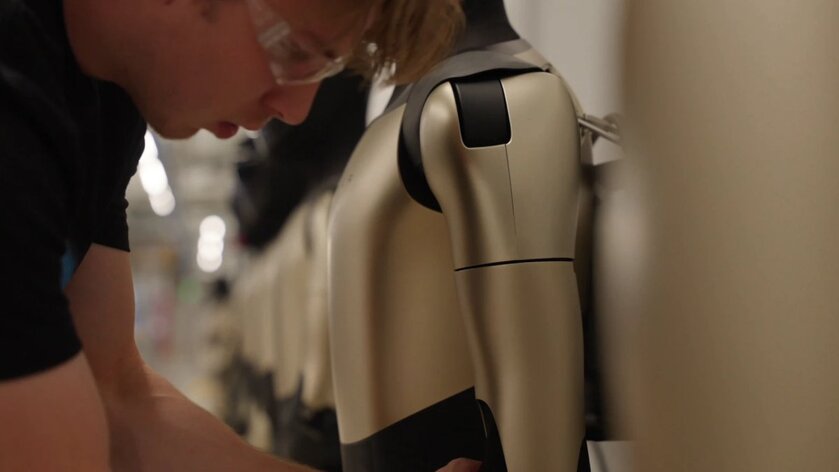
Tesla To Acquire German Precision Parts Maker EMAG For Optimus Robot Production

Tesla filed a proposal on eartlier this week (Nov. 23), to acquire specific assets from German machine-tool maker EMAG, with the transaction officially listed by Germany’s Federal Cartel Office (Bundeskartellamt) as case B5-132/26 on November 27. The deal is classified as an asset acquisition (Vermögenserwerb) covering precision manufacturing systems, electrochemical machining, and laser processing capabilities essential for producing humanoid robot drive components.

Tesla registered a new German entity, Tesla Machining Technologies Management SE ($131,405 or €120,000 capital), with its business address at EMAG’s headquarters in Salach, near Stuttgart. Unconfirmed reports suggest about 220 EMAG employees may transfer to Tesla, while EMAG’s operations in nearby Eislingen would remain independent.

The strategic goal is for Tesla to produce in-house, high-precision gears—such as flexsplines, wave generators, and planetary gears—used in Optimus robot actuators. This move addresses reliability bottlenecks identified by CEO Elon Musk during the third-quarter earnings call and aims to secure supply chain control for Tesla’s mass production targets, potentially scaling to 20,000 units per week.

EMAG has faced financial struggles, reporting a $45 million (€42 million) loss on $543 million (€496 million) in revenue in 2024, and had previously announced plans to cut jobs.

The Federal Cartel Office has up to one month for a first-phase review, with a potential five-month second phase if deeper investigation is required.

Neither Tesla nor EMAG has officially confirmed the deal’s specific financial terms, the exact scope of assets being sold, or a closing date. The acquisition follows Tesla’s previous integration of German automation expertise through the purchases of Grohmann Engineering and Manz’s Reutlingen operations.

Read full Article
November 26, 2026
post photo preview
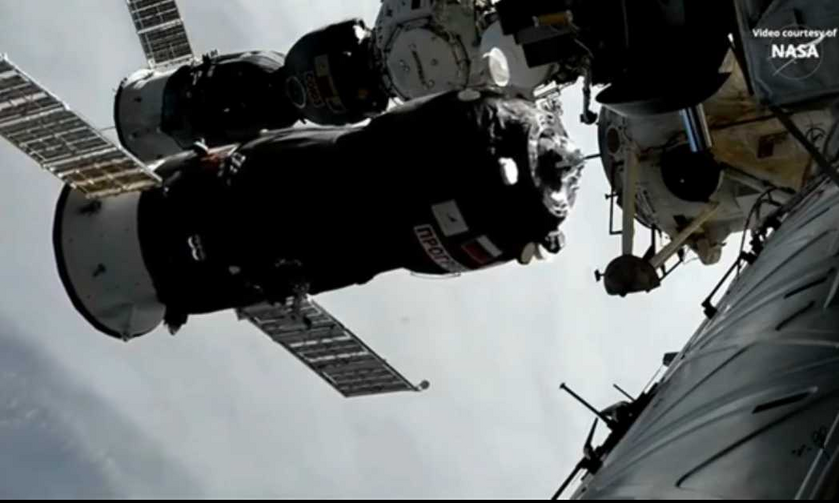
Roscosmos MS-36 Cargo Capsule Arrives At The ISS Carrying Over 2.4 metric tons Of Supplies

MS-36 or Progress 97 cargo capsule docked with the Rassvet module on the International Space Station (ISS) on Thursday (Nov. 26), at 1208 UTC, arriving three minutes ahead of schedule. The uncrewed cargo spacecraft launched from the Baikonur Cosmodrome in Kazakhstan at 1017 UTC, on Nov. 24, atop a Soyuz-2.1b rocket, completing a two-day autonomous journey to deliver approximately three tons of essential provisions.

In a unique operational change, the spacecraft docked at the Rassvet module to allow crew members to unload cargo, avoiding the sealed PrK transfer tunnel at the Zvezda service module which has an ongoing air leak.

MS-36 carried 750 kilograms(kg) of fuel, 51 kg of oxygen, 420 kg of drinking water, and 261 kg of food for the Expedition 75 crew, alongside 657 kg of equipment for various scientific experiments. A primary payload is the Teledroid humanoid robot’s control system, designed to assist cosmonauts with external maintenance tasks in vacuum and extreme temperatures.

After unloading, MS-36 is scheduled to relocate to Zvezda’s aft port to perform orbital reboosts, marking the first time a cargo mission splits unloading and engine burns across two different ports. The capsule will remain attached for about six to eight months before departing for a destructive re-entry to dispose of station waste.

=================

Roscosmos Soyuz-2.1b rocket launched the Progress MS-36 (a.k.a. Progress 97) cargo spacecraft to the International Space Station(ISS) Tuesday (Nov. 24) at 1017 UTC from Site 31 at the Baikonur Cosmodrome in Kazakhstan, carrying over 2.4 metric tons of supplies for the Expedition 75 crew aboard ISS.

MS-36 reached orbit and is scheduled to autonomously dock with the ISS's Poisk module on Thursday. Then cosmonauts currently living on the ISS — Pyotr Dubrov, Anna Kikina and Sergey Teteryatnikov — will unload Progress 97 through Poisk. But the freighter will then hop over to a different port aft one of the PrK transfer tunnel to perform ISS orbit-reboosting engine burns, leading it to Russia's Zvezda service module, marking the first cargo mission to split unloading and orbital correction across different ports.

A primary payload on MS-36, is the control system for the Teledroid, a torso-type humanoid robot with 30 degrees of freedom developed by NPO Android Technics. Designed to assist cosmonauts during spacewalks, the robot can operate standard tools in vacuum and extreme temperatures; it will be tested via virtual simulation, internal pressurized trials, and external operations on the station’s exterior.

MS-36 will likely stay docked to the ISS for about six months, after which it will be loaded up with trash and sent home to burn up in Earth's atmosphere.

MS-36 launch was significantly delayed from its original August 2026 target due to the collapse of the service platform at Baikonur’s Site 31 in November 2025, which required approximately three months for repairs. Other than SpaceX's Dragon capsule, which is reusable and makes parachute-aided ocean splashdowns at the end of its missions, Japan's HTV-X vehicle and Northrop Grumman's Cygnus spacecraft are expendable.

Read full Article
November 25, 2026
post photo preview
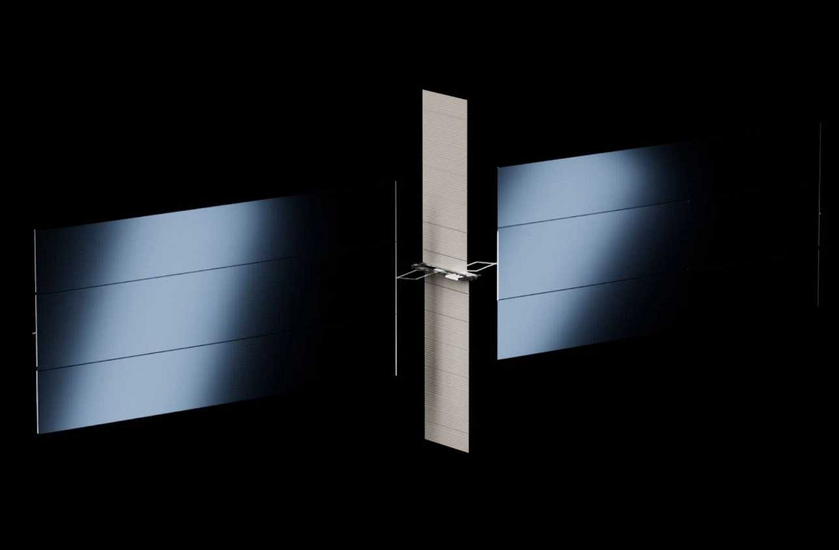
Starmind: US Regulators Approve SpaceX Plan To Deploy 1 Million Space Data Center Satellites

The U.S. Federal Communications Commission, FCC approved SpaceX’s plan to deploy up to 1 million Starmind satellites for orbital data centers, marking the first authorization in U.S. history for a space-based data center constellation.

According to the 15-year FCC license, SpaceX is required to deploy first satellite by Nov 2033; 100,000 by Nov 2035; 500,000 by Nov 2038; full 1 million by Nov 2040. The satellites will orbit at 500–1,002 kilometers, using 210 kilowat(kW) solar arrays, 250 kW peak compute, and laser links to Starlink; with Ka-band frequewncies authorized for backup and emergency communications only.

FCC Chairman Brendan Carr in a statement declared, “America is leading the world into the era of super intelligence... The FCC supercharges that effort today by granting, for the first time ever, authorization to deploy 1 million orbital compute modules for data centers in space. This action opens a bold new frontier for the computing infrastructure needed to power America’s leadership and growth.”

He added, “Compute campuses or data centers are essential to sustaining America’s leadership in SI. By moving compute capacity beyond Earth, SpaceX and the many competitors working on their own orbital data centers are meeting the moment. This is the kind of American ingenuity that can unite our strengths in space and advanced technology, reinforce our economic leadership, and expand prosperity here at home.”

The FCC noted the system “promises to bring the human race closer to a Kardashev II civilization—one that can harness the full power of the sun.”

Elon Musk in an X post responding to Musk, wrote: “Much appreciated. This will be a great asset to America and the world.”

SpaceX must file a final debris mitigation plan before deploying above 600 km; a request to park retired satellites in disposal orbits was deferred. Petitions from Amazon Leo, Viasat, and the American Astronomical Society were dismissed; the AAS said it's “disheartened and dismayed” by the decision.

Applied in Jan 2026 after SpaceX acquired xAI; the plan was featured in SpaceX’s June IPO pitch. The first-generation AI1 satellite, built on Nvidia Vera Rubin NVL72 racks, could launch as early as Q3 2027

Read full Article
See More
Available on mobile and TV devices
google store google store app store app store
google store google store app tv store app tv store amazon store amazon store roku store roku store
Powered by Locals