keneci Network
News • Comedy • Science & Tech
Brazil Supreme Court Judge Moraes Blocks Access To X, Freezes SpaceX Starlink Bank Accounts In Tyrannical Escalation After Elon Musk Rejects Censorship Demands
August 30, 2024
post photo preview

Following months of harassing X which led to the closure of the social media company's office in Brazil, the country's tyrannical Supreme Court Judge Alexandre de Moraes has this week, ordered shutdown of access to the platform within the country, and frozen the financial accounts of Elon Musk’s SpaceX satellite internet service, Starlink.

The fascist Judge also ordered Google and Apple to remove X from their app stores in the country within 5 days. Anyone caught using a VPN to gain access to X, will face a fine of nearly $9,000 a day, according to the order.

The latest escalation comes after X refused to comply with a series of "unconstitutional" secret court orders demanding the social media platform censor prominent civil rights activists and elected opposition party leaders critical of the ruling far-left government of President Luiz Inácio Lula da Silva.

Moraes had set a 24-hour deadline for X to name its legal representative in Brazil by 2300 UTC on Thursday. The Supreme Court posted a screen shot of Wednesday's court order on its X account, tagging Musk's and X's global government affairs accounts. Before closing its office in Brazil, X had revealed that Moraes secretly threatened one of its legal representatives with arrest if the social media company did not comply with his "unconstitutional" censorship demands.

Moments after the deadline passed Thursday, X global affairs account wrote that it expected the fascist judge to order the shutdown of access to the platform in the country "soon." The Judge ordered shutdown of X Friday.

"Earlier this week we received an order from Brazil’s Supreme Court Justice @alexandre de Moraes that freezes Starlink’s finances and prevents Starlink from conducting financial transactions in that country," the company wrote on X, Thursday. "This order is based on an unfounded determination that Starlink should be responsible for the fines levied—unconstitutionally—against X. It was issued in secret and without affording Starlink any of the due process of law guaranteed by the Constitution of Brazil. We intend to address the matter legally. Today, Starlink is connecting more than a quarter million customers in Brazil—from the Amazon to Rio de Janeiro—including small businesses, schools, and first responders, among many others. We are proud of the impact Starlink is making in communities across the country, and the Starlink team is doing everything possible to ensure their service is not interrupted.

The Brazilian military had written in a letter, of the vital importance of Starlink to their operations and strategic readiness across the nation. Canceling the contract, it warned, could compromise critical missions, including those of Special Border Platoons in remote areas.

In a series of posts Friday, responding to other X users, Musk wrote: "Free speech is the bedrock of democracy and an unelected pseudo-judge in Brazil is destroying it for political purposes. The attacks this year on free speech are unprecedented in the 21st century. It will happen in America too if Kamala/Walz gain power. Just listen to what they’ve said. The oppressive regime in Brazil is so afraid of the people learning the truth that they will bankrupt anyone who tries. One day, that criminal posing as a judge will occupy the prison cell of the people he has wrongfully convicted."

Musk had in earlier posts Thursday, called Moraes an “outright criminal” and a “dictator;” and accused the judge of attempting to use Starlink as leverage to force X to comply with his orders.

"SpaceX and X are two completely different companies with different shareholders," Musk wrote. "I own about 40% of SpaceX, so this absolutely illegal action by the dictator @alexandre improperly punishes other shareholders and the people of Brazil."

On her part, X CEO Linda Yaccarino wrote: "This is a sad day for X users around the world, especially those in Brazil, who are being denied access to our platform. I wish it did not have to come to this – it breaks my heart. The Brazilian Constitution says, "Any and all censorship of a political, ideological and artistic nature is forbidden." I hope for a day when the Brazilian government will live up to the Constitution that the Brazilian people ratified. But until there is change in Brazil, X will be shut down. We hope to be back soon."

US embassy in Brazil said in a statement it is "monitoring monitoring the situation between the Supreme Court and the X platform. ...We emphasize that freedom of expression is a fundamental pillar in a healthy democracy."

However critics including Musk believe President Joe Biden administration officials are complicit in the prosecution of X, given their own history of demanding censorship on the social media platform and others. Many have pointed out that other platforms including Mark Zuckerberg's Meta, TikTok and Google have been quietly complying with Moraes' "unconstitutional" and tyrannical censorship demands.


community logo
Join the keneci Network Community
To read more articles like this, sign up and join my community today
0
What else you may like…
Videos
Posts
Articles
SpaceX Starlink Internet Satellites

With Starlink internet, data is continuously being sent between a ground dish and a Starlink satellite orbiting 550km above. Furthermore, the Starlink satellite zooms across the sky at 27,000 km/hr! MORE VIDEOS ON KENECI NETWORK RUMBLE CHANNEL: https://rumble.com/c/Keneci

00:28:08
Elon Musk, DOGE Speak On Waste And Fraud

US Department of Government Efficiency Services (USDS) led by Elon Musk speak on the "mind-boggling" fraud and waste in UInited States federal government

00:00:45
January 17, 2025
SpaceX Launches Starship 7th Test Flight

SpaceX successfully executed its second-ever “chopsticks” catch of a Super Heavy booster (or Booster 14) using the “Mechazilla” launch tower on Thursday(Jan. 16), during the seventh uncrewed test flight of the company's 123-meter Starship rocket. However, the megarocket's upper stage(or Ship 33) was lost approximately 8.5 minutes into the flight in a “rapid unscheduled disassembly(RUD)” or explosion

00:10:30
Welcome to Keneci Network!

Join the conversations!

December 09, 2025
Bitcoin White Paper By Satoshi Nakamoto

Bitcoin white paper

Bitcoin_White_Paper.pdf
September 17, 2024
Charges Against Sean 'Diddy' Combs In Grand Jury Indictment

The rapper was charged with racketeering conspiracy, sex trafficking by force, fraud or coercion, and transportation to engage in prostitution in the indictment unsealed Tuesday(Sept. 17)

Combs-Indictment-24-Cr.-542.pdf
post photo preview
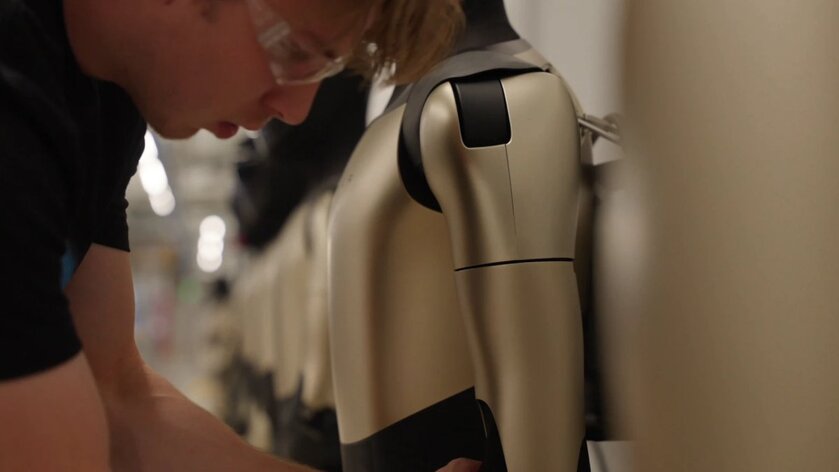
Tesla To Acquire German Precision Parts Maker EMAG For Optimus Robot Production

Tesla filed a proposal on eartlier this week (Nov. 23), to acquire specific assets from German machine-tool maker EMAG, with the transaction officially listed by Germany’s Federal Cartel Office (Bundeskartellamt) as case B5-132/26 on November 27. The deal is classified as an asset acquisition (Vermögenserwerb) covering precision manufacturing systems, electrochemical machining, and laser processing capabilities essential for producing humanoid robot drive components.

Tesla registered a new German entity, Tesla Machining Technologies Management SE ($131,405 or €120,000 capital), with its business address at EMAG’s headquarters in Salach, near Stuttgart. Unconfirmed reports suggest about 220 EMAG employees may transfer to Tesla, while EMAG’s operations in nearby Eislingen would remain independent.

The strategic goal is for Tesla to produce in-house, high-precision gears—such as flexsplines, wave generators, and planetary gears—used in Optimus robot actuators. This move addresses reliability bottlenecks identified by CEO Elon Musk during the third-quarter earnings call and aims to secure supply chain control for Tesla’s mass production targets, potentially scaling to 20,000 units per week.

EMAG has faced financial struggles, reporting a $45 million (€42 million) loss on $543 million (€496 million) in revenue in 2024, and had previously announced plans to cut jobs.

The Federal Cartel Office has up to one month for a first-phase review, with a potential five-month second phase if deeper investigation is required.

Neither Tesla nor EMAG has officially confirmed the deal’s specific financial terms, the exact scope of assets being sold, or a closing date. The acquisition follows Tesla’s previous integration of German automation expertise through the purchases of Grohmann Engineering and Manz’s Reutlingen operations.

Read full Article
November 26, 2026
post photo preview
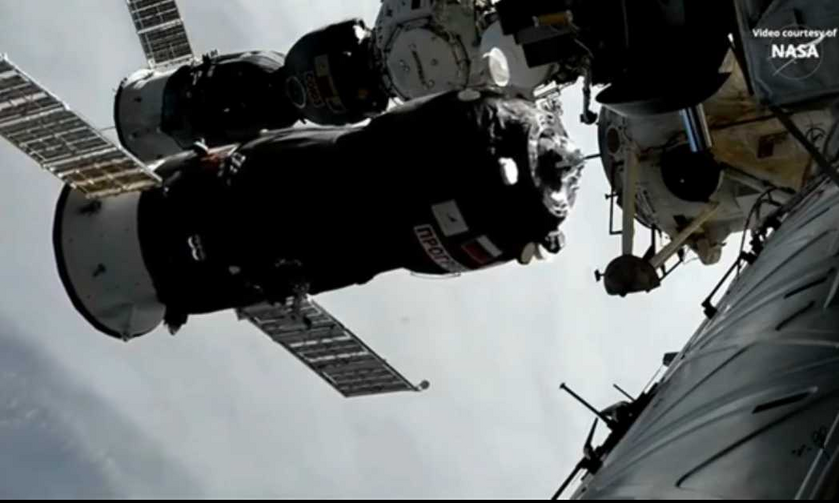
Roscosmos MS-36 Cargo Capsule Arrives At The ISS Carrying Over 2.4 metric tons Of Supplies

MS-36 or Progress 97 cargo capsule docked with the Rassvet module on the International Space Station (ISS) on Thursday (Nov. 26), at 1208 UTC, arriving three minutes ahead of schedule. The uncrewed cargo spacecraft launched from the Baikonur Cosmodrome in Kazakhstan at 1017 UTC, on Nov. 24, atop a Soyuz-2.1b rocket, completing a two-day autonomous journey to deliver approximately three tons of essential provisions.

In a unique operational change, the spacecraft docked at the Rassvet module to allow crew members to unload cargo, avoiding the sealed PrK transfer tunnel at the Zvezda service module which has an ongoing air leak.

MS-36 carried 750 kilograms(kg) of fuel, 51 kg of oxygen, 420 kg of drinking water, and 261 kg of food for the Expedition 75 crew, alongside 657 kg of equipment for various scientific experiments. A primary payload is the Teledroid humanoid robot’s control system, designed to assist cosmonauts with external maintenance tasks in vacuum and extreme temperatures.

After unloading, MS-36 is scheduled to relocate to Zvezda’s aft port to perform orbital reboosts, marking the first time a cargo mission splits unloading and engine burns across two different ports. The capsule will remain attached for about six to eight months before departing for a destructive re-entry to dispose of station waste.

=================

Roscosmos Soyuz-2.1b rocket launched the Progress MS-36 (a.k.a. Progress 97) cargo spacecraft to the International Space Station(ISS) Tuesday (Nov. 24) at 1017 UTC from Site 31 at the Baikonur Cosmodrome in Kazakhstan, carrying over 2.4 metric tons of supplies for the Expedition 75 crew aboard ISS.

MS-36 reached orbit and is scheduled to autonomously dock with the ISS's Poisk module on Thursday. Then cosmonauts currently living on the ISS — Pyotr Dubrov, Anna Kikina and Sergey Teteryatnikov — will unload Progress 97 through Poisk. But the freighter will then hop over to a different port aft one of the PrK transfer tunnel to perform ISS orbit-reboosting engine burns, leading it to Russia's Zvezda service module, marking the first cargo mission to split unloading and orbital correction across different ports.

A primary payload on MS-36, is the control system for the Teledroid, a torso-type humanoid robot with 30 degrees of freedom developed by NPO Android Technics. Designed to assist cosmonauts during spacewalks, the robot can operate standard tools in vacuum and extreme temperatures; it will be tested via virtual simulation, internal pressurized trials, and external operations on the station’s exterior.

MS-36 will likely stay docked to the ISS for about six months, after which it will be loaded up with trash and sent home to burn up in Earth's atmosphere.

MS-36 launch was significantly delayed from its original August 2026 target due to the collapse of the service platform at Baikonur’s Site 31 in November 2025, which required approximately three months for repairs. Other than SpaceX's Dragon capsule, which is reusable and makes parachute-aided ocean splashdowns at the end of its missions, Japan's HTV-X vehicle and Northrop Grumman's Cygnus spacecraft are expendable.

Read full Article
November 25, 2026
post photo preview
Starmind: US Regulators Approve SpaceX Plan To Deploy 1 Million Space Data Center Satellites

The U.S. Federal Communications Commission, FCC approved SpaceX’s plan to deploy up to 1 million Starmind satellites for orbital data centers, marking the first authorization in U.S. history for a space-based data center constellation.

According to the 15-year FCC license, SpaceX is required to deploy first satellite by Nov 2033; 100,000 by Nov 2035; 500,000 by Nov 2038; full 1 million by Nov 2040. The satellites will orbit at 500–1,002 kilometers, using 210 kilowat(kW) solar arrays, 250 kW peak compute, and laser links to Starlink; with Ka-band frequewncies authorized for backup and emergency communications only.

FCC Chairman Brendan Carr in a statement declared, “America is leading the world into the era of super intelligence... The FCC supercharges that effort today by granting, for the first time ever, authorization to deploy 1 million orbital compute modules for data centers in space. This action opens a bold new frontier for the computing infrastructure needed to power America’s leadership and growth.”

He added, “Compute campuses or data centers are essential to sustaining America’s leadership in SI. By moving compute capacity beyond Earth, SpaceX and the many competitors working on their own orbital data centers are meeting the moment. This is the kind of American ingenuity that can unite our strengths in space and advanced technology, reinforce our economic leadership, and expand prosperity here at home.”

The FCC noted the system “promises to bring the human race closer to a Kardashev II civilization—one that can harness the full power of the sun.”

Elon Musk in an X post responding to Musk, wrote: “Much appreciated. This will be a great asset to America and the world.”

SpaceX must file a final debris mitigation plan before deploying above 600 km; a request to park retired satellites in disposal orbits was deferred. Petitions from Amazon Leo, Viasat, and the American Astronomical Society were dismissed; the AAS said it's “disheartened and dismayed” by the decision.

Applied in Jan 2026 after SpaceX acquired xAI; the plan was featured in SpaceX’s June IPO pitch. The first-generation AI1 satellite, built on Nvidia Vera Rubin NVL72 racks, could launch as early as Q3 2027

Read full Article
See More
Available on mobile and TV devices
google store google store app store app store
google store google store app tv store app tv store amazon store amazon store roku store roku store
Powered by Locals