keneci Network
News • Comedy • Science & Tech
Elon Musk: I Lost My Son Xavier To Transgender Propaganda, Woke Mind Virus
July 24, 2024
post photo preview

Tesla and SpaceX CEO Elon Musk spoke about his estranged son Xavier publicly for the first time, during a recent interview with Canadian podcaster and psychologist Jordan B. Peterson.

The X owner revealed he was “essentially tricked” into signing documents for Xavier’s transgender transition. Musk said that he was misled into consenting to puberty blockers, which he believes are “sterilization drugs,” without fully understanding the implications.

"It happened to one of my older boys, where I was essentially tricked into signing documents for one of my older boys, Xavier. This is before I had any understanding of what was going on. COVID was going on, so there was a lot of confusion and I was told Xavier might commit suicide if he doesn't…" Musk told Peterson.

"That was a lie right from the outset," Peterson interjected.

"Incredibly evil, and I agree with you that the people that have been promoting this should go to prison," Musk responded.

Musk said it wasn't explained to him that puberty blockers are "actually just sterilization drugs," and called the term "gender affirming care" a "terrible euphemism."

"I lost my son, essentially. They call it deadnaming for a reason," Musk said. "The reason it's called deadnaming is because your son is dead. My son Xavier is dead, killed by the woke mind virus."

After an extended pause, Musk added, "I vowed to destroy the woke mind virus after that."

Xavier, now 20 years old, 'legally changed' his name and gender in 2022, and has since distanced himself from Musk, stating in court documents that he “no longer wishes to be related” to his biological father “in any way, shape or form.”

Musk has been a vocal critic of the far-left's pro-transgender propaganda, and had vowed to “destroy the woke mind virus” the influence of which he blames for his estrangement from Xavier.

Transgender treatments and the far-left's pro-LGBTQ propaganda face fierce criticisms and opposition from conservatives in the United Kingdom, America and the west in general. They argue that underage children especially, must not be exposed to such destructive life-altering concepts and practices.

Puberty blockers have been shown to cause long-term fertility problems in boys, a preprint study from Mayo Clinic concluded earlier this year. The study found that puberty blockers’ impacts may be permanent, disputing claims that such effects can be reversed.


community logo
Join the keneci Network Community
To read more articles like this, sign up and join my community today
0
What else you may like…
Videos
Posts
Articles
SpaceX Starlink Internet Satellites

With Starlink internet, data is continuously being sent between a ground dish and a Starlink satellite orbiting 550km above. Furthermore, the Starlink satellite zooms across the sky at 27,000 km/hr! MORE VIDEOS ON KENECI NETWORK RUMBLE CHANNEL: https://rumble.com/c/Keneci

00:28:08
Elon Musk, DOGE Speak On Waste And Fraud

US Department of Government Efficiency Services (USDS) led by Elon Musk speak on the "mind-boggling" fraud and waste in UInited States federal government

00:00:45
January 17, 2025
SpaceX Launches Starship 7th Test Flight

SpaceX successfully executed its second-ever “chopsticks” catch of a Super Heavy booster (or Booster 14) using the “Mechazilla” launch tower on Thursday(Jan. 16), during the seventh uncrewed test flight of the company's 123-meter Starship rocket. However, the megarocket's upper stage(or Ship 33) was lost approximately 8.5 minutes into the flight in a “rapid unscheduled disassembly(RUD)” or explosion

00:10:30
Welcome to Keneci Network!

Join the conversations!

December 09, 2025
Bitcoin White Paper By Satoshi Nakamoto

Bitcoin white paper

Bitcoin_White_Paper.pdf
September 17, 2024
Charges Against Sean 'Diddy' Combs In Grand Jury Indictment

The rapper was charged with racketeering conspiracy, sex trafficking by force, fraud or coercion, and transportation to engage in prostitution in the indictment unsealed Tuesday(Sept. 17)

Combs-Indictment-24-Cr.-542.pdf
post photo preview
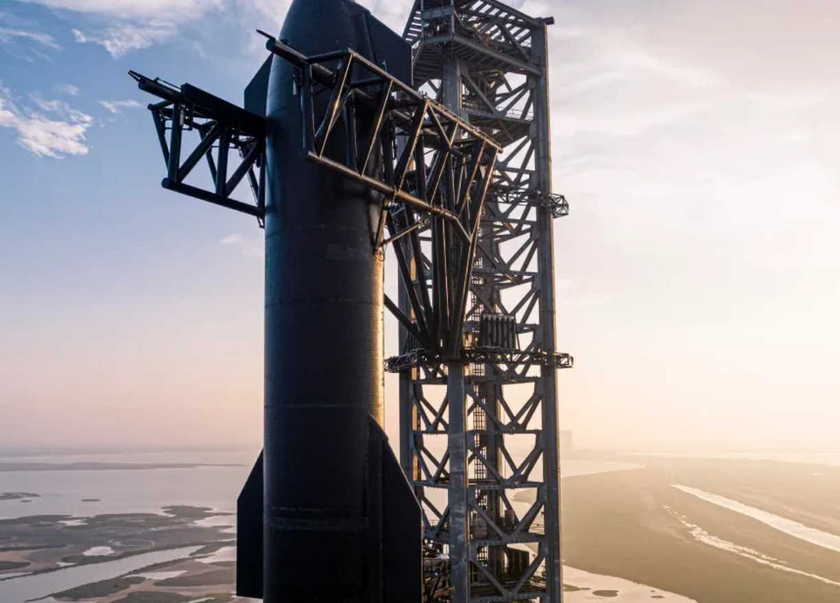
US Govt Contracts Account For <10% Of SpaceX Revenue, As Company Prepares To 'Catch' Starship Upper Stage And Super Heavy During Flight 15: Elon Musk

Elon Musk pointed out in an X post Friday, that SpaceX government contracts will account for less than 10% of revenue in the fourth quarter of 2026, dropping from 16.6% in Q3, and will fall to under 5% within a year. The Tesla and SpaceX CEO was responding to far-left Democrat critics who have threatened to scrutinize federal contracts after regaining control of Congress.

The shift in revenue composition is driven by the rapid growth of the company’s AI computing segment, SpaceXSI, which generated $7.56 billion in Q3. Anthropic has emerged as the company's largest single customer, accounting for over one-third of revenue through massive compute leasing deals from SpaceX’s Memphis data centers.

This commercial growth reduces reliance on federal funding, however it introduces concentration risk, as Anthropic can exit its contracts with 90 days’ notice starting in early 2027.

Musk defended the U.S. government contracts by asserting they offer the "best product and lowest price" and offered to cancel any agency's wish to terminate. The space, communication and AI company provides the only viable crewed spacecraft, Dragon, which flies astronauts to-and-from the International Space Station.

SpaceX is preparing for Starship Flight 15, scheduled for November, 2026. This mission aims to achieve a "profound" technological milestone by attempting to catch both the Starship upper stage and the Super Heavy booster using the launch tower's mechanical arms. Musk described the odds of success as "more likely than not," noting that successful dual-stage recovery is critical for achieving the economies of scale needed to make life multiplanetary and support future Artemis IV lunar landings.

Read full Article
post photo preview
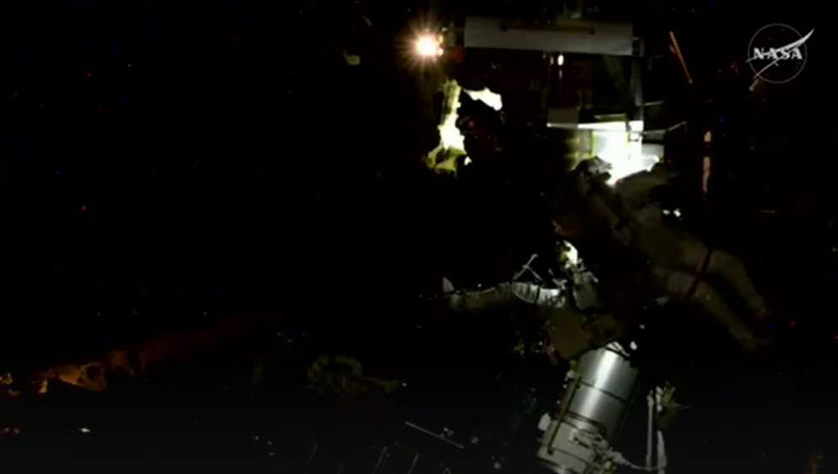
US Spacewalk 101: Astronauts Install 8th & Final ISS Roll-out Solar Array

NASA's Anil Menon and Canadian Space Agency's Joshua Kutryk completed U.S. Spacewalk 101 (Extravehicular activity, EVA-101), the 286th spacewalk in International Space Station (ISS) history. The 7-hour, 59-minute extravehicular activity (EVA) began at 1336 UTC and concluded at 2035 UTC, with the the duo successfully installing and deploying the eighth and final ISS Roll-Out Solar Array (iROSA) on the station's starboard 3B power channel.

This spacewalk concluded a five-year power augmentation campaign that began in 2021, designed to compensate for the age-related degradation of the ISS's original solar arrays.

The final iROSA installation was the most complex of the series because the 3B channel on the S6 truss segment sits beyond the operational reach of the Canadarm2 robotic arm. To overcome this, Menon and Kutryk utilized a novel "leapfrog" handoff technique.

Menon rode the robotic arm to the worksite, transferred the 340-kilogramg array to Kutryk, and then secured himself to the station structure to assist in mounting. The deployment itself required no motors; the array unfurled to its full 19-meter length using stored potential energy in its carbon-composite booms.

The process was briefly paused during orbital night to inspect a power connector after controllers detected lower-than-expected current, but the array was successfully deployed shortly after.

"We are seeing half of the expected shunt current that we want," radioed Nichole Stilwell, a NASA astronaut serving as the spacewalk officer in Mission Control. "In this current config, we are not necessarily going to deploy."

Out of safety concerns — given that the arrays generate electricity whenever lit by the sun — the astronauts needed to wait for the space station to enter the shadow of Earth to see what could be done. In the interim, they spent the time cleaning up their worksite and returning the Canadarm2 to its park site as they would have done after the deployment.

They were able to clear the issue. "We are seeing good shunt currents on the ground, so we are go for deploy," said Stilwell.

"We got it done!" said Menon at the end of the 6-hour-and-59-minute spacewalk.

The eight new iROSA panels boost the station's total power output from approximately 152–160 kilowatts** to roughly 215 kilowatts, a 30% increase. This additional power is critical for sustaining station operations, including life support and research, through its planned controlled deorbit in 2030.

"Today marks the completion of not just one solar array but, over 15 years after its development, eight arrays," Menon said at the close of the spacewalk. "These solar arrays are incredible. Half the size of the old ones and bringing 40% more power."

The need for the iROSA augmentations was discovered by flight controllers when the space station's eight original arrays began to show degraded power output as they exceeded their 15-year design life. The iROSAs provide the additional electricity needed to support ISS operations through its retirement and controlled deorbit, which are currently scheduled to occur in late 2030.

The iROSA technology, developed by Redwire, is also selected to power the Power and Propulsion Element of NASA's Gateway lunar outpost.

Menon logged his fourth spacewalk (33.5 hours total in EVA suits), while Kutryk completed his first, becoming the fifth Canadian to walk in space. The duo had installed the seventh iROSA just one week prior (October 29, 2026), marking the 100th U.S. spacewalk conducted from the ISS without a docked Space Shuttle.

"Congratulations to you all on your stellar work to finish the last of the roll-out solar arrays and the upgrades to the ISS power system that will take it to the end of its journey," said Stilwell, addressing Menon and Kutryk. "It is fitting that we just surpassed 26 years of constant human presence on the International Space Station, and you all showed us what the best of humanity looks like executing one of the most difficult and dangerous [things] humans do and making it look easy. Congratulations!"

Each of the eight iROSAs and their mounting assemblies were delivered to the space station by SpaceX Dragon cargo spacecraft. Beginning in June 2021, four teams of two astronauts did as was done on Thursday to deploy each array. In addition to Kutryk and Menon's work on the 2A and 3B power channels, the spacewalkers included Shane Kimbrough of NASA and Thomas Pesquet of the European Space Agency for the 2B and 4B channels; Josh Cassada and Frank Rubio, both with NASA, on 3A and 4A in December 2022; and NASA's Steve Bowen and Woody Hoburg on 1A and 1B in June 2023.

Read full Article
post photo preview
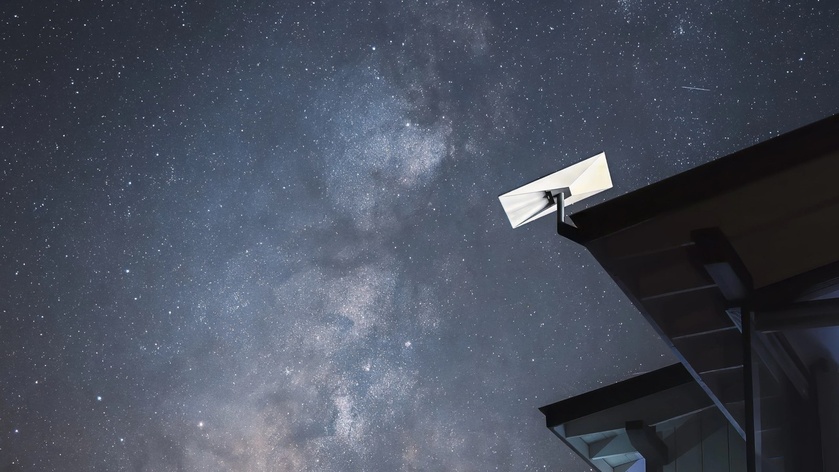
SpaceX Taps Qualcomm Dragonwing To Accelerate Starlink Mobile's US 5G Network

SpaceX selected Qualcomm to supply Dragonwing Cellular Infrastructure platforms for Starlink Mobile’s nationwide terrestrial 5G network in the U.S. Announced Wednesday, the multi-year agreement covers tens of thousands of cell sites, with deployment beginning in 2027.

The terrestrial network will complement Starlink’s satellite capabilities, creating what SpaceX calls “the first fully-integrated US nationwide satellite and terrestrial network.”

“At last there will be one network with good signal everywhere!,” SpaceX CEO Elon Musk wrote on X. And added in another post, “Qualcomm’s technology is excellent.”

SpaceX is designing its own end-to-end base station architecture; Qualcomm supplies the radio, processing, and Layer 1 building blocks.

Thge network will be built on Qualcomm Dragonwing QRU100 (radio unit signal processing) and QDU100 (baseband/Layer 1 processing) platforms, plus commercial-grade Layer 1 software; with massive MIMO -- 64 transmit/64 receive paths (64T64R) to improve coverage, capacity, and spectral efficiency.

“Together with SpaceX, we are building world-leading cellular infrastructure in the United States, advancing 5G today, with an opportunity to lay the foundation for AI-native 6G in the years ahead,” Durga Malladi, Qualcomm EVP and GM for technology planning, edge solutions, and data center, said in an X post. “Our agreement with SpaceX is structured in such a way that as the deployment begins, starting from next year, it's going to ramp up pretty rapidly from there onwards. Building a nationwide network demands high performance and power efficiency at every site.”

The network will use a 2 GHz block acquired from EchoStar in a September 2025 deal, which closed Boost Mobile’s 5G ambitions.

“We’re excited to collaborate with Qualcomm Technologies and leverage their industry expertise and platform to accelerate our timeline to develop our base station end-to-end architecture,” Starlink SVP Michael Nicolls said. “We shouldn’t live in a time where phone calls are still dropping whether you’re at home or on-the-go.”

SpaceX has been expanding spectrum holdings throughout 2025 and is aiming to become a fourth major U.S. wireless carrier competing with Verizon, AT&T, and T-Mobile.

Qualcomm CEO Cristiano Amon called the deal “the beginning of a relationship with tremendous potential,” with revenue expected to ramp in FY28. Financial terms of the deal were not disclosed.

"Together with @elonmusk and the @SpaceX team, we’re excited to build world-leading cellular infrastructure and a path to AI-native 6G," Amon wrote on X.

Read full Article
See More
Available on mobile and TV devices
google store google store app store app store
google store google store app tv store app tv store amazon store amazon store roku store roku store
Powered by Locals