


keneci Network
News • Comedy • Science & Tech
Updates and conversations about hot topics in news, entertainment, and tech
Interested? Want to learn more about the community?
England Defeats Netherlands In Euro 2024 Semi-final

England came from behind to defeat the Netherlands 2-1 in the Euro 2024 semi-final in Berlin, thanks to the 90th minute goal from substitute Ollie Watkins.

Xavi Simons scored a stunning strike from range to give the Netherlands an early lead. England got lucky when Harry Kane won a penalty, after Denzel Dumfries attempted to close down his shot, but the England captain stepped up to dispatch the spot-kick.

00:04:34
Interested? Want to learn more about the community?
What else you may like…
Videos
Posts
Articles
SpaceX Starlink Internet Satellites

With Starlink internet, data is continuously being sent between a ground dish and a Starlink satellite orbiting 550km above. Furthermore, the Starlink satellite zooms across the sky at 27,000 km/hr! MORE VIDEOS ON KENECI NETWORK RUMBLE CHANNEL: https://rumble.com/c/Keneci

00:28:08
Elon Musk, DOGE Speak On Waste And Fraud

US Department of Government Efficiency Services (USDS) led by Elon Musk speak on the "mind-boggling" fraud and waste in UInited States federal government

00:00:45
January 17, 2025
SpaceX Launches Starship 7th Test Flight

SpaceX successfully executed its second-ever “chopsticks” catch of a Super Heavy booster (or Booster 14) using the “Mechazilla” launch tower on Thursday(Jan. 16), during the seventh uncrewed test flight of the company's 123-meter Starship rocket. However, the megarocket's upper stage(or Ship 33) was lost approximately 8.5 minutes into the flight in a “rapid unscheduled disassembly(RUD)” or explosion

00:10:30
Welcome to Keneci Network!

Join the conversations!

December 09, 2025
Bitcoin White Paper By Satoshi Nakamoto

Bitcoin white paper

Bitcoin_White_Paper.pdf
September 17, 2024
Charges Against Sean 'Diddy' Combs In Grand Jury Indictment

The rapper was charged with racketeering conspiracy, sex trafficking by force, fraud or coercion, and transportation to engage in prostitution in the indictment unsealed Tuesday(Sept. 17)

Combs-Indictment-24-Cr.-542.pdf
post photo preview
Iranian Missile Barrage Hits US Bases In Jordan, Naval Ships, After US Attacks On Iran's Oil Tankers

U.S. Central Command (CENTCOM) on Tuesday, destroyed five Iranian crude oil tankers in retaliation for repeated ballistic missile attacks by the Islamic Revolutionary Guard Corps (IRGC) on a U.S. Navy warship in the last few days. Four tankers were hit in the Gulf of Oman and one near Kharg Island, Iran’s primary oil export hub; these vessels had moved 45 million barrels of Iranian oil since 2019.

The strikes were part of a new “tanker for tanker” policy approved by President Trump, escalating a broader campaign to cripple Iran’s economy after earlier U.S. strikes on three tankers on September 5 following IRGC attacks on U.S. destroyers DDG-119 and DDG-53.

In retaliation to Tuesday's attacks, the IRGC launched a ballistic missile barrage at U.S.-linked bases in Jordan, specifically targeting the Al-Azraq air base (housing F-35, F-16, and F-15 fighter jet facilities) and the Muwaffaq Salti and Prince Hassan military bases. Jordan’s air defenses intercepted 18 of the 20 missiles launched, with the two remaining landing away from population centers.

The IRGC also claimed it attacked U.S. Navy destroyers and warned of strikes on tankers in Kuwait and Bahrain.

Meanwhile, Iran claimed to have seized a U.S. underwater drone near the Strait of Hormuz. State media identified the craft as the Dive-LD, a 19-foot autonomous submarine manufactured by U.S. defense firm Anduril Industries. This occurred amid ongoing U.S. naval operations to escort commercial shipping through the strait, where ~40 ships transited daily carrying millions of barrels of oil.

The ongoing conflict has transformed the Persian Gulf into a high-intensity maritime battleground involving commercial shipping disruptions, drone warfare, and subsea mining attempts. The war began on February 28, 2026, when pre-emptive U.S. and Israeli military strikes hit Iranian nuclear facilities, leadership command centers, and strategic targets.

Read full Article
September 07, 2026
post photo preview
Liquid Network Hacker Returns $268M in Bitcoin, Keeps $47M

Liquid Network has recovered 3,400 BTC (about $268 million) after an exploit drained nearly 4,000 BTC (about $320 million) from its federation wallet. The attacker, who identified as a "white hat," retained 598.5 BTC (about $47 million) in an address linked to the withdrawal, representing roughly 15% of the stolen funds.

The incident stemmed from a range-proof verification cache bug in Elements, the open-source software powering Liquid nodes, which allowed the creation of unbacked L-BTC tokens. No private keys or federation wallets were compromised; instead, attackers exploited the issuance logic to generate valid-looking tokens that were then pegged out via SideSwap, draining 95% of Liquid’s Bitcoin reserves.

Liquid immediately froze network operations and disabled bridge nodes to secure the remaining assets. The network remained paused while node operators updated their bridge software and verified the security fixes.

Communication between the attacker and Blockstream occurred entirely on-chain via Bitcoin OP_RETURN messages.

The hacker consolidated the stolen Bitcoin into a single address and broadcasted an OP_RETURN message reading: "we are whitehats. contact us on chain."

Blockstream established formal contact around Bitcoin block 965,822 by embedding encrypted text and a PGP signature in an OP_RETURN transaction.

The attacker sent encrypted details of the exploit back to Blockstream, stating they would not return the funds until the bug was fully patched across all network nodes.

Blockstream replied with a PGP-signed OP_RETURN message confirming against their official key on record: "Bridge nodes are patched, safe to return the funds," after which the attacker broadcast the return transaction.

While the return mitigated immediate insolvency risks, Liquid Network operations remain paused to restore 1:1 backing, and the status of the retained $47 million remains unclear, with no formal bounty agreement published.

Liquid official communications referred to the actor as a "purported white-hat hacker." Security experts and crypto community members heavily debated labeling the hacker a true "white hat," noting that taking funds by force prior to negotiations is extortion rather than responsible disclosure.

Read full Article
September 06, 2026
post photo preview
Spectrum: German Company Launches Europe's Ist Privately-developed Rocket To Orbit

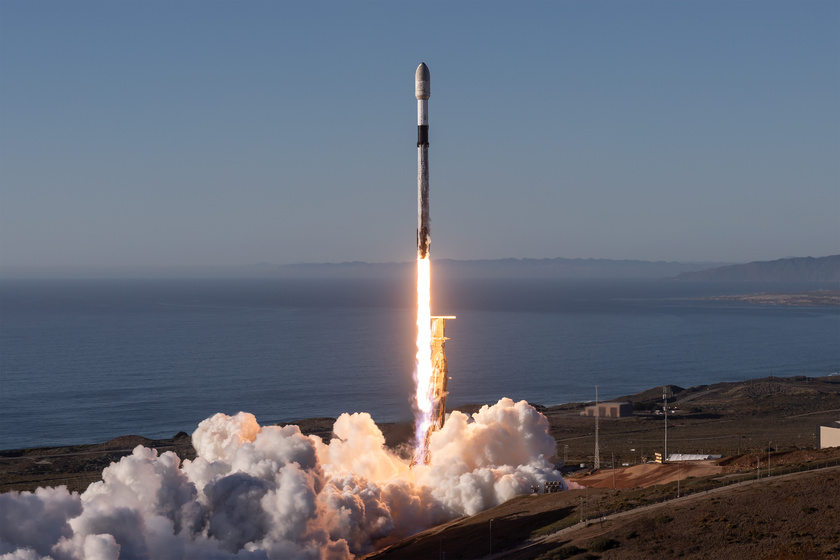
German startup Isar Aerospace successfully launched its Spectrum rocket into orbit from Andøya Spaceport in northern Norway at 2012 UTC on Saturday (Sept. 5), marking the first privately developed rocket to reach orbit from continental Europe.

After liftoff, the rockety's first stage burned for two-and-a-half minutes, separated, and the second stage ignited to reach orbital velocity. After a circularization burn, the payload fairing was discarded, and the payloads were deployed.

The "Onward and Upward" mision deployed five small satellites (CubeSats) and a non-separating technology experiment, completing the full flight sequence that failed during the small launch rocket’s inaugural launch 17 months earlier. Payloads included CyBEEsat, TriSat-S, Platform 6, FramSat-1, SpaceTeamSat1 and “Let It Go.”

"This is right now making history — making history for Spectrum, making history for Isar, making history for Europe,” Nikolaos Perakis, Spectrum chief engineer at Isar, said during Saturday's launch webcast. "I'm incredibly proud of this massive achievement."

The first test flight in March 2025, from Andøya, "Going Full Spectrum," lasted only about 30 seconds before crashing into the Norwegian Sea. An investigation revealed that a pressure relief valve malfunctioned, causing a loss of attitude control during the roll maneuver.

"A comprehensive investigation was completed within two months of the launch," Isar wrote in a September 2025 update. "The findings identified an unintended opening of the vent valve and a loss of attitude control at the start of the roll maneuver as the initiating events that led to the in-flight failure."

The return-to-flight mission faced multiple scrubs in 2026 due to weather, technical issues, and a boat straying into the launch range. Bad weather and an intruding boat scuttled multiple attempts in March, and an April 9 try was scrubbed due to a leak in a composite overwrapped pressure vessel.

Isar next tried to fly on June 15 but stood down after "detecting off-nominal behavior in the vehicle's fluid systems," according to a company update that day on X. But the company got that issue under control, rolling Spectrum back to the pad for today's launch.

"We had some delays, obviously," Petrakis said during the webcast. "We had some setbacks, but we came back stronger from them. And it validates this tremendous amount of engineering across all the teams, and that's what brings us into orbit."

So Saturday was a very big day for Isar, which is thinking big with Spectrum. “Flight 2 is a big, big milestone, big success," Petrakis said. "But this is just the beginning. So I'm really looking forward to the next steps."

Saturday's achievement positions Isar Aerospace as the first European commercial space company to deliver satellites into orbit from European soil, challenging the dominance of providers like Rocket Lab and SpaceX and complementing existing European heavy-lift systems like Ariane 6. The company has secured a $232 million (€200 million) contract with the European Space Agency (ESA) under the European Launcher Challenge and aims to manufacture 30+ rockets annually at its facility near Munich.

Spectrum is 28 meters tall with a 2-meter diameter; and utilizes automated-wound carbon fiber composite for primary structure to reduce mass and improve manufacturing throughput. The rocket's first stage is powered by nine Aquila sea-level engines and one vacuum-optimized Aquila engine powers the second stage. The small launch vehicle uses liquid oxygen (LOX) and liquid propane, a choice made for density and ease of sourcing compared to methane or kerosene.

AG8ngQU1GZNwb3E7BFGJQWxhHn6ZTiKiUhpwEGR7EVBqyd8eeXidmIee0NAd8j98MVS1pQYo0VfrhLi-SZu2Ckf7KFBSX1dE3TGXEZ9YCc5jkJRO5c6gA_8TeWvXaT6b-p-I4cvagYRCjg3X-TQjApAbmnKF4oOIMfrGV3vfdF4owERVycbTJJHRdRws7MKkpMxZVCXY_7kN7uiaa7vbgYdkvPZnzfkQg0GfkVQlzqpX=w1280
AG8ngQWh7iKKO5ystXfeMzHwtu_jfVwNDa0XGVYObsN0Vy62QGhfbA_60u95cj_bDfs6dH2DGgIEn69r-r--q4r3U3qQEVaqvrZnopdENA0YVsN_2PK-1gXgxLhfyAda4WmTK7eLccHYj2oD_BUMNXU284j-OcGxWpuzSxDMkHY-BYMcm-wr-68qad0g8DX8mSF0jdooTW6qxAZIoBti8uCa7dYGWO1Cte7GzdfO3qJRLwo=w1280
AG8ngQU-1pOpYj9SpMugdet_mF-3fQs6gMn9BUQ9z2P-v1BnyclMMxJoFvm4joN1Ut2C6MvAM5mKZSFptSVIAg2nA8ziOjYu25KShPZfYnEqP8rMDQYx0QNIcQFEPtWohMao2wmys4W7hVgj7Cehf0c3Tj0LoOYxDvuKk0Tg5si0c8ij1-5rJ7sniT_iEdCpS-qoDQkkI8x4goQ7E631ikLdJvOHEYuLROp7cD0grKNb6t0=w1280

Spectrum is designed to carry up to 1,000 kilogram(kg) to Low Earth Orbit (LEO) and about 700 kg to Sun-Synchronous Orbit (SSO). The company is aiming for a price point of about $11,600 (€10,000) per kg.

Read full Article
See More
Available on mobile and TV devices
google store google store app store app store
google store google store app tv store app tv store amazon store amazon store roku store roku store
Powered by Locals